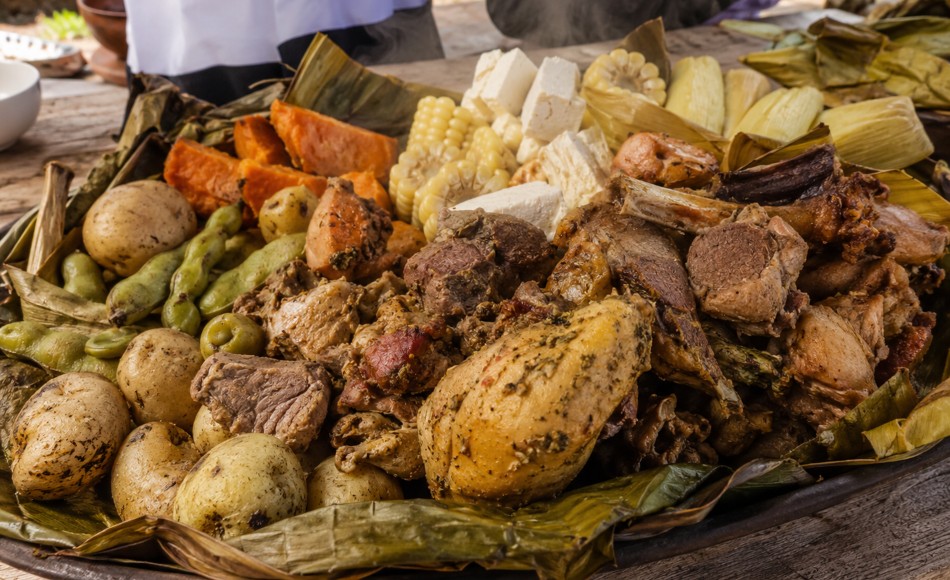
Pachamanca is one of the oldest and most iconic dishes of Peru’s Andean cuisine. Its name comes from Quechua: pacha means earth and manka means pot. More than a single recipe, it is an ancestral cooking method in which meats, tubers, fava beans, corn, and humitas cook slowly underground with preheated stones.
Preparing pachamanca brings families and communities together around fire, land, and local crops. In Peru, pachamanca is recognized as National Cultural Heritage because of its unique and ancient underground cooking process.
This version combines pork, lamb, and chicken with potatoes, sweet potatoes, fava beans, corn, and humitas, marinated with chincho, huacatay, ají panca, and chicha de jora—ingredients strongly associated with traditional Peruvian pachamanca.
Print
Peruvian Pachamanca
- Prep Time: 45 minutes
- Cook Time: 1 hour 30 minutes
- Total Time: 10 hours 15 minutes
- Yield: 10
- Category: Main Course
- Cuisine: Peruvian
Ingredients
For the meats and marinade
- 1 kg lamb, cut into large pieces (2.2 lb)
- 1 kg pork belly or pork ribs, cut into large pieces (2.2 lb)
- 1 kg chicken pieces (2.2 lb)
- 500 ml chicha de jora (2 cups)
- 100 g ají panca paste (⅓ cup)
- 30 g garlic, minced or blended (6 large cloves)
- 60 g fresh huacatay (1 small bunch)
- 40 g fresh chincho (1 small bunch)
- 20 g fresh cilantro (½ bunch)
- 10 g fresh muña (1 handful)
- 8 g ground cumin (2 teaspoons)
- 5 g ground black pepper (1 teaspoon)
- 25 g salt (1½ tablespoons)
For the pachamanca
- 2 kg medium Andean potatoes, thoroughly washed (4.4 lb)
- 1.5 kg medium sweet potatoes, thoroughly washed (3.3 lb)
- 1 kg fresh fava beans in their pods (2.2 lb)
- 8 medium ears of corn, cut in half
- 8 medium fresh humitas
- 500 g fresh white cheese (1.1 lb)
- 16 large banana leaves or 24 corn husks
- 8 kg clean, smooth, heat-safe stones
- 8 kg dry firewood
Preparation
- Make the marinade, blend the chicha de jora, ají panca paste, garlic, huacatay, chincho, cilantro, muña, cumin, black pepper, and salt until you have a thick, fragrant mixture. Place the lamb, pork, and chicken in a large container, pour over the marinade, and mix thoroughly so every piece is coated.
- Marinate the meats, cover the container and refrigerate it for at least 8 hours, preferably overnight. Take the meats out 30 minutes before cooking so they are not extremely cold when they go into the earth oven.
- Heat the stones, dig a pit about 80 cm deep and 1 m wide in a safe outdoor area, away from roots, buildings, and flammable materials. Place the firewood at the bottom, arrange the stones on top, and light the fire. Heat the stones for 1½ to 2 hours, until they are extremely hot and covered with ash. Use only solid, dry stones; avoid wet, porous, or river stones because they may crack under high heat.
- Build the cooking base, move aside part of the embers and place a layer of hot stones at the bottom of the pit. Cover them with banana leaves or corn husks, then arrange the potatoes, sweet potatoes, fava beans, and corn on top. Add another light layer of leaves to protect the food from direct contact with the soil.
- Add the meats and sides, place the marinated lamb, pork, and chicken over the tubers. Add the humitas and the fresh cheese wrapped in leaves. Cover everything with more banana leaves or corn husks, making sure the ingredients are fully protected and grouped together.
- Seal the pachamanca, arrange the remaining hot stones over the leaves, cover them with clean burlap sacks that have been lightly dampened, and seal everything with soil. Do not let steam escape: the cooking chamber must remain closed so the heat from the stones cooks the food slowly and evenly. Cook for 1 hour and 15 minutes to 1 hour and 30 minutes.
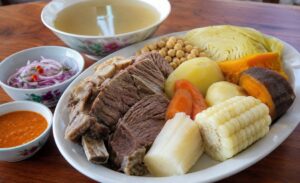
- Open and serve, carefully remove the soil, lift off the sacks, and move the stones aside using heat-resistant gloves. Open the leaves and check that the meats are fully cooked and tender. Serve a portion of each meat with potatoes, sweet potatoes, fava beans, corn, humita, and fresh cheese.
Chef’s Tips
- Marinate the meats the day before so the Andean herbs and chicha de jora can fully season them.
- Use plenty of banana leaves or corn husks. They protect the food and add aroma during cooking.
- Never use river stones or wet stones. Sudden temperature changes can cause them to break.
- Keep the pit tightly sealed. Escaping steam can lead to uneven cooking.
- Adjust the cooking time based on the size of the meat pieces and the intensity of the heat. Lamb usually needs longer than chicken.
- Open the earth oven with another person nearby, since the stones and steam remain extremely hot.
Traditional Variations
Pachamanca changes from one Peruvian region to another depending on local ingredients. It may include guinea pig, beef, alpaca, chicken, pork, oca, cassava, plantains, tamales, or cheese. However, the essential method remains the same: marinated ingredients, tubers, and Andean produce cook in an underground oven heated with stones.
Junín, Huancavelica, Ayacucho, Huánuco, Áncash, and the highlands of Lima all have their own traditional styles, herbs, meats, and accompaniments.
How to Serve It
Serve pachamanca directly on a large shared platter or as individual portions, making sure each person receives a combination of meats, potatoes, sweet potatoes, fava beans, corn, humita, and cheese.
Traditionally, you enjoy it outdoors just after opening the earth oven, alongside ground rocoto chile or Peruvian spicy sauce. Serve chicha de jora, chicha morada, or a warm Andean herbal drink on the side.
Recommended Side Dishes
- Rocoto chile sauce or Peruvian hot sauce
- Chicha de jora
- Chicha morada
- Peruvian onion salad with lime and cilantro
- Huacatay sauce
A Cultural Note
Pachamanca reflects a deep connection between food, land, and community. Its underground cooking method uses the heat stored in stones and turns the preparation of a meal into a shared social experience.
In Peru, the first Sunday of February is celebrated as National Pachamanca Day, recognizing this tradition and the family-farming products that make it possible.
Frequently Asked Questions
Pachamanca comes from two Quechua words: pacha, meaning earth, and manka, meaning pot. The name describes the traditional method of cooking food in a pit dug into the ground, using extremely hot stones as the heat source. It is an ancestral preparation from the Peruvian Andes.
There is no single mandatory meat combination because pachamanca varies by region. It may include lamb, pork, chicken, beef, guinea pig, or Andean camelids. A widely recognized family-style version combines lamb, pork, and chicken marinated with chicha de jora, chile pastes, and aromatic herbs such as huacatay and chincho.
Yes, you can make a pot or oven version at home, although it will not fully recreate the smoky aroma and distinct stone-cooked character of the original. Authentic pachamanca is cooked underground, sealed with leaves, hot stones, and soil. A home adaptation is useful when you do not have a safe outdoor space.
In a properly heated earth oven, pachamanca usually cooks for 1 hour and 15 minutes to 1 hour and 30 minutes. Timing can vary depending on the size of the stones, the amount of food, how well the pit is sealed, and the meats you use. Always check that the meats are completely cooked before serving.
The herbs most closely associated with Peruvian pachamanca are huacatay, chincho, and muña. Depending on the region and family recipe, cooks may also use cilantro, mint, or rosemary. These herbs are blended with chicha de jora, chile pastes, and garlic to create the aromatic marinade for the meats.