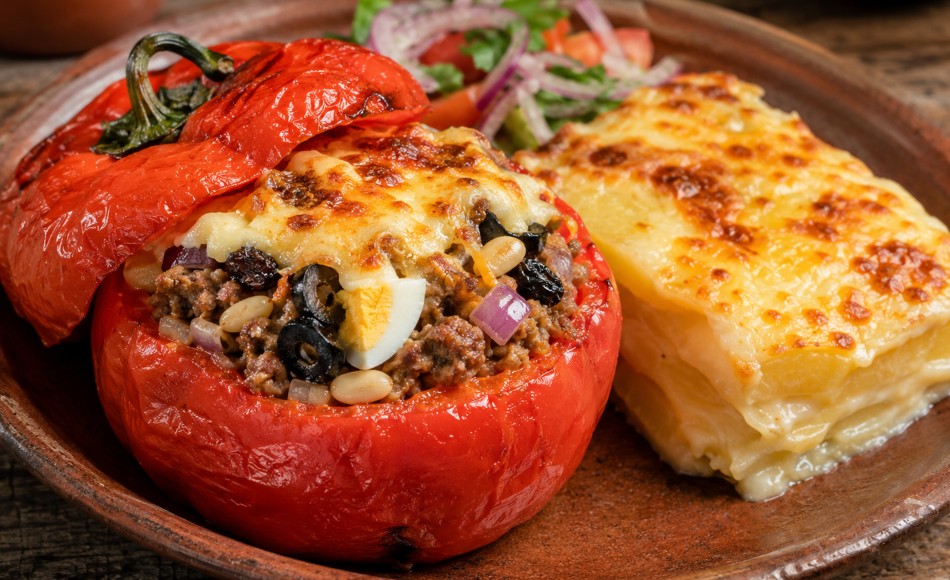
Arequipa-style rocoto relleno is one of the most representative dishes from southern Peru. It features large, intensely spicy rocoto peppers filled with ground beef, onion, olives, raisins, peanuts, and hard-boiled egg, then topped with cheese and baked until golden.
The dish is closely connected to Arequipa’s traditional picanterías and is usually served as a main course alongside creamy pastel de papa. Its distinctive character comes from the balance of spicy rocoto, savory-sweet filling, and melted cheese.
Print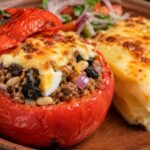
Arequipa Stuffed Rocoto
- Prep Time: 45 minutes
- Cook Time: 1 hour 15 minutes
- Total Time: 2 hours
- Yield: 6
- Category: Main Course
- Cuisine: Peruvian
Ingredients
For the rocotos
- 6 large, firm rocoto peppers
- 2 l water
- 30 g salt (2 tablespoons)
- 60 ml white vinegar (¼ cup)
- 20 g sugar (1½ tablespoons)
For the filling
- 500 g ground beef
- 300 g red onion, finely diced (2 medium onions)
- 45 ml vegetable oil (3 tablespoons)
- 40 g ají panca paste (3 tablespoons)
- 12 g garlic paste or finely grated garlic (3 large cloves)
- 4 g ground cumin (1 teaspoon)
- 3 g dried oregano (1 teaspoon)
- 6 g salt (1 teaspoon)
- 2 g ground black pepper (½ teaspoon)
- 60 g raisins (⅓ cup)
- 80 g chopped black olives (⅔ cup)
- 50 g roasted ground peanuts (⅓ cup)
- 2 hard-boiled eggs, chopped
- 120 ml beef broth (½ cup)
For the topping
- 300 g grated fresh cheese or queso paria (2½ cups)
- 120 ml evaporated milk (½ cup)
- 2 eggs
- 20 g butter (1½ tablespoons)
For the potato bake
- 1 kg white potatoes or yellow potatoes (6 medium potatoes)
- 250 ml evaporated milk (1 cup)
- 30 g butter (2 tablespoons)
- 180 g grated fresh cheese (1½ cups)
- 2 eggs
- 6 g salt (1 teaspoon)
- 2 g ground black pepper (½ teaspoon)
Preparation
- Seed the rocotos, cut the top off each rocoto to create a lid and set it aside. Carefully remove the seeds and inner veins with a small spoon, taking care not to tear the pepper walls.
- Reduce the heat, place the rocotos and their lids in a pot with water, salt, vinegar, and sugar. Boil them for 10 minutes, drain, and repeat the process twice more with fresh water, salt, and a little sugar. Taste a small edge of pepper; it should remain spicy but pleasant to eat.
- Make the seasoning base, heat the oil in a wide skillet and sauté the onion until translucent. Add the garlic, ají panca paste, cumin, oregano, salt, and black pepper. Cook for 2 minutes until fragrant and concentrated.
- Finish the filling, add the ground beef and cook over medium heat, breaking it apart with a spoon until no pink remains. Add the beef broth, raisins, olives, ground peanuts, and hard-boiled egg. Cook until the filling is juicy but not watery, then let it cool slightly.
- Prepare the potato bake, cook the potatoes in their skins until tender, about 25 to 30 minutes. Peel them while still warm and cut them into slices. Whisk together the evaporated milk, eggs, melted butter, salt, and black pepper.
- Fill the peppers, place the rocotos in a greased baking dish, fill them generously with the meat mixture, and cover each one with grated cheese. Place the lids on top or reserve them for garnish when serving.
- Assemble and bake, arrange the potato slices around the rocotos in layers, scatter over the remaining fresh cheese, and pour the milk-and-egg mixture over the potatoes. Bake at 180 °C / 350 °F for 35 to 40 minutes, until the cheese is golden and the potato bake is firm and creamy.
- Serve hot, let the dish rest for 10 minutes before serving. Plate each rocoto with a generous portion of pastel de papa and a rocoto lid on top.
Chef’s Tips
- Choose large, firm rocotos that can hold the filling and bake without collapsing.
- Wear gloves when handling rocotos, since their heat can irritate skin and eyes.
- Do not remove all of the heat; stuffed rocoto should still have a noticeable spicy character.
- Keep the filling moist but not soupy, so the rocotos do not split during baking.
- Use queso paria or a flavorful firm fresh cheese, since the melted cheese is essential to the dish.
Traditional Variations
In Arequipa, some cooks use hand-chopped beef, ground beef, or a blend of beef and pork. A few family recipes include soaked bread or extra broth for a softer, juicier filling. However, the traditional foundation remains rocoto peppers filled with meat, olives, raisins, peanuts, egg, and melted cheese.
Serving Style
Serve rocoto relleno hot with pastel de papa and, optionally, a very simple fresh salad. In Arequipa, it is commonly enjoyed as a main lunch dish. Pair it with chicha de guiñapo, cold chicha morada, or a chilled passion fruit drink.
Recommended Accompaniments
- Arequipa-style pastel de papa
- Fresh onion and tomato salad
- Chicha de guiñapo
- Cold chicha morada
- Ground chili sauce on the side
A Little History
Rocoto relleno reflects the richness of Arequipa’s culinary heritage, where chilies, cheeses, potatoes, and boldly seasoned sauces play a central role. The dish brings together Andean ingredients with cooking traditions that developed in southern Peru during the colonial and republican periods.
Arequipa’s picanterías helped preserve this recipe as one of the region’s most recognizable dishes. Its place on traditional menus has made rocoto relleno a symbol of hospitality, flavor, and local pride.
Frequently Asked Questions
Remove the seeds and internal veins, which hold much of the heat. Then boil the rocotos several times in fresh water with salt, sugar, and a little vinegar. Change the water after each boil and taste carefully. The goal is to soften the heat, not remove it entirely.
Yes. You can seed and blanch the rocotos, prepare the filling, and assemble the potato bake several hours ahead. Keep everything covered in the refrigerator and bake shortly before serving. This preserves the best texture in the melted cheese and creamy potatoes.
Queso paria is one of the most traditional choices because of its flavor and melting qualities. You can also use a firm fresh cheese or an Andean cheese that melts without releasing too much water. Avoid very mild or sweet cheeses, as they can overwhelm the bold rocoto and filling.
Rice is not the most traditional accompaniment. Arequipa-style rocoto relleno is primarily served with pastel de papa, which absorbs the juices from the filling and balances the pepper’s heat. You may add a fresh salad, but pastel de papa is the most representative side dish.