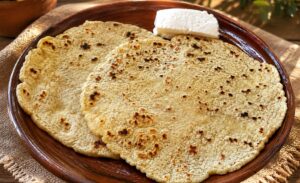
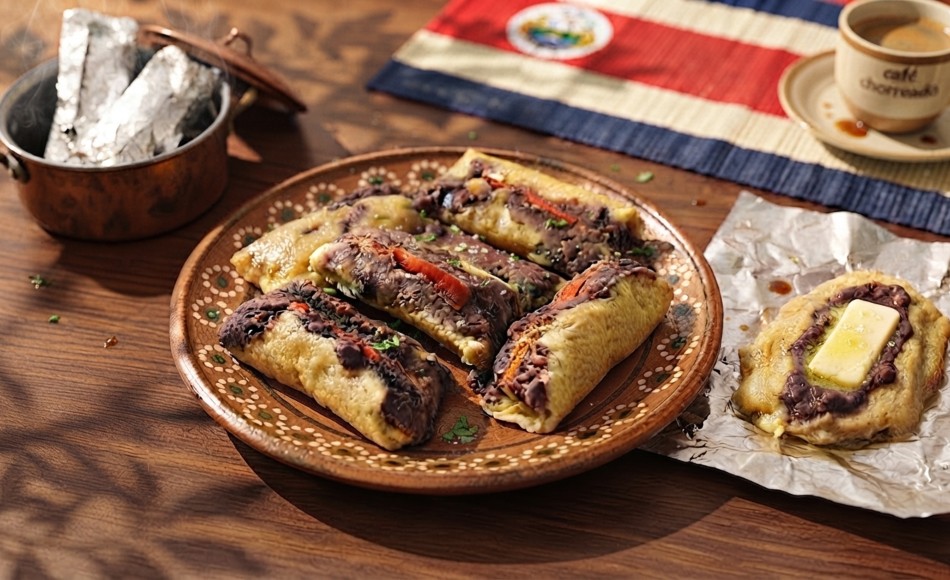
Tayuyas are a traditional Guanacaste preparation of corn masa or tortilla with a filling. This recipe presents a version stuffed with cuajada (fresh curd cheese), one of the forms historically documented in the region.
Because traditional sources describe the preparation but don’t give exact home quantities, the proportions in this recipe have been adapted so you can make it at home.
Print
Guanacaste Tayuyas – Costa Rican Corn Tortillas Stuffed with Cuajada
- Prep Time: 20 minutes
- Cook Time: 25 minutes
- Total Time: 45 minutes
- Yield: 8 tayuyas
- Category: Breakfast
- Cuisine: Costa Rican
Ingredients
- 500 g prepared corn masa for tortillas
- Warm water, only if the dough needs it
- 1 pinch salt
- 250 g cuajada (or firm fresh cheese if unavailable)
Preparation
- Make the dough, knead the corn masa with the salt until soft and pliable; if it cracks, add a little warm water.
- Shape the tayuyas, divide the dough into 8 portions and flatten each into a tortilla. Put cuajada in the center, close the dough around the filling, and gently flatten again into a stuffed tortilla.
- Cook on the comal, heat a comal or griddle with no fat and cook the tayuyas on both sides until the dough is fully cooked and has golden spots. Serve hot.
Tips
- The dough should be soft: if it cracks when you close it, the filling will leak.
- Crumble the cuajada well so it spreads evenly.
- Cook over medium heat so the dough cooks through without burning.
Traditional variations
- In Nicoya the tayuya is recorded as a half-moon shape, usually filled with cuajada.
- Some sources mention tayuyas with other fillings, such as cheese or sweet fillings.
How to serve
Serve the tayuyas hot, straight off the comal.
Recommended pairings
- Coffee
- Natilla (Costa Rican sour cream)
Did you know?
The Diccionario de Guanacastequismos notes that the original tayuya was a tortilla with cuajada inside.
Frequently Asked Questions
A Guanacaste preparation of corn masa or tortilla with a filling, traditionally cuajada, cooked on a comal.
No, they're cooked on a hot comal or griddle, with no oil.
No, the sources describe the preparation without exact quantities; these proportions are adapted for home cooking.