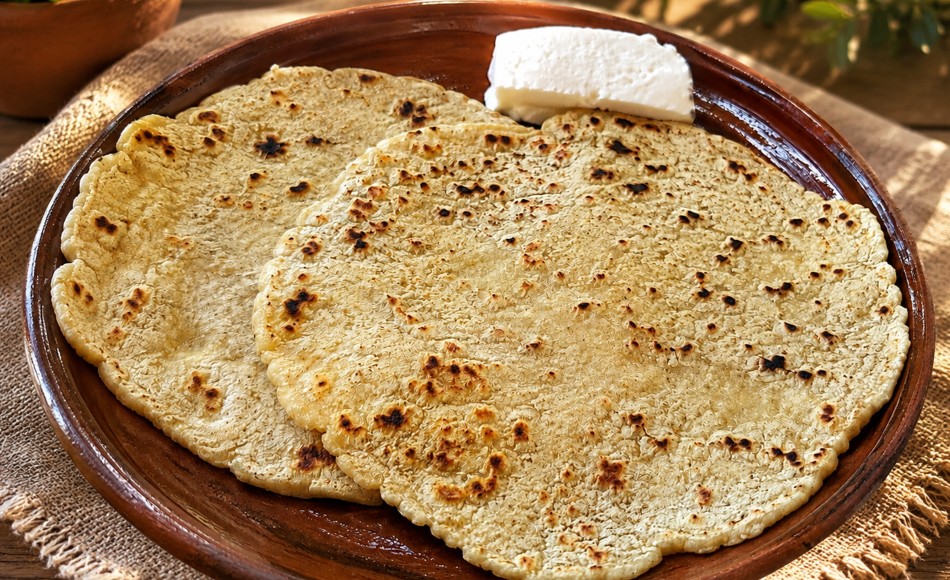
Tortilla palmeada is part of Guanacaste’s traditional cuisine, a large corn tortilla hand-shaped in the air, part of the region’s cultural legacy alongside rosquillas, cuajada, and tanelas.
Its artisanal preparation, using stone-ground nixtamalized corn, represents one of Costa Rica’s most authentic culinary traditions.
Print
Costa Rican Hand Patted Tortilla
- Prep Time: 20 minutes
- Cook Time: 15 minutes
- Total Time: 35 minutes
- Yield: 8 pieces
- Category: Side dish
- Cuisine: Costa Rican
Ingredients
- 2 cups of nixtamalized corn flour (Maseca-style)
- 1 pinch of salt
- 1 1/2 cups of warm water
Preparation
- Prepare the masa, place the corn flour in a bowl, add the salt and warm water gradually, kneading until you get a smooth dough that doesn’t crack.
- Shape the balls, take portions of dough and shape into large, even balls.
- Pat it out, hold each ball between your hands and pat it in the air, passing it from hand to hand, until it forms a large, thin disc.
- Heat the griddle, heat a clay or iron comal over medium-high heat.
- Cook, place the patted tortilla on the hot griddle and cook on both sides.
- Check doneness, the tortilla is ready when it sounds hollow after a gentle tap.
- Serve, serve hot, freshly made.
Tips for getting it right
- Water should be added warm and gradually, just enough for the dough to stay soft and not crack when patted.
- Patting the dough in the air, passing it from hand to hand, is the traditional technique that gives it its name and characteristic shape.
- The hollow sound when tapping the tortilla is the traditional sign it’s well cooked.
- Using a clay comal, if possible, gives a more authentic, traditional flavor.
Traditional variations
- The full traditional recipe includes home-nixtamalizing the corn with ash, and grinding it on a metate or stone mill.
- Workshops are held in Guanacaste to teach the authentic tortilla palmeada technique to new generations.
How to serve
Tortilla palmeada guanacasteca is served hot, alongside picadillos, soups, cheese, sour cream, or eggs.
It’s also enjoyed on its own, with a cup of coffee, as part of the region’s traditional afternoon snack.
Recommended sides
- Picadillos
- Cheese
- Sour cream
- Coffee
Did you know?
Tortilla palmeada is part of Guanacaste’s cultural legacy, alongside rosquillas, cuajada, and tanelas.
Its full traditional preparation includes nixtamalizing the corn with ash and grinding it on a metate, a process kept alive through community workshops.
Frequently Asked Questions
It's the technique of shaping the tortilla by passing it from hand to hand in the air, giving it shape and thickness without using a press.
Tradition says it should sound hollow when tapped gently, a sign it's ready.
The Guanacaste tortilla palmeada is larger and is entirely hand-shaped in the air, without a press, unlike regular tortillas.
In Guanacaste province, workshops are held to teach the authentic tortilla palmeada technique to new generations.