Valencian paella is Spain's most iconic rice dish and the original recipe behind every other paella known around the world today. It's made with chicken, rabbit, flat green beans, and garrofón beans, with no seafood at all, following the recipe that was born in the rural farmlands surrounding the Albufera wetlands near Valencia.
It's traditionally cooked outdoors in a wide, shallow paella pan over a fire of orange-tree or grapevine wood, which gives it a smoky aroma that's hard to match on a gas stove. The high point of the cooking process is the socarrat, the thin layer of toasted rice that forms on the bottom of the pan and that every good paella cook aims to achieve.
Today it remains the centerpiece of Sunday family meals across the Valencia region, and the recipe is so deeply tied to local identity that Valencians firmly insist that authentic Valencian paella never includes seafood, unlike the later 'paella mixta' that became popular mainly for tourists.
Print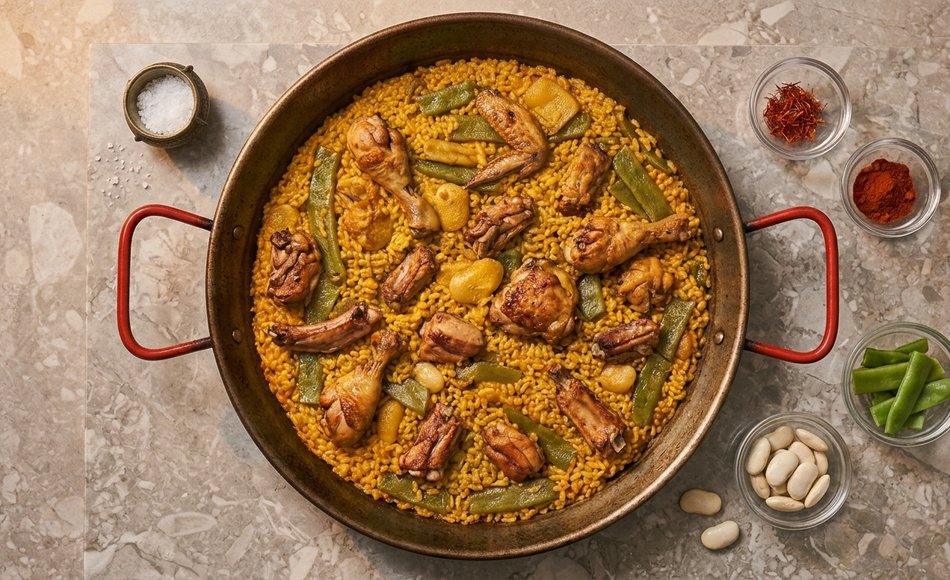
Valencian Paella
- Prep Time: 20 minutes
- Cook Time: 50 minutes
- Total Time: 1 hour 15 minutes
- Yield: 4 servings
- Category: Main Course
- Cuisine: Spanish
Ingredients
- 400 g of Bomba rice (or another short-grain paella rice) (2 cups)
- 500 g of chicken, cut into medium pieces (about 8 pieces)
- 500 g of rabbit, cut into medium pieces (about 8 pieces)
- 200 g of flat green beans (Valencian ferraura, or romano beans), cut into 2-inch pieces (2 cups)
- 150 g of garrofón beans, fresh or frozen (Valencian lima bean) (1 cup)
- 200 g of ripe tomato, grated (1 large tomato)
- 100 ml of extra virgin olive oil (1/2 cup)
- 5 g of sweet paprika (1 teaspoon)
- 1 pinch of saffron threads (about 15 threads)
- 1 sprig of fresh rosemary
- 1.2 liters of water (5 cups)
- Salt, to taste
- 200 g of cleaned snails (optional, regional)
Preparation
- Heat the oil and brown the meat, pour the olive oil into the paella pan and set it over medium-high heat; once hot, add the chicken and rabbit pieces and brown them on all sides for about 10 to 12 minutes, until the skin turns golden and crisp. Push the meat toward the edges of the pan without removing it.
- Sauté the vegetables, in the same oil, add the flat green beans and the garrofón beans and sauté them together with the meat for 4 to 5 minutes, stirring occasionally so they soak up the flavor of the drippings.
- Build the tomato sofrito, add the grated tomato to the center of the pan and cook over medium heat for 5 minutes until it loses its water and concentrates; then stir in the sweet paprika and mix quickly for a few seconds so it doesn't burn.
- Add the water and simmer the broth, pour in the hot water, add the crumbled saffron, the rosemary sprig, the snails if using, and salt to taste, and let everything simmer over medium heat for 20 minutes so the meat finishes cooking and the broth develops flavor.
- Stir in the rice, spread the rice evenly across the entire pan in a level layer, without stirring it again, and cook over high heat for the first 10 minutes.
- Finish cooking over moderate heat, lower the heat and continue cooking for 8 to 10 more minutes, until the rice absorbs all the liquid and the socarrat forms on the bottom, that prized thin toasted crust that defines a true Valencian paella.
- Let it rest and serve, remove the pan from the heat, cover it with a clean kitchen towel, and let the paella rest for 5 minutes before bringing it straight to the table to serve.
Kitchen Tricks
- Use a wide, shallow paella pan so the rice cooks in an even, thin layer.
- Don't stir the rice once it's in the broth; that's the only way the socarrat forms properly on the bottom.
- If you can't find fresh garrofón, frozen garrofón or large dried lima beans work as a substitute, though the traditional flavor will differ slightly.
- Measure the water based on your pan's diameter, not just the amount of rice, since evaporation depends heavily on the cooking surface.
- Taste the broth for salt before adding the rice, since it's much harder to adjust the seasoning afterward.
Traditional variations
- In some inland comarcas of Valencia, snails (vaquetes or serranos) are added to the paella, especially during snail season.
- In rural areas, it's traditionally cooked over a wood fire of orange or grapevine branches, which gives it a smoky aroma that gas stoves can't replicate.
How to Enjoy This Recipe
Valencian paella is served directly from the same pan it was cooked in, placed at the center of the table so everyone can serve themselves straight from it. It's traditionally paired with a jug of fresh water or a local wine, and it's common to eat it straight from the pan with a wooden spoon, without transferring it to individual plates.
Recommended sides
- Homemade alioli
- Valencian red or white wine
- Fresh water with lemon slices
A Bit of History
Valencian paella was born in the 19th century in the rural farmlands surrounding the Albufera wetlands near Valencia, where farm workers cooked rice right in the fields over a wood fire, using whatever they had on hand: vegetables from the local gardens and the meat of the animals they raised, such as chicken, rabbit, and occasionally snails.
Its name actually comes from the pan it's cooked in, the 'paella' (the Valencian word for 'frying pan'), not the other way around; that's why people in the Valencia region insist that authentic Valencian paella is made with meat and vegetables, never seafood, unlike what many tourists assume when ordering 'paella' outside of Spain.
Frequently Asked Questions
It is the thin layer of toasted rice that forms on the bottom of the pan. You get it by cooking over high heat for the first 10 minutes and never stirring the rice once it has been added.
Yes, you can use frozen garrofón beans or large dried lima beans instead, though the traditional flavor will differ slightly.
Because the socarrat only forms properly on the bottom of the pan if the rice is left undisturbed in the broth.
It is served directly from the same pan placed at the center of the table, and it is common to eat it with a wooden spoon without transferring it to individual plates.
You should measure it based on your pan's diameter, not just the amount of rice, since evaporation depends heavily on the cooking surface.