Chilindrón is one of the most iconic sauces of Aragonese cuisine, also common across Navarre and La Rioja, and its chicken version is—alongside the lamb version—the most popular rendition found in northern Spanish homes. It's built from a generous sofrito of red bell pepper, tomato, onion, and garlic, slowly cooked down into a thick, slightly sweet sauce in which the chicken finishes braising.
The name "chilindrón" actually comes from an old card game, and although no one knows for certain why it ended up naming this sauce, the dish has remained a classic for Sunday lunches and family gatherings throughout the Ebro river region. It's commonly found on the menus of traditional Aragonese restaurants and on many families' holiday tables across northern Spain.
Print
Chicken Chilindrón (Pollo al Chilindrón)
- Prep Time: 20 minutes
- Cook Time: 50 minutes
- Total Time: 1 hour 10 minutes
- Yield: 4 servings
- Category: Main Course
- Cuisine: Spanish
Ingredients
- 1.2 kg of bone-in chicken pieces (about 8 pieces: thighs and drumsticks, roughly 2.6 lb)
- 400 g of large red bell peppers, cut into strips (about 14 oz / 2 red bell peppers)
- 150 g of Italian green pepper, cut into strips (about 5 oz / 1 green pepper)
- 400 g of grated ripe tomato (about 14 oz, or 1 can crushed tomatoes)
- 200 g of onion, chopped (about 7 oz / 1 large onion)
- 4 cloves of garlic, minced
- 100 g of cured Serrano ham, diced (about 3.5 oz)
- 100 ml of dry white wine (about ½ cup)
- 60 ml of extra virgin olive oil (4 tablespoons)
- 1 bay leaf
- Salt, to taste
- Black pepper, to taste
- Fresh parsley, chopped, for garnish, to taste (optional)
Preparation
- Sear the chicken, season the pieces with salt and pepper and brown them on all sides in a wide pot with the hot olive oil until the skin turns golden and crisp; remove and set aside on a plate.
- Build the sofrito, in the same pot with the remaining oil, add the onion and both peppers and cook over medium heat for 10-12 minutes, stirring occasionally, until softened and lightly caramelized at the edges.
- Add the garlic and ham, stir in the minced garlic and diced Serrano ham and sauté for about two minutes until fragrant, being careful not to let the garlic burn.
- Add the tomato and deglaze, pour in the white wine and let it reduce for a minute, then add the grated tomato and bay leaf, and cook over medium heat for 8-10 minutes until the sauce thickens and loses the raw acidity of the tomato.
- Braise the chicken, return the chicken pieces to the pot, cover them with the sauce, partially cover the pot, and cook over low heat for 30-35 minutes, stirring occasionally, until the chicken is very tender, reaches 74 °C / 165 °F in the thickest part, and the sauce has reduced to a thick, glossy consistency.
- Adjust and serve, taste and adjust the salt and pepper, remove the bay leaf, sprinkle with fresh parsley if desired, and serve hot.
Chef's Tips
- Use bone-in chicken pieces with some skin on: they add far more flavor and juiciness to the sauce than plain breast meat would.
- If the tomato is very acidic, a small pinch of sugar can help balance the sofrito, though it's not part of the traditional recipe.
- The sauce actually improves if made a day ahead and reheated before serving.
- For a smoother sauce, you can remove a few pieces of pepper near the end, blend them, and stir them back in.
Traditional variations
- In Aragón, this same sauce is just as commonly made with lamb or rabbit instead of chicken.
- Some families add sliced or diced chorizo alongside the Serrano ham for a bolder flavor.
- In parts of Navarre, some of the fresh pepper is replaced with rehydrated choricero or ñora peppers, giving the sauce a deeper flavor and darker color.
How to Serve
Chicken chilindrón is traditionally served piping hot, straight from the pot, with crusty bread on the side for soaking up the sauce. In many Aragonese households it's customary to let it rest overnight, since the flavors settle and deepen with time.
Recommended sides
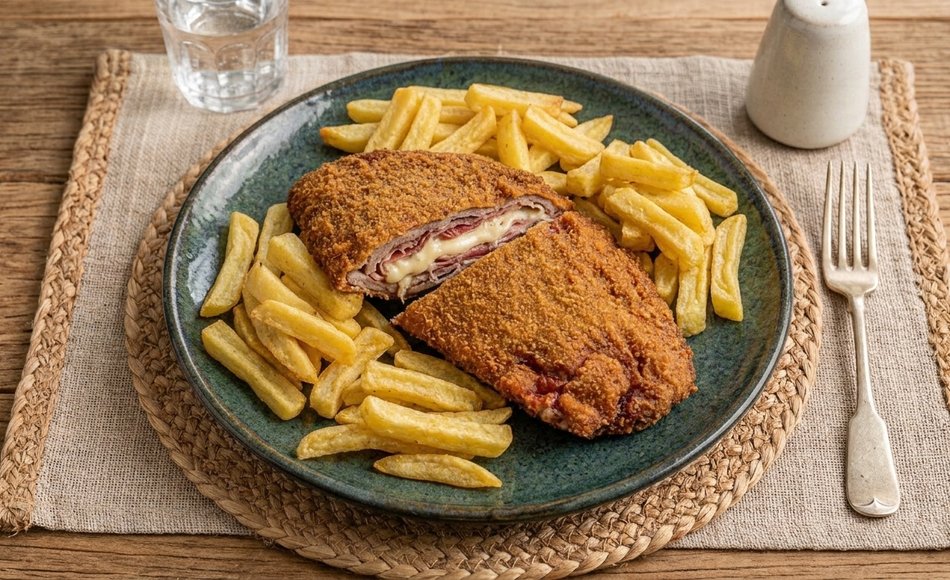
- French fries (patatas fritas)
- White rice
- Rustic country bread for dipping into the sauce
Did You Know?
The origin of the name "chilindrón" is still debated among food historians: the most widespread theory links it to a card game of the same name that was very popular in the 19th century, though no one has ever proven a real connection between the game and the dish. What is clear is that this pepper-and-tomato-based sauce took shape in Aragón before spreading to Navarre and La Rioja, becoming one of the most representative stewed dishes of the Ebro Valley.
Frequently Asked Questions
Bone-in chicken pieces are used, about 8 pieces of thighs and drumsticks.
It should be very tender and reach 74 °C / 165 °F in the thickest part, with the sauce reduced to a thick, glossy consistency.
Yes, the sauce actually improves if made a day ahead and reheated before serving.
You can remove a few pieces of pepper near the end, blend them, and stir them back into the sauce.
In Aragón, this same sauce is just as commonly made with lamb or rabbit instead of chicken.