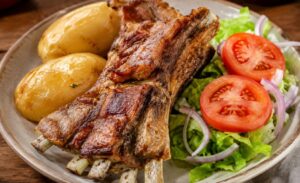

Peruvian fried cecina is a highly representative dish from the Peruvian Amazon, especially in regions such as San Martín, Loreto, Ucayali, and Madre de Dios. It is made with pork cecina, a salted, smoked, and partially dried meat that is fried until golden on the outside and still juicy inside.
In Peruvian Amazonian cooking, cecina is most often served with tacacho, a preparation made with roasted green plantain mashed with pork fat, forming one of the region’s most iconic dishes: tacacho with cecina. It can also be served with boiled cassava, chonta salad, cocona chili sauce, or rice, depending on family and regional customs.
Its smoky, salty, deep flavor reflects a traditional method of preserving meat that remains an important part of Amazonian culinary identity. This version respects the traditional preparation: fried pork cecina cooked simply, without unnecessary seasonings, so its characteristic flavor remains the focus.
Print
Peruvian Fried Cecina
- Prep Time: 10 minutes
- Cook Time: 10 minutes
- Total Time: 20 minutes
- Yield: 4
- Category: Main Course
- Cuisine: Peruvian
Ingredients
- 600 g Amazonian pork cecina (4 portions)
- 45 ml vegetable oil or pork lard (3 tablespoons)
- 300 ml hot water (1¼ cups, optional, to soften the cecina if it is very dry)
- 400 g boiled cassava, to serve (2 cups)
- 4 portions of tacacho, to serve
- 100 g cocona chili sauce, to serve (½ cup)
Preparation
- Check the cecina, look at the saltiness and dryness of the meat before frying it. If it is very dry or too salty, place it in a bowl with hot water for 10 to 15 minutes, then drain it well and pat it dry with paper towels so it can brown properly.
- Cut the portions, divide the cecina into medium pieces, following the grain of the meat. Do not cut it too small, because it can toughen and lose juiciness as it fries.
- Fry the cecina, heat the oil or pork lard in a wide skillet over medium heat. Add the pieces of cecina and fry them for 3 to 5 minutes per side, until golden, hot, and slightly crisp around the edges, but still tender in the center.
- Drain and serve, remove the cecina from the skillet and place it briefly on paper towels. Serve it hot with tacacho, boiled cassava, or cocona chili sauce, following the traditional Amazonian style.
Chef’s Tips
Do not add salt before frying, because cecina is already salted as part of its traditional curing process.
Fry over medium heat, not high heat, so the meat warms through without burning on the outside.
If the cecina is very dry, a short soak in hot water helps restore some moisture without removing all of its smoky flavor.
Pork lard gives a more traditional flavor, especially when the cecina is served with tacacho.
Traditional Variations
In San Martín and other areas of the Peruvian Amazon, cecina is almost always served with tacacho, creating the classic tacacho with cecina.
In some homes, it is fried in pork lard instead of vegetable oil, which intensifies the flavor and keeps the preparation more traditional.
It can also be served with boiled cassava or roasted plantain when prepared as a simple breakfast, lunch, or dinner dish.
Traditional Serving Style
Serve fried cecina hot, freshly browned, alongside green plantain tacacho. The most traditional presentation places one or two pieces of cecina next to the tacacho, with cocona chili sauce on the side.
You can also serve it with boiled cassava, chonta salad, or white rice. In the Peruvian Amazon, it pairs very well with regional drinks such as aguajina, masato, cocona juice, or camu camu juice.
Recommended Pairings
- Tacacho
- Boiled cassava
- Cocona chili sauce
- Chonta salad
- Roasted plantain
- White rice
- Aguajina
- Camu camu juice
A Bit of History
Amazonian cecina began as a traditional way to preserve pork through salting, drying, and smoking. This technique made it possible to keep meat longer in warm and humid areas, where food preservation was essential before everyday refrigeration.
Over time, cecina became much more than a preservation method. It turned into an emblematic ingredient of Peruvian Amazonian cuisine, especially because of its connection with tacacho, one of the most beloved dishes of the rainforest.
Frequently Asked Questions
Peruvian cecina is salted, smoked, and partially dried pork, very popular in the Amazon region. It is different from fresh meat because it has already gone through a curing process that gives it an intense flavor and smoky aroma. It is usually fried or grilled before serving.
You only need to soak or rinse it if it is too salty or very dry. If the cecina has a good salt level and a flexible texture, you can fry it directly. After soaking, always dry it well so it browns instead of steaming in the pan.
The most traditional side is tacacho, made with roasted or fried green plantain mashed with pork fat. It is also served with boiled cassava, cocona chili sauce, chonta salad, white rice, or roasted plantain, especially in Amazonian family meals.
It should be golden and slightly crisp around the edges, but not completely dry. If it is fried too long or over very high heat, it can become tough. The goal is to heat and brown it enough to intensify its smoky flavor while keeping it juicy.