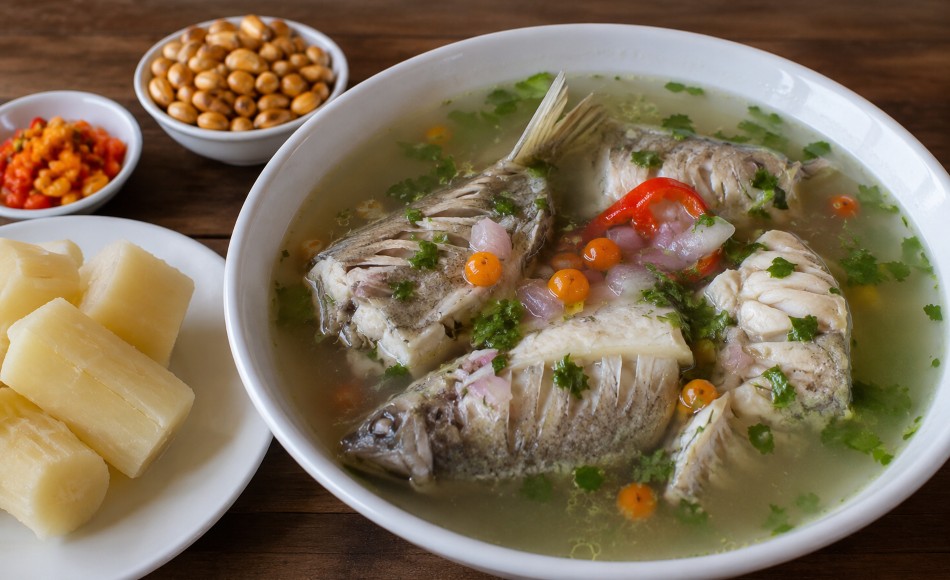
Timbuche is a light, fragrant fish broth from the Peruvian Amazon, especially associated with Loreto and riverside communities. It is made with fresh river fish, sachaculantro, charapita chili peppers, onion, and garlic, allowing the clean flavor of the fish to remain at the center of the dish.
In Peru’s rainforest regions, timbuche is known as a restorative meal and is often enjoyed after a day of fishing or whenever a hot, simple meal is needed. It is traditionally served with boiled cassava or green plantain, using everyday ingredients from the Amazon.
Print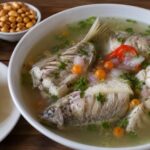
Peruvian Timbuche
- Prep Time: 20 minutes
- Cook Time: 35 minutes
- Total Time: 55 minutes
- Yield: 6
- Category: Soup
- Cuisine: Peruvian
Ingredients
- 1 kg river fish, cut into bone-in portions (about 2.2 lb; boquichico, doncella, gamitana, or paiche)
- 1.8 liters water (7½ cups)
- 300 g peeled cassava, cut into large pieces (1 medium cassava root)
- 150 g red onion, sliced (1 large onion)
- 20 g crushed garlic (4 garlic cloves)
- 30 g chopped sachaculantro (½ cup)
- 10 g whole or lightly crushed charapita chili peppers (8 to 10 peppers)
- 100 g chopped tomato (1 medium tomato)
- 10 g salt (2 teaspoons)
- 2 g ground black pepper (¼ teaspoon)
- 15 ml lime juice (1 tablespoon)
Preparation
- Clean the fish, rinse the fish portions well, remove the innards and scales when needed, then season them with half of the salt, black pepper, and lime juice. Let them rest while you cook the cassava.
- Cook the cassava, place the cassava in a pot with 1 liter of water and cook over medium heat for 20 to 25 minutes, until tender. Lift it out carefully, keep it covered, and save the cooking water.
- Build the broth, add the onion, garlic, tomato, charapita chili peppers, and remaining water to the pot. Cook over medium heat for 8 minutes, until the onion softens and the broth becomes fragrant.
- Cook the fish, add the fish portions and cook over medium heat for 8 to 12 minutes, depending on their size. Do not stir with a spoon, as this can break the fish apart; gently shake the pot instead when needed.
- Add the sachaculantro, stir in the chopped sachaculantro and remaining salt during the last 2 minutes of cooking. Turn off the heat when the fish is tender and the broth smells fresh and herbal.
- Serve hot, place one or two fish portions in each deep bowl, ladle over the broth with onion and charapita peppers, and serve with the boiled cassava.
Chef’s tips
- Use very fresh river fish for a clean, delicate, traditional broth.
- Do not overcook the fish; it should remain tender and hold together.
- Add sachaculantro at the end to preserve its distinctive aroma.
- Lightly crush the charapita peppers when you want more heat in the broth.
- Serve the cassava on the side when you prefer a completely light soup.
Traditional variations
Across the Peruvian Amazon, timbuche may be made with boquichico, doncella, carachama, gamitana, or paiche, depending on the fish available. Some families use green plantain instead of cassava, while others serve charapita peppers whole so each person can adjust the heat at the table.
How to serve
Serve timbuche immediately after cooking, steaming hot, in deep bowls with a generous fish portion and plenty of broth. Serve boiled cassava or boiled green plantain alongside it.
At an Amazonian table, extra charapita chili peppers are often offered for those who enjoy more heat. Camu camu, cocona, or aguaje drinks pair well with this light fish broth.
Recommended accompaniments
- Boiled cassava
- Boiled green plantain
- Fresh charapita chili peppers
- Cocona chili sauce
- Camu camu drink
- Aguaje drink
Food tradition
Timbuche is often described as a restorative “levantamuertos” broth because of its comforting reputation. This is linked to Amazonian traditions of making simple fish soups with freshly caught river fish and local herbs, especially after long days spent near the river.
Frequently Asked Questions
Timbuche is traditionally made with fresh river fish. Boquichico, doncella, gamitana, carachama, and paiche are common choices depending on the Amazonian region and season. Choose bone-in fish portions when possible because they add more flavor to the broth and stay intact better during cooking.
You can use regular cilantro when sachaculantro is unavailable, but the finished broth will taste different. Sachaculantro has a stronger, longer-lasting aroma that is very distinctive in Amazonian cooking. Use a smaller amount of regular cilantro and add it at the end so it stays bright and fresh.
Cassava can be served inside the bowl or on the side. Traditional preparation often keeps the broth light and serves it with cassava or green plantain. Cooking the cassava separately helps preserve the fish and herb flavors as the main elements of the timbuche.
Use large fish portions, cook them only as long as necessary, and avoid stirring with a spoon. Once the broth comes to a gentle boil, shake the pot by its handles instead of mixing. Remove the timbuche from the heat as soon as the fish turns opaque and separates easily from the bone.