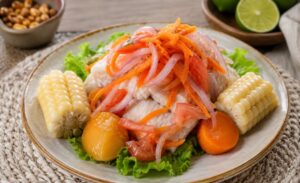

In the Peruvian Amazon, chonta salad is a fresh, light, and highly representative dish of the regional cuisine. It is made with chonta, also known as palm heart, which comes from the tender core of certain Amazonian palms and is shredded into thin strips before being mixed with lime, onion, tomato, cilantro, and chili pepper.
It is especially popular in regions such as Loreto, San Martín, Ucayali, and Madre de Dios, where it is often served as a starter or as a side dish for fish, juanes, patarashca, and other Amazonian dishes. Its bright, tangy, and vegetal flavor makes it ideal for warm climates and family meals.
The traditional Peruvian version highlights fresh chonta, a simple dressing, and local ingredients. It reflects the Amazonian way of cooking: few ingredients, deep respect for the main product, and clean flavors that complement the meal without overpowering it.
Print
Peruvian Chonta Salad
- Prep Time: 20 minutes
- Total Time: 20 minutes
- Yield: 4
- Category: Salad
- Cuisine: Peruvian
Ingredients
- 500 g cooked fresh chonta, shredded (4 cups)
- 120 g red onion, thinly sliced (1 medium onion)
- 200 g seeded tomato, cut into strips or small cubes (2 medium tomatoes)
- 20 g chopped fresh cilantro (½ cup)
- 40 ml freshly squeezed lime juice (3 tablespoons)
- 30 ml vegetable oil (2 tablespoons)
- 10 g chopped Amazonian sweet chili or seeded ají limo (2 tablespoons)
- 6 g salt (1 teaspoon)
- 1 g ground black pepper (¼ teaspoon)
- 500 ml cold water (2 cups, for soaking the onion)
- 10 g additional salt (2 teaspoons, for rinsing the onion)
Preparation
- Prepare the onion, place the thinly sliced onion in a bowl with cold water and the additional salt. Let it rest for 8 to 10 minutes to soften its sharpness, then rinse it with clean water and drain it well.
- Prepare the chonta, make sure the chonta is cooked, tender, and shredded into thin strips. If it comes in larger pieces, separate it with your hands or a fork until you have soft, fine strands.
- Mix the salad, place the chonta in a large bowl and add the drained onion, tomato, cilantro, and chopped chili. Mix gently so you do not break the chonta strands too much.
- Dress and adjust the flavor, add the lime juice, oil, salt, and pepper. Mix again until all the ingredients are well combined and the chonta absorbs the fresh, tangy dressing.
- Rest and serve, let the salad rest for 5 minutes before serving so the flavors come together. Serve it fresh as a starter or as a side dish for traditional Amazonian meals.
Chef’s Tips
Use fresh chonta whenever possible, because it has a better texture and a more delicate flavor than canned palm hearts.
Do not let the salad sit too long after dressing it, since the lime juice can soften the chonta and tomato too much.
Slice the onion very thinly so it blends well with the chonta strands and does not overpower the salad.
If you use ají charapita, add it sparingly because it is very hot despite its small size.
Traditional Variations
In some areas of the Peruvian Amazon, the salad is made with ají charapita instead of sweet chili, especially when a spicier flavor is desired.
There are also home-style versions that include diced avocado, although the most representative preparation keeps chonta, onion, tomato, cilantro, and lime as the main base.
In certain Amazonian households, it is served with an even simpler dressing made only with lime, salt, and a little oil to highlight the natural flavor of the chonta.
Traditional Serving Style
Serve chonta salad cold or fresh, in a wide serving dish or in individual portions, making sure the chonta strands remain loose and well mixed with the tomato, onion, and cilantro.
Traditionally, it is served with Amazonian fish dishes, patarashca, juane, tacacho, cecina, or grilled meats. It is also enjoyed as a light starter for family lunches, especially on hot days. For drinks, it pairs well with camu camu juice, aguajina, cocona juice, or fresh limeade.
Recommended Pairings
- Peruvian patarashca
- Amazonian juane
- Tacacho with cecina
- Fried river fish
- Boiled cassava
- Roasted plantain
- Camu camu juice
- Aguajina
Culinary Curiosity
Chonta has long been an important ingredient in Amazonian cooking because it comes from palms native to the region and is used in fresh, simple, and nourishing preparations. Its shredded texture resembles a tender vegetable salad, but its distinctive flavor sets it apart from other Peruvian starters.
On many Amazonian tables, chonta salad provides balance: it brings freshness and acidity to heartier dishes such as tacacho with cecina or grilled river fish.
Frequently Asked Questions
Chonta is the tender core of certain Amazonian palm trees, also known as palm heart. In Peruvian cooking, it is especially used in salads, where it is shredded into thin strips and mixed with lime, onion, tomato, cilantro, and chili pepper. Its flavor is mild, fresh, and slightly vegetal.
Yes, you can use canned palm hearts if fresh chonta is not available, although the flavor and texture will be different. Drain them well, rinse them gently, and cut them into thin strips. Fresh chonta has a more fibrous and authentic texture, which is why it is preferred in the Peruvian Amazon.
Not necessarily. The salad can be mild when made with sweet chili or a small amount of seeded ají limo. In some Amazonian areas, cooks use ají charapita, which adds more heat. You can adjust the amount of chili while keeping the fresh character of the recipe.
It is mainly served with Amazonian dishes such as patarashca, juane, tacacho with cecina, fried fish, boiled cassava, or grilled meats. It can also be served as a fresh starter before a regional lunch, especially in warm climates where light and tangy dishes are appreciated.