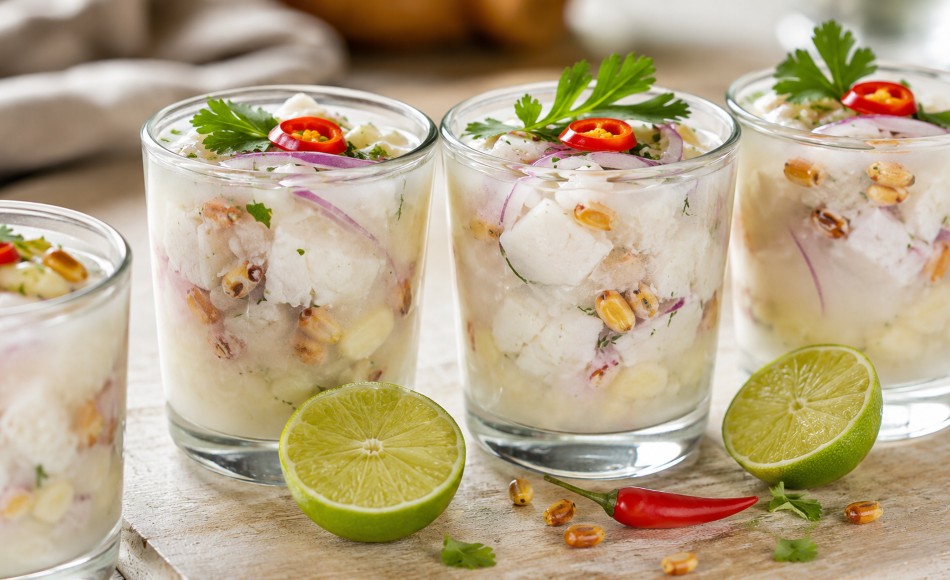
Classic Peruvian leche de tigre is the bold, citrusy liquid that comes from ceviche. It is made with lime juice, fresh fish, chili, red onion, cilantro, garlic, and a subtle touch of ginger and celery. Over time, it developed its own identity and is now commonly served very cold in a small glass as a seafood starter or refreshing drink.
In Peru, it is especially popular at cevicherías and during warm-weather gatherings. Its flavor should feel balanced: tart, savory, spicy, and fresh, with a light texture and a delicate seafood finish. It is also popularly known as a hangover remedy.
Print
Peruvian Leche de Tigre
- Prep Time: 15 minutes
- Total Time: 15 minutes
- Yield: 4 servings
- Category: Main Course
- Cuisine: Peruvian
Description
Peruvian specialty of fish broth and citrus chili, structured for home cooking and with easy-to-follow measurements.
Ingredients
- 250 g very fresh white fish fillet, previously frozen, skinless and boneless
- 180 ml freshly squeezed lime juice (¾ cup)
- 180 ml cold fish stock (¾ cup)
- 80 g red onion, roughly chopped (½ medium onion)
- 30 g celery, roughly chopped (1 small stalk)
- 10 g peeled fresh ginger (one 2 cm piece)
- 8 g peeled garlic (2 large cloves)
- 15 g fresh cilantro (⅓ cup)
- 15 g ají limo chili, seeded and roughly chopped (1 small chili)
- 6 g salt (1 teaspoon)
- 2 g ground black pepper (½ teaspoon)
- 200 g ice (2 cups)
- 80 g white fish, previously frozen, cut into small cubes, for serving
- 40 g cooked corn kernels (¼ cup)
- 30 g toasted cancha corn (¼ cup)
Preparation
- Build the seafood base, cut the 250 g fish fillet into pieces and place it in a blender with the red onion, celery, ginger, garlic, cilantro, ají limo, salt, and black pepper.
- Blend the leche de tigre, add the lime juice, cold fish stock, and ice. Blend on high speed for 30 to 40 seconds, until the liquid looks pale, frothy, and fully combined.
- Strain the mixture, pour it through a fine strainer into a chilled pitcher. Press gently with a spoon to release the liquid, but do not force the solids through, so the leche de tigre stays clean and smooth.
- Adjust the flavor, taste the leche de tigre and add a little more salt or lime juice when needed. It should be boldly tart, moderately spicy, and fresh-tasting, without the garlic, ginger, or celery overpowering the fish.
- Serve immediately, divide the leche de tigre among four small glasses and top each serving with fresh fish cubes, corn kernels, and toasted cancha corn. Serve very cold.
Chef’s Tips
- Use very fresh fish and keep it refrigerated until you are ready to blend it.
- Squeeze the limes immediately before making the recipe and avoid squeezing them too hard, which can add bitterness.
- Keep the fish stock and serving glasses cold so the drink stays bright and refreshing.
- Add the ají limo gradually; it should provide heat without covering the lime and fish flavors.
- Drink leche de tigre as soon as you make it, because its flavor and texture change over time.
Traditional Variations
In Peru, common variations include leche de tigre with rocoto, ají amarillo, or seafood. Leche de pantera, made with black clams, is a well-known traditional variation from Peru’s northern coast. The classic version remains the one made with white fish, lime, chili, onion, cilantro, and fish stock.
Serving Style
Serve leche de tigre in small chilled glasses, freshly blended and very cold. Add fish cubes, corn, and cancha corn to turn it into a light seafood starter. Serve it with plantain chips, boiled cassava, or a small portion of classic Peruvian ceviche.
Recommended Accompaniments
- Toasted cancha corn
- Cooked corn kernels
- Plantain chips
- Boiled cassava
- Classic Peruvian ceviche
A Culinary Curiosity
Leche de tigre began as the flavorful liquid left from ceviche, but it is now recognized as a standalone preparation in Peruvian seafood cuisine. Its name refers to its pale color, intense flavor, and popular reputation as a revitalizing drink.
Frequently Asked Questions
No. Traditional leche de tigre does not contain cow’s milk. Its name comes from the pale, slightly frothy color it develops when fish, lime juice, cold stock, and aromatics are blended together. Some modern recipes include evaporated milk, but it is not needed for classic Peruvian leche de tigre.
Use very fresh, firm white fish such as sea bass, flounder, grouper, halibut, snapper, or corvina. The fish should be suitable for raw consumption and kept cold at all times. Avoid fish with a strong smell or soft texture, since it will directly affect the final taste of the drink.
It is not recommended. You can prepare the cold fish stock, chop the vegetables, and set out the toppings in advance, but blend and serve the leche de tigre just before drinking it. Over time, the lime changes the fish’s flavor and the drink loses its fresh, bright balance.
No. Lime juice changes the fish’s color and texture, but it does not replace safe food handling. Use fish suitable for raw consumption, keep it refrigerated, use clean utensils, and serve immediately. People who are pregnant, immunocompromised, or especially vulnerable should consult food-safety guidance before eating raw fish.