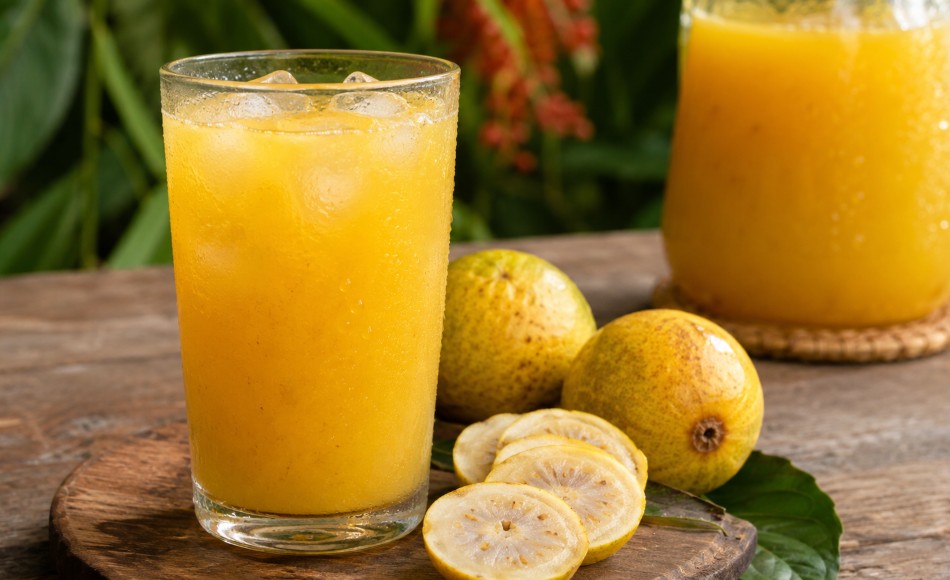
Peruvian cocona drink is a traditional Amazonian refreshment made with ripe cocona fruit, water, and sugar. It has a bright, tart, tropical flavor with notes that can recall tomato, citrus, and other acidic fruits.
Cocona is grown in Amazonian regions such as Loreto, Ucayali, and San Martín, where it is used in beverages, sauces, chile condiments, and home cooking. The drink is commonly served cold with meals, at local markets, in regional restaurants, and during family gatherings.
The most representative version briefly cooks the fruit before blending. This softens its acidity, makes the pulp easier to extract, and produces a smoother, more aromatic beverage.
Print
Peruvian Cocona Drink
- Prep Time: 15 minutes
- Cook Time: 15 minutes
- Total Time: 2 hours 30 minutes
- Yield: 10
- Category: Beverage
- Cuisine: Peruvian
Ingredients
- 1 kg ripe cocona (6 to 8 medium-sized fruits)
- 2 liters of water (8 cups)
- 180 g white sugar (¾ cup plus 2 tablespoons)
- 300 g ice cubes
- 1 small cocona, thinly sliced, for serving (optional)
Preparation
- Wash and prepare the cocona, rinse the fruit thoroughly, remove the stems, and cut it into quarters. Keep the peel, as it adds aroma and color, but discard any bruised or damaged parts.
- Cook the fruit, place the cocona in a pot with 1 liter of water and cook over medium heat for 12 to 15 minutes, until the pulp is soft and the peel has softened. Remove the pot from the heat and let it cool slightly.
- Blend the cocona juice, pour the cooked cocona and its liquid into the blender and blend for 1 minute, until the fruit is smooth. Add the sugar and the remaining liter of water, and blend again until completely dissolved.
- Strain and chill, pass the drink through a fine sieve, gently pressing the pulp to extract all the liquid. Let it cool to room temperature and refrigerate for at least 2 hours.
- Serve chilled, stir the drink before serving, place ice in the glasses, and pour in the beverage. You can add a thin slice of cocona to each serving for a simple presentation.
Helpful Tips
- Choose ripe, firm cocona fruit with yellow, orange, or reddish skin, depending on the variety.
- Cook the fruit only until tender; excessive cooking can reduce its fresh aroma.
- Adjust the sugar after tasting the chilled drink, since acidity becomes more noticeable at lower temperatures.
- Strain the beverage to remove seeds and peel fragments, but avoid using a cloth so fine that it removes all the pulp.
- Stir well before serving because natural fruit solids may settle at the bottom.
- Keep the drink refrigerated and do not leave it at room temperature for several hours.
Traditional Variations
Some households prepare the drink with raw cocona blended directly with water and sugar. This version has a sharper flavor and a slightly thicker texture.
Cocona may also be combined with small amounts of camu camu or passion fruit, especially in Amazonian juice shops. However, a beverage made only with cocona remains the simplest and most representative preparation.
Some recipes replace part of the sugar with cane syrup or light chancaca. This gives the drink a deeper flavor but changes its color and fresh fruit profile.
Traditional Serving Style
Serve cocona drink well chilled in tall glasses or family-style pitchers. Ice may be added, although too much will dilute its distinctive flavor.
It is commonly enjoyed with lunch, after outdoor activities, or as a refreshing drink in hot weather. Its tartness pairs particularly well with fish, smoked meats, and richly seasoned Amazonian dishes.
Recommended Pairings
- Juanes
- Tacacho with cecina
- Patarashca
- Grilled Amazonian fish
- Inchicapi
- Hearts of palm salad
- Dishes served with cocona chile sauce
Did You Know?
Cocona belongs to the same botanical family as tomatoes and eggplants. Although it is often treated as a fruit because it is used in juices and drinks, it is also prepared in savory sauces with chile peppers, onions, and Amazonian herbs.
Its cultivation is closely connected with the food traditions of Peru’s rainforest communities. Cocona varies considerably in size, color, and acidity, so the amount of sugar used in the drink often changes from one harvest to another.
Frequently Asked Questions
Cooking is not required, but a brief simmer creates a smoother, more aromatic drink that is easier to strain. Raw cocona gives the beverage a stronger and more acidic flavor. Both methods are used in the Amazon, although cooked cocona is often preferred for a family-style refreshment.
You do not need to remove it when the fruit is healthy and thoroughly washed. The peel contains aroma and contributes color. After blending, the drink is strained to remove coarse peel fragments, seeds, and fibers.
Natural acidity varies according to the cocona variety and its ripeness. Add sugar gradually after chilling the drink or dilute it with a little more water. Avoid making it excessively sweet because it should retain a fresh, lightly tart character.
Yes, but the drink will be denser and may contain small seeds and fibers. For a rustic version, use a powerful blender and serve it immediately. For a lighter, more traditional presentation, strain it through a fine-mesh sieve.
Store it in a covered pitcher or bottle in the refrigerator for up to 2 days. Stir before serving because the pulp will settle naturally. Discard it if the aroma changes, foam develops, or signs of fermentation appear.