
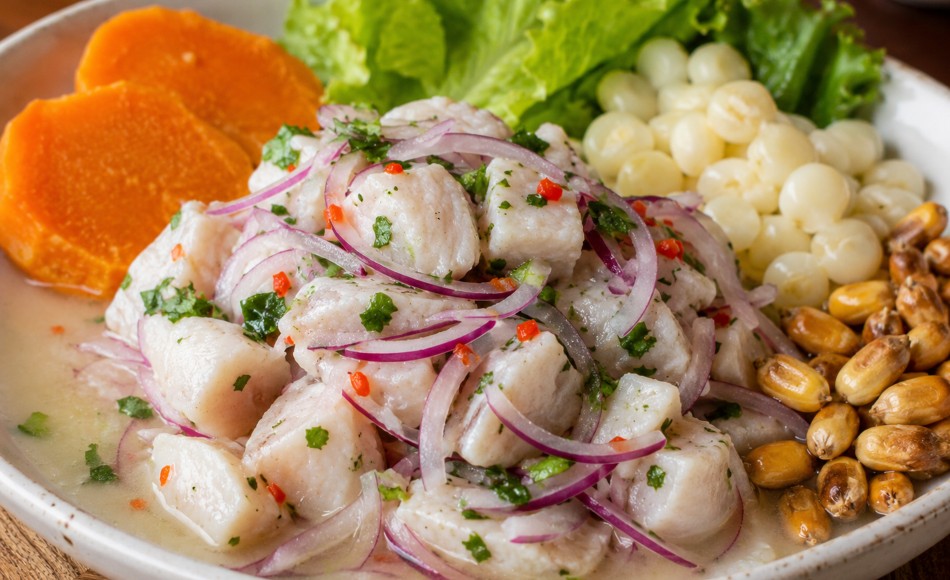
Classic Peruvian ceviche is one of Peru’s most celebrated dishes. It combines very fresh white fish, freshly squeezed lime juice, red onion, ají limo chili, cilantro, and salt. It is served immediately so the fish stays firm and tender while the citrusy leche de tigre remains bright and refreshing.
In Peru, ceviche is closely associated with family gatherings, weekend lunches, and traditional cevicherías. It is commonly served with sweet potato, corn on the cob, and toasted cancha corn, which balance the dish’s acidity and heat. Ceviche is widely regarded as a source of Peruvian culinary identity and pride.
Print
Peruvian Ceviche
- Prep Time: 25 minutes
- Cook Time: 25 minutes
- Total Time: 50 minutes
- Yield: 4 servings
- Category: Main Course
- Cuisine: Peruvian
Description
Peruvian recipe based on fresh fish marinated in citrus, adapted to a homemade version with exact quantities.
Ingredients
- 700 g very fresh firm white fish fillet, previously frozen, skinless and boneless, cut into 2 cm cubes
- 120 ml freshly squeezed lime juice (½ cup)
- 150 g red onion, thinly sliced (1 large onion)
- 20 g ají limo chili, seeded and finely chopped (2 small chilies)
- 20 g fresh cilantro, chopped (¼ cup)
- 6 g salt (1 teaspoon)
- 2 g ground black pepper (¼ teaspoon)
- 250 g cooked and peeled sweet potato (2 medium sweet potatoes)
- 400 g cooked corn on the cob (2 large ears)
- 100 g toasted cancha corn (¾ cup)
- 6 washed lettuce leaves
Preparation
- Cook the sides, boil the sweet potatoes in their skins until tender, about 25 minutes, and cook the corn until the kernels are soft. Let both cool, peel the sweet potatoes, and cut them into thick slices.
- Keep the fish cold, refrigerate the fish until the last possible moment. Place the fish cubes in a chilled bowl, then add the salt, black pepper, and the ají limo. Toss gently so the fish keeps its shape.
- Wash the onion, thinly slice the red onion and rinse it under cold water (optionally with a pinch of salt) to soften its sharp bite before adding it.
- Build the leche de tigre, pour in the lime juice and add the chopped cilantro. Toss for about 30 seconds, then add half of the washed red onion. Taste the liquid; it should be bright, citrusy, lightly spicy, and well seasoned.
- Finish the ceviche, add the remaining red onion and toss once more. Let the ceviche stand for only 3 to 5 minutes so the fish remains juicy and tender instead of becoming firm and dry.
- Serve immediately, arrange lettuce leaves on individual plates and spoon over the ceviche with plenty of leche de tigre. Add sweet potato slices, pieces of corn on the cob, and toasted cancha corn alongside.
Chef’s Tips
- Choose very fresh, firm white fish such as sea bass, flounder, grouper, halibut, or snapper.
- Squeeze the limes just before making the ceviche for the cleanest flavor.
- Do not squeeze the limes too hard, since oils from the peel can make the juice taste bitter.
- Keep the fish cold from start to finish.
- Serve ceviche right away, when its texture and flavor are at their best.
Traditional Variations
Peru has many regional ceviche styles, including northern ceviche served with yuca and zarandaja beans, mixed ceviche made with fish and seafood, and black clam ceviche from northern coastal areas. The most representative version remains white fish ceviche with lime, red onion, chili, and cilantro.
Traditional Serving Style
Serve ceviche chilled and freshly made, with plenty of leche de tigre. Sweet potato adds gentle sweetness, corn brings a soft texture, and cancha corn gives the plate a toasted crunch. Pair it with cold chicha morada, a light Peruvian lager, or a citrusy nonalcoholic drink.
Recommended Accompaniments
- Cooked sweet potato
- Corn on the cob
- Toasted cancha corn
- Lettuce leaves
- Cold chicha morada
A Culinary Tradition
The practices and meanings associated with preparing and eating Peruvian ceviche were added to UNESCO’s Representative List of the Intangible Cultural Heritage of Humanity in 2023. The recognition highlights how ceviche brings together knowledge connected to fishing, agriculture, markets, and family cooking throughout Peru.
Frequently Asked Questions
Use a very fresh white fish with firm flesh. Sea bass, flounder, grouper, halibut, snapper, or corvina are good choices. Avoid fish with a very soft texture because it can break apart when mixed with lime juice. Buy fish from a reliable source and keep it refrigerated until you are ready to prepare and serve it.
Classic Peruvian ceviche should sit for only 3 to 5 minutes after the lime juice is added. The goal is not to leave the fish in citrus for a long time, but to preserve a juicy, fresh texture. When it sits too long, the fish becomes firmer and the lime can overpower the other ingredients.
No. Lime juice changes the fish’s color and texture, but it does not replace safe food handling. Use high-quality fish suitable for raw consumption, keep it cold, use clean utensils, and serve it immediately. Pregnant, immunocompromised, or especially vulnerable people should consult food-safety guidance before eating raw fish.
You can prepare the side dishes, slice the onion, and chop the cilantro in advance, but combine the fish and lime juice only right before serving. Making ceviche too early causes the fish to become firm and dry, while the onion can color and overpower the leche de tigre.
Rinsing it under cold water softens its sharp bite so it doesn't overpower the ceviche; it's a traditional step documented in several Peruvian sources, not an optional detail.