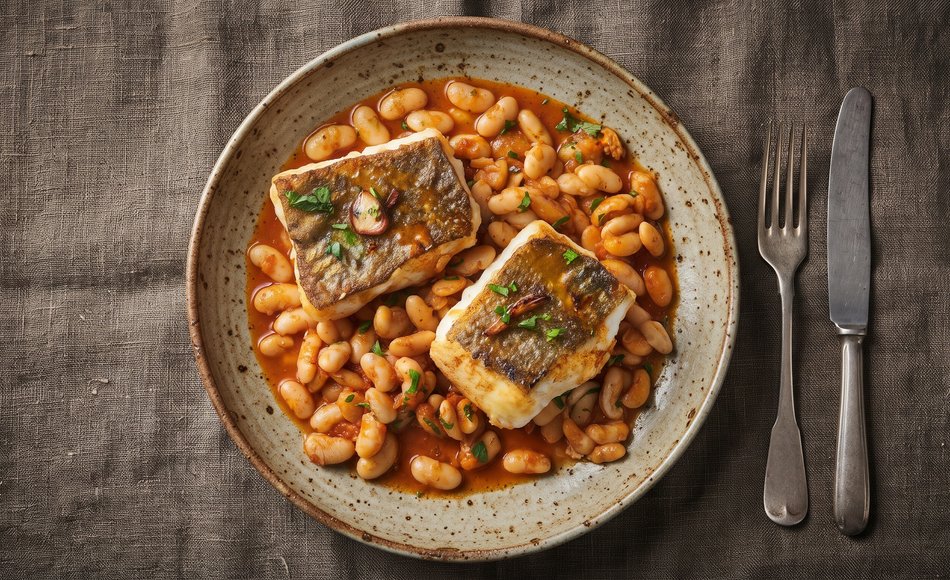
Judiones de la Granja is one of the most iconic dishes of Segovian cuisine, a hearty bean stew named after the judión, a giant white bean traditionally grown in the orchards of La Granja de San Ildefonso, right at the foot of the Royal Palace, in the province of Segovia, Castile and León.
This prized bean variety, recognized with a Protected Geographical Indication, is simmered low and slow with pork products such as chorizo, morcilla, pork belly, and pig's ear, resulting in a thick, deeply savory stew that has fed generations of Segovian families through the harsh winters of the Sierra de Guadarrama mountains.
You'll find it on the menus of local inns and taverns throughout the region, especially in the colder months, and it's often mentioned alongside Asturian fabada as one of Spain's great bean stews, though it has its own distinct identity thanks to the size and buttery texture of its signature bean.
Print
Judiones de La Granja (Spanish Giant White Bean Stew)
- Prep Time: 20 minutes
- Cook Time: 2 hours 45 minutes
- Total Time: 15 hours 5 minutes
- Yield: 6 servings
- Category: Main Course
- Cuisine: Spanish (Castilian)
Ingredients
- 500 g dried judión beans (Spanish giant white beans) (about 2 1/2 cups)
- 200 g cured Spanish chorizo (2 medium chorizo links)
- 200 g morcilla (Spanish blood sausage) (2 medium morcilla links)
- 150 g streaky pork belly (tocino) (1 large piece (about 5 oz))
- 1 salted pig’s ear (optional)
- 1 ham bone (jamón bone)
- 200 g white onion (1 large onion)
- 1 whole head of garlic
- 2 bay leaves
- 100 ml extra virgin olive oil (about 7 tablespoons)
- 5 g sweet paprika (pimentón dulce) (1 teaspoon)
- Salt, to taste
- Cold water for soaking and cooking
Preparation
- Soak the beans, place the dried judión beans in a large bowl, cover with plenty of cold water, and let them soak for at least 12 hours or overnight until they double in size.
- Assemble the pot, drain the beans and place them in a large pot along with the chorizo, morcilla, pork belly, pig's ear, and ham bone; add the whole peeled onion, the whole head of garlic, the bay leaves, and the olive oil.
- Cover with cold water and bring to a boil, cover everything with cold water by about two finger-widths, set the pot over high heat, and as soon as it comes to a boil, lower the heat to a gentle simmer.
- Simmer gently and shock the beans, let the stew simmer covered for 2 to 3 hours without stirring with a spoon, shaking the pot by the handles from time to time; every 30 minutes add a splash of cold water, the classic Spanish 'susto' or shock, so the bean skins stay whole and creamy instead of splitting.
- Remove the meats and cut them up, once the beans are tender and creamy, take out the chorizo, morcilla, pork belly, and pig's ear, cut them into pieces, and return them to the pot; discard the onion, garlic, and bay leaves.
- Season and rest before serving, stir in the sweet paprika dissolved in a bit of the broth, adjust the salt, cook for 5 more minutes to let the flavors meld, and let the stew rest briefly before serving it piping hot.
Practical Tips
- Avoid stirring with a spoon; shake the pot by the handles instead so the beans don't break apart.
- The 'susto' splash of cold water is what keeps the beans whole and creamy.
- This stew tastes even better the next day, so it's a great make-ahead dish.
- Look for authentic PGI-certified judión de La Granja beans for the true buttery texture.
Traditional variations
- Judiones with partridge: a hunting-season version made with red partridge in addition to, or instead of, the pork products.
- Lenten judiones: a meat-free variation made only with the beans, vegetables, and olive oil for days of religious abstinence.
How to Enjoy This Dish
Serve the judiones piping hot in a deep bowl or in the traditional Segovian clay pot.
Pair it with rustic bread to soak up the thick, flavorful broth.
In Segovia, it's commonly enjoyed as a one-dish lunch during the cold winter months.
Recommended sides
- Rustic country bread
- Red wine from Ribera del Duero
- A simple green salad
Origin and Tradition
The judión bean that gives this dish its name has been grown for centuries in the orchards and fields near the Royal Palace of La Granja de San Ildefonso, built by King Philip V in the 18th century, and it owes its exceptional size to the cool, humid microclimate of the Sierra de Guadarrama mountains.
Its quality is so well recognized that it holds a Protected Geographical Indication, and every year the town celebrates gastronomic days dedicated to this stew, where local inns and restaurants compete to serve the best version of the recipe.
Frequently Asked Questions
Because stirring with a spoon can break the bean skins; it's best to shake the pot by the handles instead so the beans don't break apart.
It's the splash of cold water added every 30 minutes during cooking so the bean skins stay whole and creamy instead of splitting.
Yes, this stew tastes even better the next day, so it's a great make-ahead dish.
Lenten judiones, a meat-free variation made only with the beans, vegetables, and olive oil.
It's recommended to pair it with rustic country bread, red wine from Ribera del Duero, and a simple green salad.