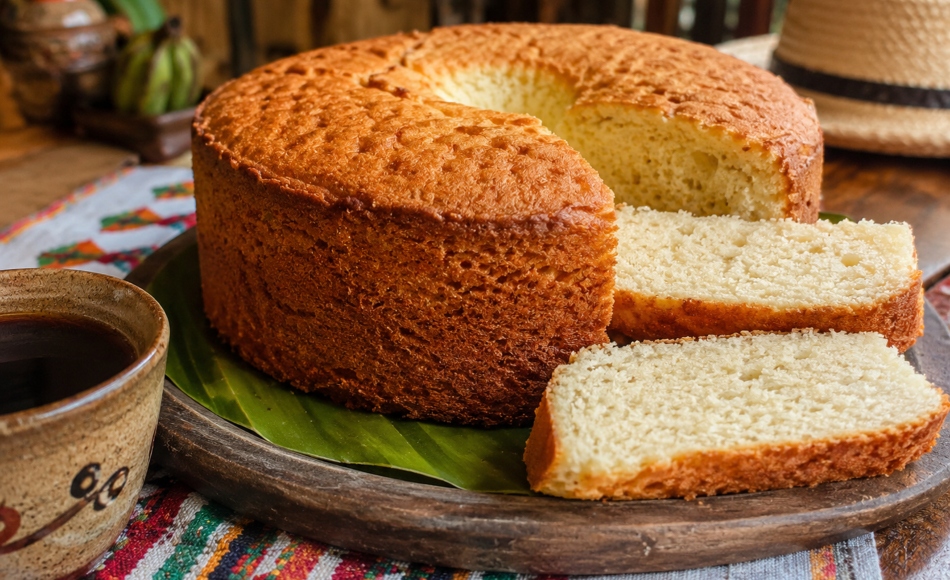
Huila-style bizcochuelo is a traditional dessert from Colombia’s Huila region. It is known for its light texture, citrus aroma, and use of achira starch. Instead of relying on butter for richness, this cake gets its delicate crumb from whipped eggs, sugar, and achira starch.
In Huila, it is associated with family celebrations and festivities such as San Juan and San Pedro. It belongs to the same regional culinary tradition as tamales, achiras, and other well-known local baked goods.
Print
Huila Style Bizcochuelo
- Prep Time: 20 minutes
- Cook Time: 30 minutes
- Total Time: 50 minutes
- Yield: 10
- Category: Dessert
- Cuisine: Colombian
Ingredients
- 250 g achira starch or sago starch (2 cups)
- 250 g granulated sugar (1 ¼ cups)
- 5 large eggs
- 5 ml anise extract (1 teaspoon)
- 5 g lemon zest (1 tablespoon)
- 3 g baking powder (½ teaspoon)
- 2 g salt (¼ teaspoon)
- 15 g unsalted butter (1 tablespoon), for greasing the pan
- 15 g achira starch (2 tablespoons), for dusting the pan
Preparation
- Preheat the oven to 180 °C / 350 °F. Grease a 22 cm / 9-inch round cake pan with butter. Dust the base and sides with the extra achira starch, then remove any excess.
- Whip the eggs, separate the egg whites from the yolks. Beat the whites until stiff peaks form, then gradually add the sugar while continuing to beat until you have a thick, glossy white meringue.
- Add the yolks, mix in the yolks one at a time at low speed, beating only until combined. Add the anise extract and lemon zest for the distinctive aroma of Huila-style bizcochuelo.
- Fold in the starch, sift the achira starch with the baking powder and salt. Add it in three additions, folding gently after each one so you do not deflate the whipped egg mixture.
- Pour the batter into the prepared pan and gently level the top. Bake for 25 to 30 minutes, until golden, firm around the edges, and a toothpick inserted in the center comes out clean.
- Let the cake rest in the pan for 10 minutes, then carefully remove it and cool completely on a wire rack before slicing.
Chef’s tips
- Whip the egg whites thoroughly before adding the sugar because that air creates the cake’s volume.
- Fold in the starch gently to keep the batter light.
- Use true achira starch for the most traditional texture.
- Do not open the oven during the first 20 minutes, or the cake may lose volume.
Traditional variations
Some Huila versions flavor the batter with anise liqueur and lemon zest. You can also find bizcochuelo baked in smaller molds for sharing during family events and local celebrations. Achira starch, eggs, and sugar remain the most distinctive ingredients.
How to serve
Serve Huila-style bizcochuelo at room temperature in small slices. Traditionally, it goes well with Colombian black coffee, hot chocolate, masato, or warm milk.
Recommended accompaniments
- Colombian black coffee
- Hot chocolate
- Huila-style masato
- Warm milk
- Hot panela drink with lemon
A culinary curiosity
Bizcochuelo is part of Huila’s traditional sweet repertoire and differs from achiras, which are dry, crisp crackers also made with achira starch. Achiras are commonly sold as travel snacks, while bizcochuelo is more closely associated with desserts and special occasions.
Frequently Asked Questions
Achira starch is a fine flour made from the rhizome of the achira plant, also known as sago. In this recipe, it creates a lighter and more delicate texture than wheat flour. You may find it labeled as achira starch, achira flour, or sago starch.
You can, but the result will be noticeably different. Wheat flour produces a crumb closer to a standard sponge cake, while achira starch creates the characteristic texture of this Huila dessert. Use achira starch when you want the most traditional result.
It can sink when the egg whites were not beaten enough, when the starch was mixed too vigorously, or when the oven door was opened too early. Fold the dry ingredients in gently and let the cake bake undisturbed for the first 20 minutes.
Store it completely cooled in an airtight container for up to 3 days at room temperature. Avoid refrigerating it because it can lose softness. To serve it the next day, warm it briefly in a low 150 °C / 300 °F oven.