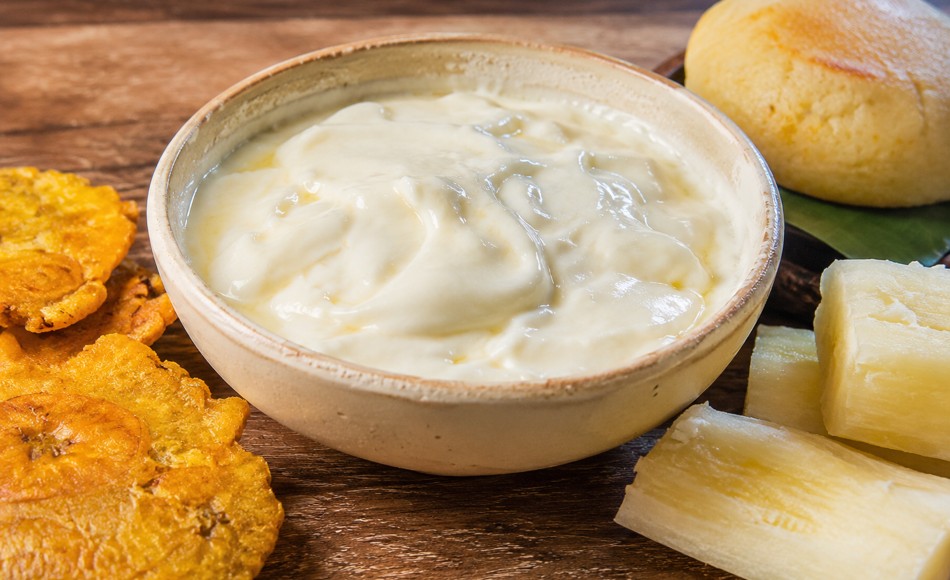
Suero costeño, also known in some areas as atollabuey, is a thick fermented dairy sauce with a tangy flavor, creamy texture, and a lightly salty finish. It is one of the best-known accompaniments from Colombia’s Caribbean coast and is often served with cassava, patacones, arepas, corn rolls, grilled meats, and fried snacks.
Traditional suero costeño starts with fermented milk that is strained until concentrated. It should be creamy, fresh, and gently tangy—thicker than yogurt but softer than cream cheese.
Print
Colombian Suero Costeño
- Prep Time: 20 minutes
- Total Time: 20 hours 20 minutes
- Yield: 16
- Category: Side Dish
- Cuisine: Colombian
Ingredients
- 2 l pasteurized whole milk (8 cups)
- 120 g plain unsweetened yogurt with live cultures (1/2 cup)
- 8 g salt (1 1/2 teaspoons)
- 60 ml cold whole milk (1/4 cup), optional
Preparation
- Ferment the milk, warm the milk in a clean pot until it reaches 38 to 43 °C / 100 to 110 °F. Remove it from the heat, add the plain yogurt, and stir until fully combined. Cover the pot and leave it in a warm place for 10 to 12 hours, until the milk is thick, tangy, and set.
- Strain the mixture, set a large strainer over a bowl and line it with a clean cotton cloth or double layer of cheesecloth. Pour in the fermented milk, cover it, and refrigerate for 6 to 8 hours so excess liquid can drain away.
- Make it creamy, transfer the strained curds to a bowl, add the salt, and stir with a spoon or whisk until smooth. Add the 60 ml of cold milk gradually only if you want a softer, more spreadable texture.
- Chill and serve, place the suero costeño in a clean lidded jar and refrigerate for 2 hours before serving. Serve cold.
Chef’s tips
- Use whole pasteurized milk for the creamiest result.
- Keep all utensils very clean so the fermentation develops a pleasant flavor.
- Do not use sweetened, flavored, or gelatin-thickened yogurt; choose one with live cultures.
- Add the cold milk sparingly at the end. Suero costeño should stay thick, never runny.
Traditional variations
Some households strain the fermented milk for less time, creating a softer and looser suero. Other traditional versions begin with naturally soured milk and are whisked until smooth and creamy.
How to serve
Serve suero costeño cold as a table sauce. It is traditionally paired with boiled cassava, patacones, corn rolls, arepas, empanadas, grilled meat, fried fish, or crispy pork.
Recommended sides
- Boiled cassava.
- Patacones.
- Colombian arepa de huevo.
- Corn rolls.
- Grilled meat.
- Fried fish.
Food culture note
Suero costeño is part of the culinary identity of Colombia’s Caribbean coast. Its tangy, creamy flavor appears alongside many everyday regional foods and is especially common at family tables, street-food stalls, and beachside meals.
Frequently Asked Questions
Suero costeño usually has a more noticeable fermented flavor and can range from soft to very thick depending on how long it is strained. Sour cream is generally smoother and less tangy. Although they are similar, suero has a flavor profile strongly associated with Caribbean Colombian food.
Keep it refrigerated at all times in a clean, airtight jar. Use it within 5 days for the best flavor and texture. Always serve it with a clean spoon, and discard it if it develops an unpleasant smell, mold, or unusual color changes.
It is not recommended. Skim milk produces fewer curds and a thinner sauce. Whole milk provides the fat needed for the creamy texture that defines traditional suero costeño.