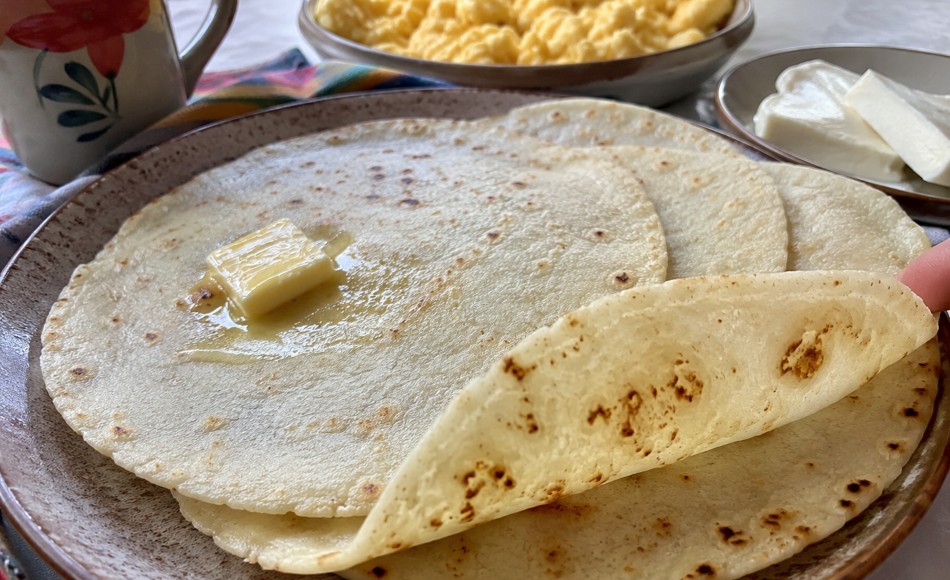
Arepa ’e tela, also known as arepa de tela or thin paisa-style arepa, is a white, thin, griddled corn arepa strongly associated with Antioquia and Colombia’s Paisa region. Its name comes from its thinness: it is almost as thin as a “cloth,” while still firm enough to serve with breakfast, beans, meats, eggs, or simply butter.
In Antioquian cooking, the arepa has been an everyday food for generations. Medellín’s official travel guide notes that arepas are present throughout Colombia in different regional forms, and that in Antioquia corn has been a staple food since Indigenous times.
Print
Colombian Arepa ’e Tela
- Prep Time: 15 minutes
- Cook Time: 10 minutes
- Total Time: 25 minutes
- Yield: 8
- Category: Main Course
- Cuisine: Colombian
Ingredients
- 300 g white precooked cornmeal (about 2 1/2 cups)
- 430 ml warm water (about 1 3/4 cups)
- 3 g salt (1/2 teaspoon)
- 15 g butter for serving (1 tablespoon)
Preparation
- Prepare the dough, place the cornmeal in a large bowl, add the salt, and pour in the warm water gradually while mixing with your hands. Knead for 3 to 4 minutes until the dough feels soft, moist, and smooth. Let it rest for 5 minutes so the cornmeal absorbs the liquid properly.
- Shape the thin arepas, divide the dough into 8 equal portions and roll each one into a ball. Flatten them between two clean plastic sheets or with your palms until you get very thin disks, about 12 to 14 cm wide and around 3 mm thick. Keep the edges smooth so they do not break while cooking.
- Griddle the arepas, heat a griddle, budare, or heavy skillet over medium heat. Place the arepas on the hot surface and cook them for 4 to 5 minutes per side, until they look dry, firm, and lightly golden in spots. Avoid very high heat, because they may toast outside before cooking properly.
- Finish and serve, remove the arepas when the edges are lightly crisp and the center remains flexible. Serve them hot with butter or as a side for a Paisa-style breakfast, beans, eggs, or meat.
Practical tips
The dough should feel soft rather than dry. If it cracks while shaping, add 1 tablespoon of warm water and knead again.
To make the arepas truly thin, place the dough between two plastic sheets and press it with a board or flat plate.
Do not add too much oil or butter to the dough. Traditional arepa ’e tela is simple and neutral in flavor.
For cleaner edges, trim each disk with a small plate before placing it on the griddle.
Traditional variations
In many Paisa households, this arepa is made without salt, especially when it is served with cheese, butter, hogao, beans, or well-seasoned meats.
Some families make it with cooked and ground corn instead of precooked cornmeal, which is an older and more artisanal method.
It can also be made slightly thicker, but arepa ’e tela is mainly recognized for being thin, white, and griddled.
Traditional serving style
Serve arepa ’e tela hot, straight from the griddle. In Antioquia, it often accompanies breakfast with eggs, fresh cheese, butter, or hot chocolate. It is also served with fuller meals, especially beans, pork belly, ground beef, hogao, or avocado.
Recommended accompaniments
- Butter
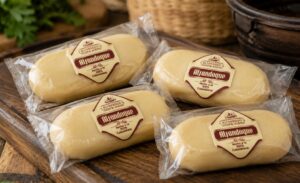
- Fresh cheese or Antioquian quesito
- Scrambled eggs
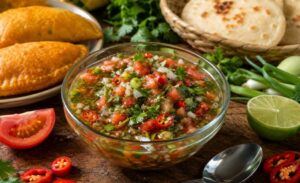
- Colombian hogao
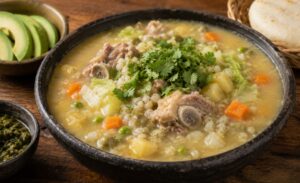
- Antioquian beans
- Hot chocolate
- Colombian coffee
Food fact
Paisa arepa is one of Colombia’s most versatile arepa styles. Marca País Colombia describes it as a white corn arepa commonly served with ingredients such as meat, chicken, pork belly, avocado, fresh cheese, or hogao.
Arepa ’e tela represents the thinnest and simplest expression of that tradition: it is not meant to overpower the plate, but to accompany everyday meals with balance.
Frequently Asked Questions
Arepa ’e tela is a popular way of saying “arepa de tela,” or cloth-thin arepa. The name refers to how thin the arepa is. It is a simple white corn arepa, griddled and closely associated with Paisa and Antioquian cooking.
The basic traditional version does not include cheese in the dough. It is made with corn, water, and little salt or no salt at all. Cheese is usually served on the side, especially Antioquian quesito, fresh cheese, or campesino-style cheese.
Flatten the dough between two clean plastic sheets and press it with a board, flat plate, or arepa press. The dough must be well hydrated and flexible; if it is dry, it will crack and will not form a thin disk properly.
It is griddled on a hot flat surface, budare, or skillet. Frying is not part of this traditional preparation. The arepa should be dry, lightly golden, and flexible, with slightly crisp edges.