
Colombian garlic langoustines are a popular seafood preparation in coastal cooking, especially in seafood restaurants, Caribbean home kitchens, and places where fresh shellfish is part of everyday meals. The appeal of this dish is its simplicity: tender langoustines quickly cooked with garlic, butter, oil, lime, and fresh herbs.
In Colombia, they are often served as a generous appetizer or as a main dish with coconut rice, fried green plantains, cassava, or a fresh salad. It is a quick recipe, but the cooking time matters because langoustines should stay tender and juicy.
Print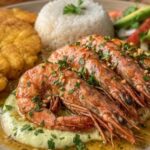
Colombian Garlic Langoustines
- Prep Time: 15 minutes
- Cook Time: 10 minutes
- Total Time: 25 minutes
- Yield: 4
- Category: Main Course
- Cuisine: Colombian
Ingredients
- 700 g cleaned, peeled, and deveined langoustines (about 24 medium pieces)
- 40 g finely chopped or crushed garlic (8 cloves)
- 45 g butter (3 tablespoons)
- 30 ml vegetable oil (2 tablespoons)
- 45 ml lime juice (3 tablespoons)
- 60 ml fish stock or water (¼ cup)
- 10 g chopped fresh cilantro (¼ cup)
- 6 g salt (1 teaspoon)
- 2 g ground black pepper (½ teaspoon)
- 2 g ground cumin (½ teaspoon)
- 1 g ground dried chili or mild hot pepper (¼ teaspoon)
Preparation
- Season the langoustines, mix the cleaned langoustines with the salt, black pepper, cumin, and lime juice. Let them rest for 10 minutes, just long enough to absorb flavor without letting the lime affect their texture too much.
- Make the garlic base, heat the oil and butter in a wide skillet over medium heat. Add the garlic and sauté for 1 to 2 minutes, stirring constantly, until fragrant and lightly golden. Do not let it burn, because burnt garlic will make the sauce bitter.
- Cook the langoustines, add the drained langoustines to the skillet and cook for 2 minutes on one side. Turn them over and cook for another 1 to 2 minutes, until they change color, feel firm, and remain juicy.
- Build the sauce, add the fish stock or water, dried chili, and chopped cilantro. Stir gently for 1 minute so the garlic sauce coats the langoustines and becomes glossy, aromatic, and slightly reduced.
- Serve immediately, turn off the heat as soon as the langoustines are cooked and serve them hot with the garlic sauce spooned over the top. Do not leave them sitting in the hot skillet too long, or they may overcook.
Chef’s Tips
Use fresh langoustines or fully thawed ones, and dry them before cooking so they do not release too much water.
Do not cook the garlic over high heat; it should flavor the butter without burning.
Langoustines are ready when they change color and feel firm while still remaining juicy.
If you use tail-on langoustines, the presentation looks more traditional and attractive for serving as an appetizer.
Traditional Variations
In some Colombian coastal kitchens, this dish is made with large shrimp instead of langoustines, using the same base of garlic, butter, lime, and cilantro.
There are also versions with a splash of dry white wine, although the simpler home-style preparation uses fish stock or a little water to create the sauce.
In some areas, the dish is served with extra heat, especially when paired with fried green plantains or white rice.
Traditional Serving Style
Serve garlic langoustines hot, covered with their garlic, butter, and cilantro sauce. They can be served as an appetizer with fried green plantains or as a main dish with coconut rice, white rice, boiled cassava, or a fresh salad.
For drinks, they pair well with fresh lemonade, corozo juice, passion fruit juice, or cold panela water with lime.
Recommended Side Dishes
- Coconut rice
- White rice
- Fried green plantains
- Boiled cassava
- Fresh salad
- Avocado
- Lime wedges
Culinary Fun Fact
Garlic-style seafood is very popular in Colombian coastal cooking because it highlights the natural flavor of shellfish without covering it with heavy sauces. In coastal areas, this preparation is easily adapted to langoustines, shrimp, squid, or fish, always with garlic as the main flavor.
Even though it is a quick recipe, its success depends on the balance between lightly golden garlic, hot fat, and very brief seafood cooking.
Frequently Asked Questions
The preparation is very similar, but langoustines are usually larger and meatier than shrimp. That means they need just a little more care while cooking, although the cooking time is still short. In Colombia, both versions are common in seafood cooking.
Cook them only until they change color and feel firm. If they stay in the skillet too long, they lose moisture and become tough. The best method is to prepare the garlic base first and add the langoustines at the end to control the cooking point.
Yes, frozen langoustines work well, but you should thaw them completely in the refrigerator and dry them before cooking. If they go into the skillet with too much moisture, the sauce becomes watery and the langoustines cook unevenly.
They are commonly served with fried green plantains, coconut rice, white rice, boiled cassava, or a fresh salad. When served as an appetizer, fried green plantains are especially traditional because they are perfect for enjoying the garlic butter sauce.