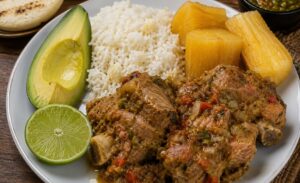

Mamona, also known as Ternera a la Llanera, is one of the most iconic dishes from Colombia’s Eastern Plains. It consists of young veal seasoned simply with coarse salt and slowly roasted over hardwood embers while mounted on large stakes surrounding the fire.
More than a recipe, Mamona is a cultural tradition deeply connected to the Llanero way of life. It is commonly served during festivals, ranch gatherings, family celebrations, and cattle-related events throughout the Colombian plains.
The traditional technique focuses on highlighting the natural flavor of the meat rather than masking it with heavy seasonings. The result is exceptionally tender, juicy beef with a distinctive smoky aroma.
Print
Colombian Mamona Veal Roast
- Prep Time: 45 minutes
- Cook Time: 5 hours
- Total Time: 5 hours 45 minutes
- Yield: 5
- Category: Main Course
- Cuisine: Colombian
Ingredients
- 4 kg young veal cuts (leg, ribs, loin, and flank)
- 40 g coarse salt (4 tablespoons)
Preparation
- Prepare the meat, trim only excess fat and cut the meat into large pieces suitable for mounting on roasting stakes.
- Season traditionally, coat all surfaces with coarse salt and allow the meat to rest for 30 minutes.
- Build the fire, burn hardwood until you obtain a large bed of stable embers without excessive flames.
- Mount the meat, secure each cut on roasting stakes positioned at an angle around the fire.
- Roast slowly, cook for 4 to 6 hours depending on thickness, turning occasionally for even cooking.
- Check doneness, remove the meat once it develops a golden exterior and becomes tender throughout.
- Slice and serve, carve into generous portions and serve immediately.
Chef’s Tips
- Use quality hardwood for long-lasting embers.
- Keep the meat away from direct flames.
- Traditional seasoning relies almost entirely on coarse salt.
- Bone-in cuts add extra flavor during roasting.
- Low and slow cooking is essential for authentic results.
Traditional Variations
- The modern variant using butcher-shop cuts (ribs, loin, leg, and flank) is a common adaptation; the fuller traditional version uses the whole regional cut of the entire animal.
- Some modern variants marinate the meat with beer beforehand, rather than basting it during cooking.
- Special celebrations may use exclusively very young veal.
How to Serve
Serve on large platters with boiled cassava, roasted plantains, and traditional Llanero hot sauce. It is typically shared among a group and paired with refreshing local beverages.
Recommended Side Dishes
- Boiled cassava
- Salted potatoes
- Roasted sweet plantains
- Llanero hot sauce
- Corn arepas
- Fresh salad
Food History
Mamona originated from the cattle-ranching traditions of Colombia’s Eastern Plains. Llanero cowboys developed this outdoor cooking method using stakes positioned around open fires to prepare large quantities of meat.
Today it remains one of the most important culinary symbols of the Meta, Casanare, Arauca, and Vichada regions.
Frequently Asked Questions
The name comes from the fact that it is traditionally prepared with an animal that is still nursing ("mamon"), between 6 months and 1 year old, which gives the meat an especially tender texture and a milder flavor than mature beef.
Its distinctive stake-roasting technique, long cooking time, hardwood embers, and minimal seasoning set it apart from other grilled meat traditions.
Yes. While it will not fully replicate the traditional method, indirect grilling can produce similar results.
Cooking usually takes between 4 and 6 hours, depending on the size of the cuts and the heat of the embers.
In the modern variant, most common today, butcher-shop cuts such as ribs, loin, leg, and flank are used. The more traditional version uses the whole regional cut of the entire animal.