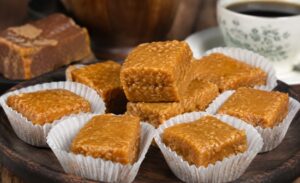

Colombian rice arepa is a traditional preparation from the Eastern Plains of Colombia, especially connected to the Meta department. It is made with rice flour or soaked ground rice, fresh curd cheese, butter, milk, and salt, ingredients that reflect the region’s rural cooking and its strong connection to rice farming and cattle ranching.
In Llanero homes, it is commonly served for breakfast, dinner, or as a simple side dish. Its texture is distinctive: lightly golden on the outside, tender inside, and rich in fresh dairy flavor from the curd cheese.
Print
Colombian Rice Arepa
- Prep Time: 20 minutes
- Cook Time: 18 minutes
- Total Time: 38 minutes
- Yield: 10
- Category: Main Course
- Cuisine: Colombian
Ingredients
- 500 g rice flour (about 4 cups)
- 500 g fresh curd cheese, crumbled (about 3 cups)
- 240 ml whole milk (1 cup)
- 120 ml warm water (1/2 cup)
- 60 g melted butter (4 tablespoons)
- 8 g salt (1 1/2 teaspoons)
Preparation
- Prepare the dough, place the rice flour in a large bowl and add the crumbled curd cheese, salt, and melted butter. Mix with your hands until the cheese is evenly distributed and the mixture feels sandy but slightly moist.
- Add the liquids, pour in the milk gradually, then add the warm water little by little while kneading. The dough should become soft, compact, and easy to shape without falling apart. If your cheese is very moist, use a little less water.
- Shape the arepas, divide the dough into 10 equal portions and roll them into balls. Flatten each one into a disk about 1 cm thick, sealing the edges gently so they do not crack while cooking.
- Cook the arepas, heat a griddle, budare, or heavy skillet over medium-low heat. Place the arepas on the hot surface and cook them for 7 to 9 minutes per side, until golden, firm on the outside, and fully warm in the center.
- Serve them fresh, remove the arepas once they have a light crust and a toasted aroma. Let them rest for 2 minutes before serving so the dough settles while staying tender.
Practical tips
Use fresh curd cheese rather than a very dry cheese, because its moisture helps bind the dough.
Do not add all the water at once. The amount may vary depending on the moisture of the cheese and how much liquid the rice flour absorbs.
Cook the arepas over medium-low heat so they brown without burning and become warm and tender inside.
If the dough cracks while shaping, dampen your hands with a little warm water and press the dough together again.
Traditional variations
In some Llanero kitchens, the arepas are made with rice soaked overnight and then ground, instead of rice flour.
There are also more rustic versions with a higher amount of curd cheese, which makes the arepa softer, milkier, and slightly grainier.
Some families make smaller arepas to serve with coffee, hot chocolate, or an afternoon snack.
Traditional serving style
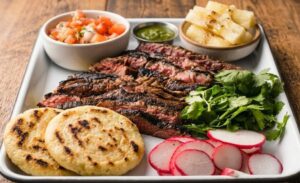
Serve rice arepas hot, straight from the griddle or budare. Traditionally, they are eaten plain or with butter, and they can accompany a Llanero-style breakfast, strong Colombian coffee, hot chocolate, or a simple meal with grilled beef.
Recommended accompaniments
- Colombian black coffee
- Hot chocolate
- Butter
- Llanero-style grilled beef
- Scrambled eggs
- Extra fresh cheese
Food fact
Rice arepas belong to the traditional cooking of San Martín and other towns in Meta. Their origin is tied to the use of rice and curd cheese, two important products in the rice-growing and cattle-ranching economy of the Colombian plains.
Frequently Asked Questions
The traditional Llanero version can be made with soaked ground rice, but many home cooks use rice flour for a more practical and consistent result. Both versions are part of the regional tradition as long as the base of rice, curd cheese, butter, and salt is preserved.
Fresh curd cheese is the traditional choice because it adds moisture, dairy flavor, and a slightly grainy texture. If you cannot find it, use a soft, moist Latin-style fresh cheese, although the most authentic flavor comes from fresh campesino-style curd cheese.
Yes. Use a heavy or nonstick skillet over medium-low heat. The key is to cook them slowly so they brown on the outside and heat through in the center without burning. A griddle, budare, or flat grill also works well.
The dough usually cracks when it is too dry or when the cheese lacks moisture. Add the warm water gradually and knead until the dough holds together. It also helps to press and seal the edges firmly before cooking.