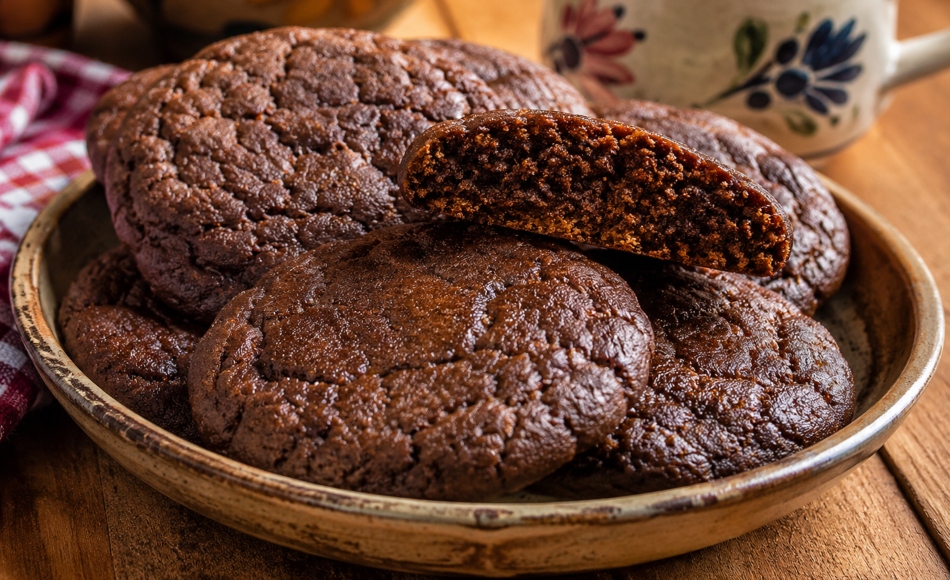
Cucas are traditional Colombian dark cookies, also known in some regions as black cookies or galletas del país. You make them with panela, wheat flour, and warm spices such as cinnamon, clove, and ginger. They usually have a firm outside with a soft or gently chewy center.
They are a classic snack with coffee and milk, hot chocolate, or a glass of fresh milk. Although regional variations exist, the panela-and-spice version is the most recognizable Colombian style.
Print
Colombian Cucas Cookies
- Prep Time: 20 minutes
- Cook Time: 20 minutes
- Total Time: 1 hour
- Yield: 14
- Category: Dessert
- Cuisine: Colombian
Ingredients
- 420 g all-purpose flour (3 cups)
- 200 g finely grated panela (1 cup)
- 113 g unsalted butter, softened (½ cup)
- 60 ml molasses or thick panela syrup (¼ cup)
- 120 ml water (½ cup)
- 1 large egg
- 5 g ground ginger (1 teaspoon)
- 5 g ground cinnamon (1 teaspoon)
- 1 g ground cloves (¼ teaspoon)
- 5 g baking soda (1 teaspoon)
- 2 g salt (¼ teaspoon)
Preparation
- Preheat the oven to 180 °C / 350 °F and line a baking sheet with parchment paper.
- Mix the dry ingredients, place the flour, ginger, cinnamon, cloves, baking soda, and salt in a large bowl. Stir until the spices are evenly distributed.
- Make the sweet base, beat the butter with the grated panela until you have a moist, even mixture. Add the molasses, water, and egg, then mix until combined.
- Make the dough, gradually add the dry ingredients and mix until you have a soft, dark, slightly sticky dough. When it feels too wet, add up to 35 g of extra flour, one tablespoon at a time.
- Let the dough rest for 15 minutes so the flour can absorb moisture and the dough becomes easier to roll.
- Cut the cookies, roll out the dough on a lightly floured surface until it is about 1 cm thick. Cut circles about 6 to 7 cm wide and place them on the baking sheet, leaving space between them.
- Bake for 18 to 22 minutes, until the edges look firm and slightly darker. Remove them while the centers still feel a little soft because they will finish setting as they cool.
- Let them rest on the baking sheet for 10 minutes, then transfer them to a wire rack. Serve them warm or fully cooled.
Chef’s tips
- Grate the panela finely so it blends smoothly into the dough.
- Do not overbake the cucas; they should be firm but not dry or hard.
- Use molasses or thick panela syrup for a deeper color and richer aroma.
- Let the cookies cool before storing them to preserve their texture.
Traditional variations
In some Colombian regions, cucas include lemon or orange zest. In Cauca, related cookies may be called liberales or peras, while other regional versions vary in spices, color, and sweetness.
How to serve
Serve cucas at room temperature, on their own or in a basket with other traditional baked goods. They are especially good for breakfast, coffee breaks, or afternoon snacks with hot drinks.
Recommended accompaniments
- Coffee with milk
- Colombian hot chocolate
- Fresh milk
- Hot panela drink
- Cinnamon or herbal tea
A culinary curiosity
Cucas belong to a broader family of panela-based sweets found across Latin America. In Colombia, they may also be called black cookies or galletas del país, and their character comes from the combination of panela, flour, and spices.
Their dark color does not come from cocoa. It mainly comes from panela or molasses, which also provide moisture and a deep caramel-like flavor.
Frequently Asked Questions
No. Traditional cucas do not need cocoa to achieve their dark color. That color comes from panela, molasses, or thick panela syrup. Spices such as cinnamon, cloves, and ginger create their distinctive flavor.
Yes, you can use dark brown sugar when panela is unavailable. However, panela provides a more traditional flavor and deeper aroma. For a closer result, combine dark brown sugar with molasses or thick panela syrup.
They can turn hard when you add too much flour or bake them for too long. Remove them when the edges are firm but the centers still feel slightly soft. The cookies will continue setting as they cool.
Let them cool completely, then keep them in an airtight container for up to 7 days in a cool, dry place. When you prefer a softer texture, place a small piece of paper towel inside the container to help manage excess moisture.