
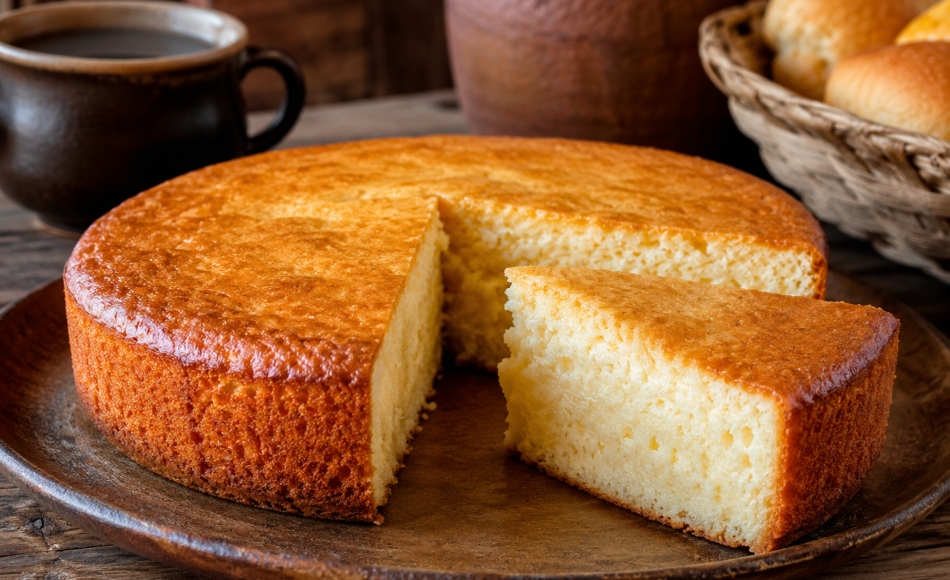
Colombian bizcocho de cuajada is a traditional baked treat from the Andean region, especially associated with Boyacá and Cundinamarca. You make it with fresh curd cheese, cornmeal, eggs, butter, and sugar, creating a soft baked cake with a moist crumb and a gentle dairy flavor.
You can often find it in small-town bakeries, local markets, and roadside stops, where people enjoy it warm for breakfast or Colombia’s traditional afternoon snack, known as onces. It reflects the countryside tradition of using fresh curd cheese in everyday baked goods.
Print
Colombian Fresh Curd Cheese Cake
- Prep Time: 20 minutes
- Cook Time: 45 minutes
- Total Time: 1 hour 5 minutes
- Yield: 10
- Category: Dessert
- Cuisine: Colombian
Ingredients
- 500 g fresh curd cheese, crumbled (4 cups)
- 200 g pre-cooked cornmeal (1 ⅓ cups)
- 100 g cornstarch (⅔ cup)
- 150 g granulated sugar (¾ cup)
- 100 g unsalted butter, softened (7 tablespoons)
- 3 large eggs
- 120 ml whole milk (½ cup)
- 10 g baking powder (2 teaspoons)
- 3 g salt (½ teaspoon)
- 5 ml vanilla extract (1 teaspoon)
Preparation
- Preheat the oven to 180 °C / 350 °F. Grease a 24 cm / 9-inch round cake pan or a similarly sized baking dish with a small amount of butter.
- Prepare the curd cheese, crumble the fresh curd cheese with your hands or a fork until no large pieces remain. When it feels very wet, let it drain for a few minutes so the batter does not become too loose.
- Cream the base, place the butter and sugar in a large bowl. Beat until the mixture becomes creamy and lighter in color. Add the eggs one at a time, mixing well after each addition, then stir in the vanilla.
- Make the batter, add the crumbled curd cheese, cornmeal, cornstarch, baking powder, and salt. Mix with a spatula or clean hands while gradually adding the milk. You should have a thick, moist, even batter rather than a runny one.
- Pour the mixture into the prepared pan and gently smooth the top. Tap the pan lightly on the counter to release large air bubbles.
- Bake for 40 to 50 minutes, until the cake is golden, firm around the edges, and a toothpick inserted into the center comes out clean or with moist crumbs, but no raw batter.
- Let it rest for 15 minutes before removing it from the pan. Serve warm or at room temperature, sliced into portions.
Chef’s tips
- Use fresh, low-salt curd cheese to preserve the traditional flavor.
- Add the milk gradually because some curd cheeses contain more moisture than others.
- Do not overmix after adding the dry ingredients; mix only until everything is evenly combined.
- Let the cake rest before slicing so it can set properly and hold its shape.
Traditional variations
In some regions, people make a less sweet version meant to accompany hot chocolate or coffee. Other family recipes add lemon zest or a few drops of anise extract for fragrance, while keeping fresh curd cheese as the main ingredient.
How to serve
Serve fresh curd cheese cake warm or at room temperature. It works well for breakfast, Colombian afternoon snacks, or family gatherings, especially with a hot drink. You can also place it in a bread basket alongside other Colombian baked goods.
Recommended accompaniments
- Colombian hot chocolate
- Colombian black coffee
- Hot panela drink
- Warm milk
- Fresh farmer’s cheese
A culinary curiosity
Fresh curd cheese has long been an essential ingredient in baked goods from Colombia’s Andean highlands. Its use in cakes, almojábanas, and breads gives these foods a soft texture, gentle tang, and flavor closely connected to rural home cooking.
Bizcocho de cuajada reflects that tradition of combining fresh dairy products with cornmeal, a pairing found in many family recipes from Boyacá and Cundinamarca.
Frequently Asked Questions
Use fresh, moist, mild curd cheese that crumbles easily with your hands or a fork. Avoid curd cheese that is very dry, overly salty, or aged, because it may change the flavor and make the cake denser than intended.
Yes. Use fresh farmer’s cheese when curd cheese is unavailable. Choose a low-salt cheese with some moisture and crumble it very finely before adding it to the batter. This helps it distribute evenly and keeps the finished cake soft.
It may turn out dry when the curd cheese is low in moisture, when you add too much flour, or when you bake it for too long. Start checking it at 40 minutes and remove it once the center is cooked but still appears moist and tender.
Let it cool completely, then keep it in an airtight container for up to 3 days. You can leave it at room temperature on the first day in cool weather, then refrigerate it. Warm it briefly in a low oven before serving when you prefer it soft and warm.