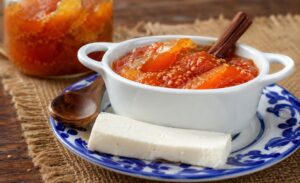
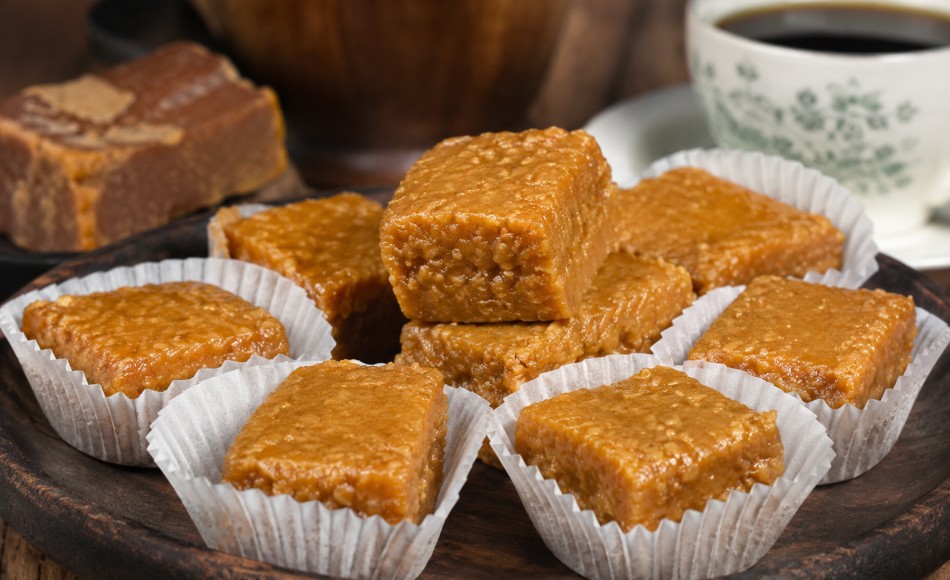
Goat milk curds candy, known in Colombia as cortados de leche de cabra, is a traditional sweet from the country’s northeastern region, closely associated with Santander and Norte de Santander. It is made by slowly cooking goat milk with panela, then adding lemon juice at the end to create the lightly curdled texture that gives the dessert its name.
The finished candy is firm, caramel-colored, and rich in dairy flavor, with small soft curds throughout. It is traditionally made in a wide cooking pan or heavy pot, then cooled and cut into small pieces. Published versions of the recipe consistently use goat milk, panela, and lemon juice as its base ingredients.
Print
Colombian Goat Milk Candy
- Prep Time: 1 hour 15 minutes
- Cook Time: 1 hour
- Total Time: 2 hours 15 minutes
- Yield: 18
- Category: Dessert
- Cuisine: Colombian
Ingredients
- 1 liter pasteurized goat milk (4 cups)
- 450 g grated or chopped panela (1 pound)
- 30 ml fresh lemon juice (2 tablespoons)
- 2 g ground cinnamon (1 teaspoon), optional
- 2 g whole cloves (4 cloves), optional
Preparation
- Dissolve the panela, place the goat milk and panela in a wide heavy-bottomed pot. Cook over medium heat, stirring with a wooden spoon until the panela dissolves completely and the milk begins to simmer gently.
- Reduce the mixture, lower the heat and cook for 50 to 60 minutes, stirring often. Keep the heat gentle so the milk does not stick; the mixture should reduce, turn light caramel in color, and become noticeably thicker.
- Add the lemon, stir in the lemon juice once the mixture is thick, then add the cinnamon and cloves if using them. Stir gently for 3 to 5 minutes, until small curds appear and the dessert develops its characteristic curdled texture.
- Finish cooking, continue cooking over low heat until you can see the bottom of the pot for a few seconds when you drag a spoon across it. Remove the cloves and let the mixture rest off the heat for 2 minutes.
- Spread and cut, pour the candy onto a lightly dampened tray or a parchment-lined baking sheet. Spread it to a thickness of about 2 cm and let it cool completely for 1 hour. Cut it into small squares or rectangles before serving.
Chef’s tips
- Use fresh, pasteurized goat milk for the cleanest flavor and most reliable texture.
- Keep the heat low once the mixture begins to simmer; high heat can burn the panela before the candy thickens.
- Add the lemon near the end so the curds remain visible without making the dessert overly tart.
- Stir more frequently during the last 15 minutes, when the mixture becomes denser.
- Let the candy cool fully before cutting for neat, firm portions.
Traditional variations
Some Santander-style versions flavor the candy with cinnamon, cloves, and lemon peel. Other versions use only goat milk, panela, and lemon, preserving the dessert’s simple and distinctive regional flavor.
How to serve
Serve the goat milk curds candy at room temperature, cut into small squares and arranged in paper candy cups or on a serving tray. It pairs especially well with Colombian black coffee, hot chocolate, or aguapanela during an afternoon snack or family visit.
Recommended pairings
- Black Colombian coffee
- Hot chocolate
- Aguapanela
- Almojábanas
- Colombian cheese bread
A little history
The name cortado refers to the change in texture created when lemon is added to concentrated milk. This sweet is recognized as part of the homemade confectionery tradition of northeastern Colombia, where goat milk and panela have long been important ingredients in regional sweets.
Frequently Asked Questions
It gets its name from the small curds that form when lemon juice is added to the concentrated milk. This texture is intentional rather than a mistake. Add the lemon once the mixture has thickened so the candy remains soft and balanced instead of becoming overly tart.
You can make a similar sweet with cow’s milk, but the flavor will be different. Goat milk gives the dessert its fuller aroma and characteristic regional identity. For the most traditional result, use pasteurized goat milk and panela.
It is ready when the mixture is thick, caramel-colored, and leaves the bottom of the pot visible for a few seconds as you move a spoon through it. It should also hold its shape once spread on a tray. If it still flows too easily, cook it for a few more minutes.
Store it in an airtight container, separating the pieces with parchment paper, for 5 to 7 days in a cool place. In warm weather, refrigerate it, then let it stand at room temperature for a few minutes before serving for a softer texture.