Known in Catalan as peus de porc a la catalana, this is one of the most beloved offal-based stews in traditional Catalan cooking, especially popular in Barcelona and the inland comarcas. It's a humble spoon dish, born from nose-to-tail cooking traditions, that over time became a staple of cuina de mercat menus and Sunday family meals, particularly in winter.
What sets this dish apart from other regional versions of pig's trotters found across Spain is the final picada: a paste of toasted nuts, garlic, parsley, and a touch of dark chocolate — a technique distinctly Catalan that also appears in dishes like civet stew or cuttlefish-and-meatball combinations. That hint of chocolate isn't meant to sweeten the dish, but rather to add body, color, and a silky richness that rounds out the natural gelatin released by the trotters.
Print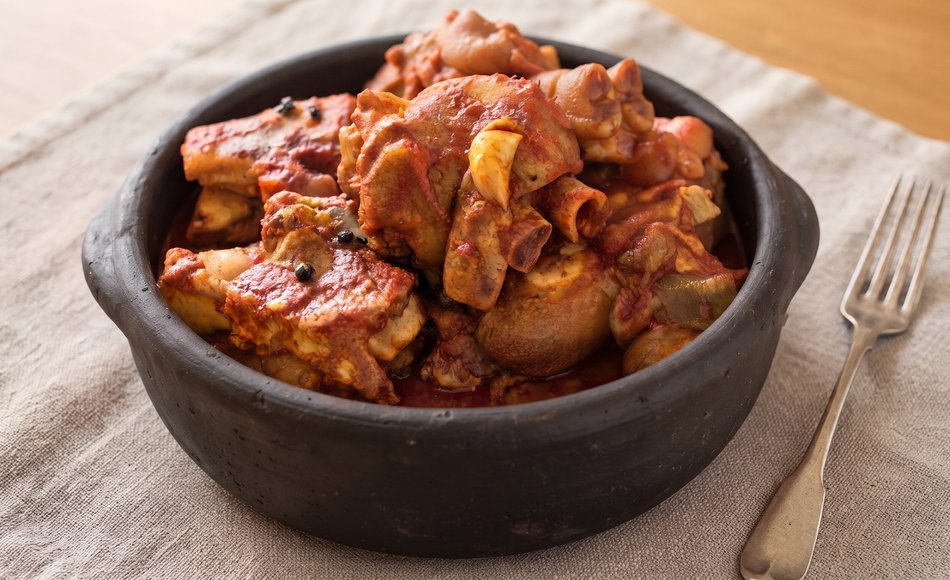
Catalan-Style Pig’s Trotters
- Prep Time: 30 minutes
- Cook Time: 3 hours 30 minutes
- Total Time: 4 hours
- Yield: 4 servings
- Category: Main Course
- Cuisine: Catalan / Spanish
Ingredients
- 1.6 kg of pig’s trotters, split in half (8 halves)
- 200 g of onion, chopped (1 large onion)
- 300 g of ripe tomatoes, grated (2 large tomatoes)
- 4 cloves of garlic (2 for the sofrito, 2 for the picada)
- 2 bay leaves
- 100 ml of rancio wine or brandy
- 30 g of toasted almonds (about 20 pieces)
- 30 g of toasted hazelnuts (about 25 pieces)
- 15 g of dark chocolate, grated (70% cocoa) (1 ounce)
- 1 bunch of fresh parsley
- 50 ml of extra virgin olive oil (1/4 cup)
- Salt, to taste
- Black pepper, to taste
- ½ head of garlic (for cooking)
- Cold water for cooking the trotters
Preparation
- Clean and cook the trotters, singe off any remaining hair, rinse them in a bowl of clean water, without strong running water to avoid splashing, and then wash the utensils and surfaces that touched them; place them in a large pot covered with cold water along with one bay leaf, half a head of garlic, and a pinch of salt. Simmer over medium-low heat for 2 to 3 hours, until the meat is tender and pulls easily from the bone; remove the trotters and reserve some of the cooking broth.
- Make the sofrito, heat the oil in a wide pot and sauté the chopped onion over low heat for about 10 minutes, until translucent. Add the minced garlic and grated tomato, and cook for another 10 minutes until the mixture thickens and loses its excess water.
- Add the trotters, stir the cooked trotters into the pot along with the rancio wine, let the alcohol cook off for a couple of minutes, then add enough of the reserved broth to almost cover the meat. Simmer gently for 30 to 40 minutes to let the flavors come together.
- Prepare the picada, crush the almonds, hazelnuts, remaining garlic, parsley, and grated chocolate in a mortar until you get a textured paste, loosening it with a couple of tablespoons of broth from the pot.
- Bind the stew, stir the picada into the pot, mixing well until it dissolves, and cook for another 10 minutes over low heat, watching closely, until the sauce turns thick, glossy, and silky.
- Adjust and rest, season with salt and pepper to taste, remove the bay leaves, and let the stew rest off the heat for 10 minutes before serving so the sauce can fully settle.
Kitchen Tips
- If you have a pressure cooker, the trotters' cooking time drops to about 45-50 minutes.
- This stew tastes even better the next day: make it ahead and reheat it gently before serving.
- Ask your butcher to split the trotters lengthwise in half; it makes cooking and plating much easier.
- If the sauce looks too thin, let it reduce uncovered for a few more minutes before adding the picada.
Traditional variations
- In some comarcas, peus de porc amb cargols (with snails) is a classic mar i muntanya combination.
- During mushroom season, it's common to add wild mushrooms, especially rovellons, to the stew.
How to Enjoy This Dish
Catalan-style pig's trotters are served piping hot, straight from the pot or in deep bowls, generously coated in their own sauce. It's traditional to have bread on hand to soak up the sauce.
Recommended sides
- Pa amb tomàquet (tomato bread)
- Mashed potatoes
- White rice
A Bit of History
Pig's trotters are part of Catalonia's nose-to-tail cooking tradition, in which no part of the pig went to waste after the traditional matanza (pig slaughter). Over time, this stew moved from everyday fare to a highly regarded spoon dish in Catalan restaurants.
The use of chocolate in the picada has historical roots: Barcelona was a major European entry port for cacao starting in the 17th century, and Catalan cuisine incorporated it not only into desserts but also into meat stews, a tradition that lives on in dishes like this one.
Frequently Asked Questions
Simmer them over medium-low heat for 2 to 3 hours, until the meat is tender and pulls easily from the bone.
The picada is made with toasted almonds and hazelnuts, garlic, fresh parsley, and grated dark chocolate, crushed together in a mortar.
The chocolate isn't meant to sweeten the dish; it adds body, color, and a silky richness that rounds out the natural gelatin released by the trotters.
Yes, this stew tastes even better the next day, so you can make it ahead and reheat it gently before serving.
If the sauce looks too thin, let it reduce uncovered for a few more minutes before adding the picada.