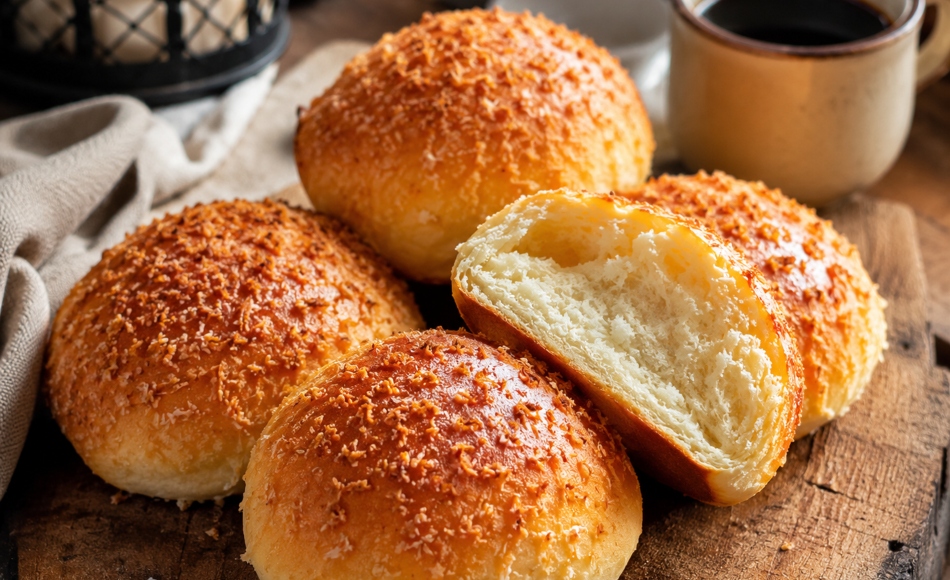
Colombian coconut bread is a sweet bakery bread especially popular in Caribbean-influenced areas of the country. You make it with wheat flour, coconut milk, yeast, butter, sugar, and shredded coconut, creating a soft, fragrant crumb with a lightly crisp coconut topping.
People enjoy it fresh from the oven for breakfast, afternoon coffee, or a snack with hot chocolate, coffee, or cold drinks. Its flavor brings together a tender enriched bread dough and the unmistakable aroma of coconut.
Print
Colombian Coconut Bread
- Prep Time: 30 minutes
- Cook Time: 25 minutes
- Total Time: 55 minutes
- Yield: 10
- Category: Dessert
- Cuisine: Colombian
Ingredients
- 500 g bread flour (4 cups)
- 200 ml warm unsweetened coconut milk (¾ cup plus 1 tablespoon)
- 100 g granulated sugar (½ cup)
- 85 g unsalted butter, melted (6 tablespoons)
- 7 g instant dry yeast (2 ¼ teaspoons)
- 1 large egg
- 5 g salt (1 teaspoon)
- 5 ml vanilla extract (1 teaspoon)
For the topping
- 100 g unsweetened shredded dried coconut (1 ¼ cups)
- 50 g granulated sugar (¼ cup)
- 1 large egg white
To finish
- 1 large egg, beaten, for brushing
Preparation
- Activate the yeast, combine the warm coconut milk with 15 g of sugar and the yeast in a small bowl. Let it rest for 8 to 10 minutes, until the surface looks foamy. Keep the coconut milk warm, not hot.
- Make the dough, place the flour, remaining sugar, and salt in a large bowl. Add the yeast mixture, egg, melted butter, and vanilla. Mix until combined, then knead for 10 to 12 minutes until you have a smooth, soft, elastic dough.
- Place the dough in a lightly greased bowl, cover it with a clean kitchen towel, and let it rise for 1 hour, until noticeably larger.
- Make the topping, combine the shredded coconut with the 50 g sugar and egg white. You should have a moist mixture that can cling to the tops of the rolls.
- Shape the breads, gently press the dough to release excess air and divide it into 10 equal portions. Roll them into smooth balls and place them on a parchment-lined baking sheet, leaving space between each one.
- Cover the rolls and let them rise for 30 to 40 minutes, until puffier. Preheat the oven to 180 °C / 350 °F.
- Top and bake, brush each roll with beaten egg and spread the coconut mixture over the surface, pressing gently so it sticks. Bake for 20 to 25 minutes, until the breads are golden and firm on the bottom.
- Let them rest for 10 minutes before serving warm or at room temperature.
Chef’s tips
- Use unsweetened coconut milk so you can control the sweetness of the dough.
- Add the butter once the dough has started coming together, making it easier to incorporate.
- Do not overload the rolls with coconut topping because it may fall off while baking.
- Enjoy coconut bread on the day you bake it for the softest texture and best aroma.
Traditional variations
Some Colombian bakeries make coconut bread as individual round rolls, while others bake larger loaves that you slice before serving. You can also find versions with shredded coconut mixed into the dough and a simpler sugar topping.
How to serve
Serve coconut bread warm or at room temperature. It is ideal for breakfast, afternoon snacks, or coffee breaks with Colombian black coffee, hot chocolate, milk, or fresh fruit juice.
Recommended accompaniments
- Colombian black coffee
- Hot chocolate
- Warm milk
- Hot panela drink
- Mango or passion fruit juice
A culinary curiosity
Coconut bread is enjoyed in several Caribbean and Latin American countries, with variations in sweetness, shape, and the use of coconut milk or grated coconut. In Colombia, it is commonly sold as a sweet bakery bread for breakfast and snacks.
Frequently Asked Questions
Yes, you can use freshly grated coconut, but drain it well so it does not make the topping too wet. Unsweetened dried coconut is often easier to use because it holds its texture better during baking and sticks well with the egg white.
It can turn dry when you add too much flour while kneading or bake it longer than necessary. The dough should feel soft and slightly moist before its first rise. Remove the breads once they are golden and firm instead of waiting for them to become hard.
After resting with warm coconut milk and sugar, the mixture should develop foam and small bubbles on the surface. When it remains completely flat after 10 minutes, the yeast may be expired or the coconut milk may have been too hot or too cold.
Let it cool completely, then keep it in an airtight container for up to 2 days. To refresh its softness, warm it in a 160 °C / 325 °F oven for 5 to 7 minutes. Avoid refrigerating it because cold temperatures can make the crumb firmer.