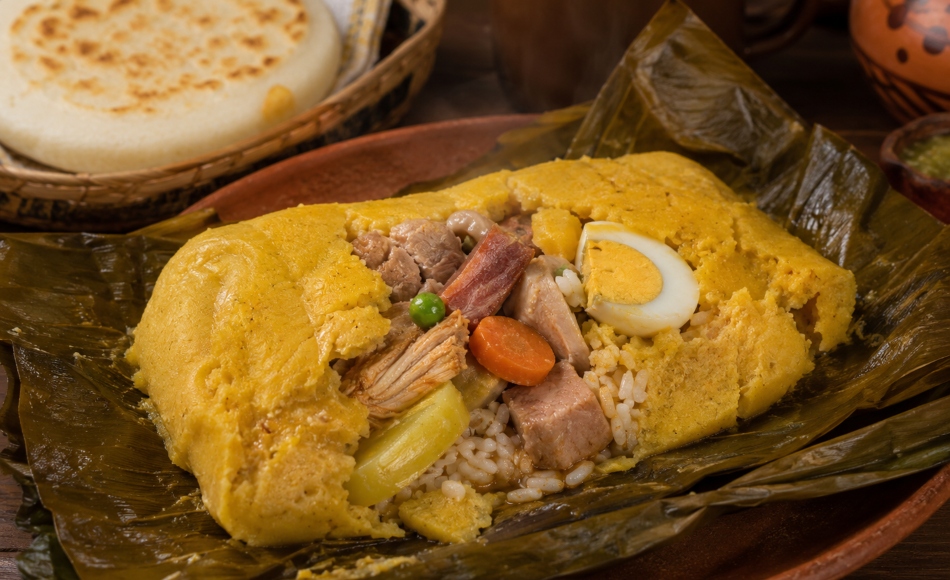
Antioquia-style tamale is a traditional preparation from Antioquia, Colombia, commonly found at family breakfasts, weekend gatherings, popular celebrations, and regional food stalls. It is made with seasoned corn dough, pork, chicken, rice, potatoes, carrots, peas, and egg, all wrapped in banana leaves and slowly cooked until the dough becomes tender, aromatic, and infused with the flavor of the stew.
In Antioquia, this tamale is usually enjoyed as a complete meal, especially in the morning, accompanied by hot chocolate, coffee, or aguapanela. It is a generous, homemade dish that reflects the Paisa tradition of preparing hearty, practical meals meant to be shared.
Although it shares elements with other Colombian tamales, Antioquia-style tamale is identified by its connection to Paisa cuisine, its well-seasoned dough, its substantial filling, and the custom of serving it hot, opened on the banana leaf, as part of a traditional breakfast.
Print
Antioquia Style Tamale
- Prep Time: 1 hour 30 minutes
- Cook Time: 3 hours
- Total Time: 4 hours 30 minutes
- Yield: 8
- Category: Main Course
- Cuisine: Colombian
Ingredients
- 1 kg yellow corn dough or cooked ground peeled corn
- 500 g pork meat, cut into medium pieces
- 500 g chicken pieces
- 250 g pork belly, cut into pieces
- 300 g cooked rice (1 ½ cups)
- 300 g potatoes, peeled and cut into thick slices (3 medium potatoes)
- 200 g carrots, sliced (2 medium carrots)
- 200 g cooked peas (1 ¼ cups)
- 4 boiled eggs, cut in half
- 200 g chopped scallions (2 cups)
- 150 g chopped white onion (1 large onion)
- 150 g chopped ripe tomato (1 large tomato)
- 20 g crushed garlic (4 cloves)
- 30 ml achiote oil (2 tablespoons)
- 10 g ground cumin (2 teaspoons)
- 8 g salt (1 ½ teaspoons), adjust to taste
- 5 g ground black pepper (1 teaspoon)
- 1 liter chicken or pork broth (4 cups)
- 12 large banana leaves, cleaned and softened over heat
- Kitchen string for tying
Preparation
- Make the stew, heat the achiote oil in a large pot and sauté the scallions, white onion, tomato, and garlic until everything is soft, juicy, and well combined. Add the cumin, black pepper, and part of the salt to create a flavorful and aromatic base.
- Season the meats, add the pork, pork belly, and chicken to the stew. Mix well so the pieces are coated with the seasoning and cook for about 15 minutes, until they change color and release their juices. Add a little broth if the stew becomes too thick.
- Prepare the dough, place the corn dough in a large bowl and add warm broth little by little, mixing until you get a moist, soft, thick texture. Stir in part of the stew to add color and flavor, adjust the salt, and make sure the dough is workable, not runny or crumbly.
- Prepare the banana leaves, pass the banana leaves over an open flame or through hot water so they become flexible and do not tear when folded. Wipe them clean and place two crossed leaves for each tamale to create a strong base.
- Assemble the tamales, place a generous portion of dough in the center of each leaf. Add rice, peas, potatoes, carrots, one chicken piece, one piece of pork, pork belly, and half a boiled egg. Spoon a little stew over the top so the filling stays moist and flavorful.
- Wrap and tie, fold the leaves toward the center to form a firm packet, but do not press too tightly so the dough has room during cooking. Tie each tamale with kitchen string, making sure it is well sealed.
- Cook slowly, line the bottom of a large pot with banana leaves, arrange the tamales inside, and add hot water until it reaches about halfway up their height. Cover and cook over medium-low heat for 2 ½ to 3 hours, checking the water level so the pot does not dry out.
- Let them rest and serve, remove the tamales from the pot and let them rest for 10 to 15 minutes before opening. The dough should be firm, moist, and fully infused with the flavor of the stew, meats, and banana leaves.
Practical Tips
Soften the banana leaves well before wrapping the tamales, because this makes them flexible and helps release their aroma during cooking.
Use warm broth to hydrate the dough; this gives the tamale better flavor and a softer texture.
Do not tie the tamales too tightly, since the dough needs room to cook properly.
The stew should be juicy, not dry, because some of that moisture helps keep the filling flavorful.
Let the tamales rest before opening so the dough sets and holds its shape better.
Traditional Variations
In some Antioquia families, pork ribs are used instead of boneless pork, giving the filling a deeper flavor.
There are also versions made with hen instead of chicken, especially when tamales are prepared for family gatherings or celebrations.
Depending on each household’s custom, the amount of rice, potatoes, or peas may vary, but seasoned corn dough, meats, and cooking in banana leaves remain essential elements.
Traditional Serving Style
Antioquia-style tamale is served hot, opened directly on the banana leaf. It is commonly enjoyed as a hearty breakfast or as a main meal during weekend family gatherings.
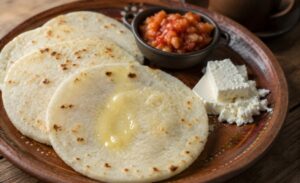
Traditionally, it is paired with hot chocolate, Colombian coffee, or aguapanela. It may also be served with white arepa or fresh bread, depending on each Paisa household’s custom.
Recommended Pairings
- Colombian hot chocolate
- Colombian coffee
- Hot aguapanela
- White arepa
- Fresh bread
Fun Food Fact
Antioquia-style tamale is part of the Paisa tradition of preparing complete, hearty meals closely tied to family life. In many homes, making tamales becomes a shared cooking day, where the leaves, stew, dough, and fillings are prepared ahead of time.
Its presence at breakfasts and traditional food stalls shows how the tamale became both a practical and festive meal: it can be served on a special occasion, but it is also enjoyed as part of the region’s everyday cooking.
Frequently Asked Questions
Antioquia-style tamale stands out for its connection to Paisa cuisine, its well-seasoned corn dough, its filling with meats, rice, potatoes, carrots, peas, and egg, and its traditional role as a hearty breakfast. It is a generous, homemade tamale with a very familiar flavor.
Yes, you can use ready-made corn dough for a more practical preparation. For good flavor, hydrate it with warm broth and mix part of the stew into the dough. The most traditional version uses cooked and ground peeled corn, but ready-made dough makes the process easier at home.
Antioquia-style tamale usually cooks for 2 ½ to 3 hours over medium-low heat. The time may vary depending on the size of the tamales and how many you prepare. The dough should be fully cooked, tender, and firm.
Yes, you can freeze them after they are cooked and completely cooled. Keep them well wrapped to preserve moisture. To reheat them, steam them or warm them in hot water while still wrapped in the banana leaf until heated through.
Antioquia-style tamale is commonly served with hot chocolate, Colombian coffee, or aguapanela. For breakfast, hot chocolate with arepa or fresh bread is one of the most traditional and appreciated combinations.