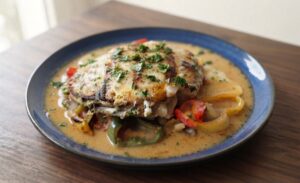
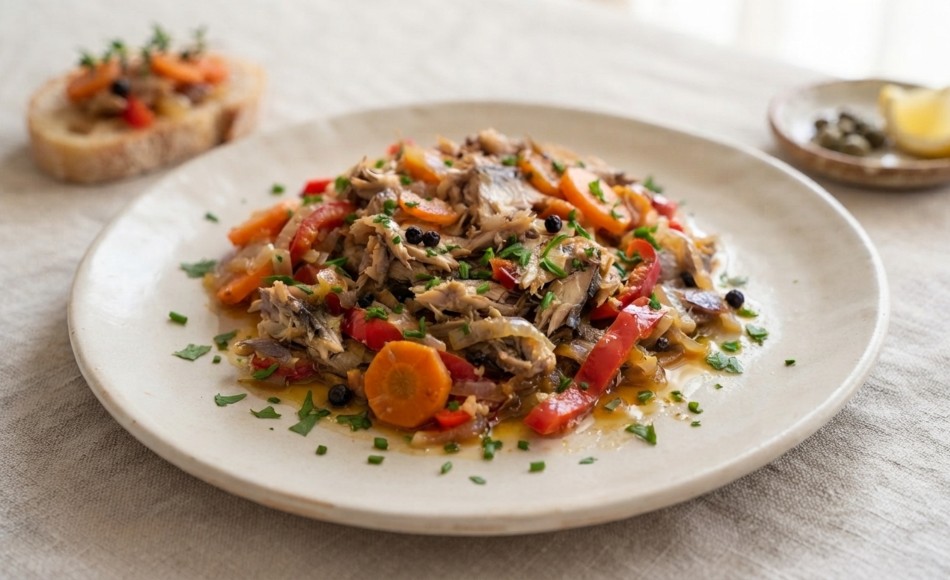
Vizcacha escabeche is a classic of Argentine country cooking, closely tied to Córdoba and Santa Fe: vizcacha pieces seared and slowly cooked in an escabeche of wine vinegar, oil, vegetables, and herbs, then served cold.
The vizcacha is a rodent of the Argentine countryside whose meat has a strong flavor, similar to rabbit; that’s why it’s usually soaked in vinegar water before cooking. Use vizcacha from authorized hunting or trade, according to your province’s regulations.
Print
Vizcacha Escabeche
- Prep Time: 20 minutes
- Cook Time: 1 hour
- Total Time: 5 hours 30 minutes
- Yield: 6 to 8 servings
- Category: Appetizer
- Cuisine: Argentine
Ingredients
- 1 medium vizcacha
- Enough water to cover the pieces for soaking
- 30 ml of distilled white vinegar (for soaking)
- 250 ml of oil
- 360 g of onions
- 300 g of carrots
- 70 g of green bell pepper
- 70 g of red bell pepper
- 4 or 5 cloves of garlic
- 250 ml of wine vinegar
- 250 ml of water
- 100 g of lemon, sliced
- Salt, to taste
- Peppercorns, thyme, rosemary, bay leaf, and oregano, to taste, to flavor the escabeche
Preparation
- Soak the vizcacha, cut it into pieces, place them in a container with the water and distilled vinegar, cover, and let them rest for 4 to 5 hours in the refrigerator. Remove the pieces, drain them, and pat them dry with paper towels.
- Sear the pieces, heat half of the oil in a pot and brown the pieces on both sides to sear them; remove them and set aside.
- Sauté the vegetables, cut the onions and bell peppers into thin strips and the carrot into rounds, and peel the garlic. Replace the used oil with the rest of the oil and sauté the vegetables.
- Cook the escabeche, add the herbs and seasonings, the wine vinegar, the water, and the meat. Cook over low heat, covered, for 45 minutes, until the meat is fully cooked.
- Cool and refrigerate, transfer to a container, add the lemon slices, let it cool to room temperature, and refrigerate right away.
Practical Tips
- Soaking the meat in water with distilled vinegar, in the refrigerator, mellows its strong flavor.
- Cook the vizcacha for the full 45 minutes in the escabeche: the initial browning only sears the meat, it doesn’t cook it.
- Cut the vegetables to the same thickness so they cook evenly.
Food Safety and Storage
- Always keep it in the refrigerator, never at room temperature, and make sure the fridge cools properly and isn’t overloaded.
- Make amounts that will be eaten soon; health authorities advise against making large batches of homemade preserves.
- Keep the meat covered by the acidic escabeche liquid and don’t cover it with too much oil.
- Don’t store it in sealed jars outside the refrigerator: poorly refrigerated low-acid homemade preserves can cause botulism.
Traditional Serving
It’s served cold, as a starter or as part of a country-style picada, with homemade bread to soak up the escabeche.
Recommended sides
- Homemade bread or tortas fritas
- Tomato and onion salad
Origin and Tradition
In the countryside of Córdoba and Santa Fe, vizcacha has been part of regional cooking for generations; the same recipe can be made with chicken or another white meat.
Frequently Asked Questions
It's an Argentine country dish in which vizcacha is seared and cooked for 45 minutes in an escabeche of wine vinegar, oil, vegetables, and herbs, then served cold.
It rests for 4 to 5 hours in the refrigerator in water with distilled vinegar to mellow its strong flavor; then it's drained and patted dry, without rinsing.
Always in the refrigerator, never at room temperature, and in amounts that will be eaten soon, following health guidance for homemade preserves.
Yes: the institutional recipe suggests replacing the vizcacha with chicken or another white meat.