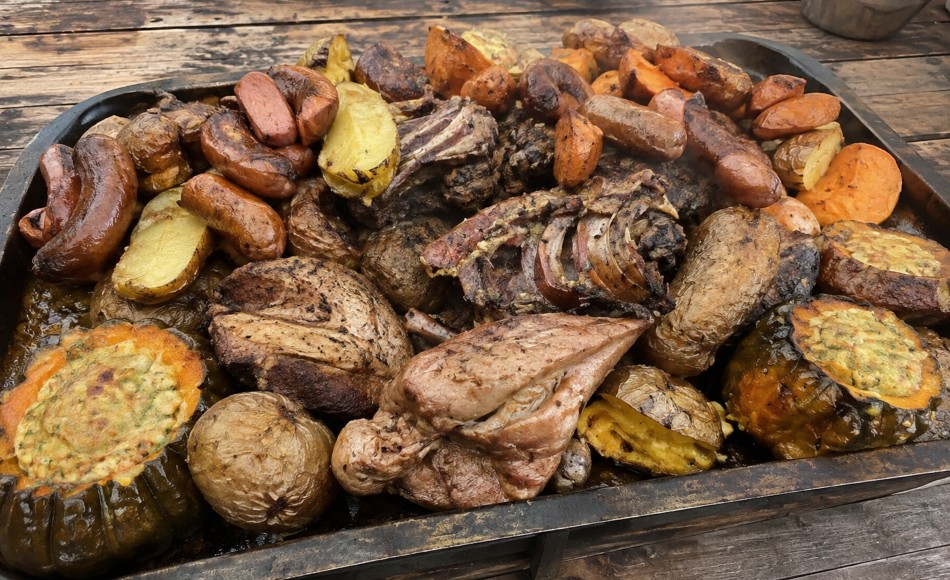
Curanto is an age-old Mapuche cooking technique, whose name comes from the Mapudungun word “curantü,” meaning “stone heated by the sun.”
It arrived in Argentine Patagonia in the late 19th century with Swiss-French pioneers who settled near Bariloche, adapting the original Chilean recipe with the region’s meats and vegetables.
Print
Argentine Patagonian Earth Oven
- Prep Time: 45 minutes
- Cook Time: 2 hours 45 minutes
- Total Time: 3 hours 30 minutes
- Yield: 10 servings
- Category: Main Course
- Cuisine: Argentine
Ingredients
- 1 kg of pork, in pieces (about 2.2 lb)
- 1 kg of lamb, in pieces (about 2.2 lb)
- 4 sausages (chorizo)
- 6 potatoes, skin on
- 6 sweet potatoes, skin on
- 1 cabbage, in large leaves
- Salt, to taste
- plenty of nalca or cabbage leaves, for covering
Preparation
- Dig the pit, dig a hole in the ground and heat large stones until red-hot with a wood fire.
- Build the base, place the hot stones at the bottom of the pit.
- Add the meats, arrange the pork, lamb, and sausages on the stones, starting with whatever needs the longest cooking time.
- Add vegetables, add the potatoes and sweet potatoes, and cover with the cabbage leaves.
- Cover, cover everything with plenty of large leaves and then with dirt, to fully seal in the heat.
- Cook, let it cook for 2 to 3 hours without uncovering, letting the steam and stone heat cook all the ingredients.
- Uncover, carefully remove the dirt and leaves.
- Serve, serve hot, straight from the pit.
Tips for getting it right
- Choosing large stones and heating them thoroughly is essential so they retain heat throughout cooking.
- Sealing the pit well with dirt keeps the steam from escaping, key to an even cook for all the ingredients.
- Placing the meats that need the longest cooking time first ensures everything finishes at the same time.
- In Argentina, the seafood from the original Chilean version is replaced with meats and vegetables, more accessible in the region.
Traditional variations
- The original Chilean version, typical of Chiloé, includes seafood such as clams and mussels.
- In Argentina, Colonia Suiza near Bariloche is known for keeping this tradition alive with its own adaptation.
How to serve
Curanto is served hot, freshly uncovered from the pit, as a main dish for group sharing.
It’s a Patagonian tradition closely associated with Bariloche and Colonia Suiza, celebrated at community gatherings.
Recommended sides
- Homemade bread
- Red wine
Did you know?
The word “curanto” comes from the Mapudungun “curantü,” meaning “stone heated by the sun,” referring to the ancestral cooking technique.
In Argentina, curanto arrived in the late 19th century with Swiss-French pioneers who settled in Colonia Suiza, near Bariloche.
Frequently Asked Questions
It comes from the Mapudungun "curantü," meaning "stone heated by the sun," referring to the technique of cooking with hot stones underground.
It arrived in the late 19th century with Swiss-French pioneers who, after traveling through Chile, settled in Colonia Suiza, near Bariloche.
The Chilean version includes seafood, while in Argentina meats and vegetables are used mainly, since fresh seafood is harder to come by on this side of the Andes.
Sealing the pit with dirt traps the steam and heat from the stones, ensuring an even, slow cook for all the ingredients.