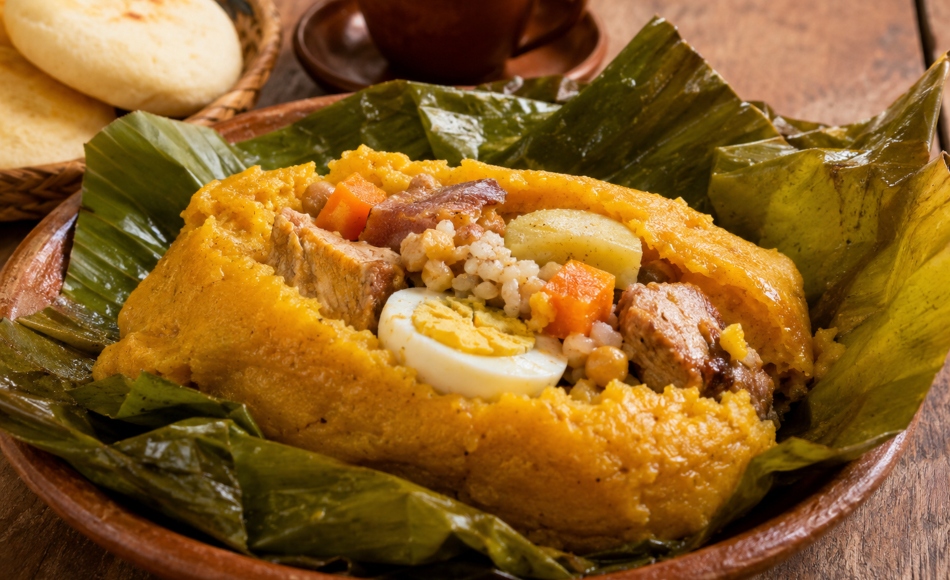
Santander-style tamale is a traditional preparation from Santander, Colombia, known for its bold flavor, corn dough enriched with pork cracklings, rectangular shape, and filling of pork, chicken, and pork belly marinated in hogao, with chickpeas, raisins, and capers. Like many Colombian tamales, it is wrapped in banana leaves and cooked slowly, but its identity is shaped by the hearty and flavorful character of Santander cuisine.
In Santander, this tamale is commonly enjoyed at family breakfasts, traditional food stalls, weekend gatherings, and popular celebrations. It is a filling dish meant to be eaten slowly and usually served with hot chocolate, coffee, or aguapanela.
Its preparation follows a very home-style approach: seasoned dough, well-marinated meats, softened banana leaves, and long cooking that allows all the ingredients to blend into a rich and deeply regional dish.
Print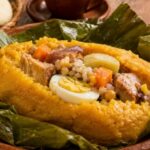
Santander Style Tamale
- Prep Time: 1 hour
- Cook Time: 5 hours
- Total Time: 6 hours
- Yield: 4 to 6 servings
- Category: Main Course
- Cuisine: Colombian
Ingredients
For 2 cups of cold hogao (basic Colombian hogao, optional if you already have prepared hogao)
- 2 scallion stalks, cut into thin strips
- 1 small white onion, finely chopped
- 4 ripe tomatoes, peeled and chopped
- 2 garlic cloves, finely chopped
- 3 tablespoons oil
- 2 tablespoons butter
- 2 tablespoons grated cheese (optional)
- Salt, cumin, and pepper, to taste
For the meats
- 500 g chicken breast (1 lb)
- 500 g pork leg (1 lb)
- 250 g pork belly or slab bacon (½ lb)
- Salt, pepper, and cumin, to taste
For the dough
- 500 g dried yellow corn (1 lb)
- Water for cooking, straining and soaking the corn and for the tamale pot
- 8 garlic cloves, finely chopped or crushed
- ½ cup fried and ground pork cracklings (chicharrón)
- ½ cup pork lard or oil
- 1 teaspoon cumin
- Achiote or annatto coloring, to taste
- Salt, to taste
For the filling
- 1 cup chickpeas, soaked since the day before
- 2 scallion stalks, finely chopped
- 2 large red or white onions, cut into chunks
- 1 sprig parsley, chopped
- 1 red bell pepper, cut into thin strips
- ¼ cup seedless raisins
- ¼ cup capers
For wrapping and cooking
- 10 to 15 banana leaves, softened over heat and cut into squares
- Extra banana leaves and stems for lining the pot
- Kitchen twine
Preparation
- Make the hogao the day before, the traditional recipe calls for 2 cups of cold or ready-made hogao. If you do not have it, make a basic Colombian hogao: heat the oil and sauté the scallions, white onion, tomatoes, and garlic for 10 minutes over medium heat. Add the butter, the grated cheese if using, salt, cumin, and pepper, and cook over low heat for 10 more minutes. Let it cool and use 2 cups.
- Cook the corn and marinate the meats, also the day before, cook the yellow corn in water until soft, let it cool, grind it, and strain it with water; leave it in fresh water overnight. Cut the chicken, pork leg, and pork belly into small pieces and marinate them overnight in the refrigerator in the 2 cups of cold hogao with salt, pepper, and cumin to taste.
- Make the dough, the next day, carefully pour off the water and collect the corn dough. Mix it with the garlic, cumin, pork cracklings, salt, achiote, and lard, and cook it, stirring constantly so it does not stick. To check if it is ready, take it off the heat and dip in a wet finger: it should come out clean. Cover it with a damp cloth or banana leaves and set aside.
- Cook the chickpeas, cook them in a pressure cooker with the scallions and salt for 45 minutes, or until tender.
- Shape and fill the tamales, lay 10 banana leaves on the table. Shape the dough into balls, reserving some to close the tamales, and place one on each leaf; flatten them with another leaf into slightly hollow arepas. Fill them with chickpeas, onion, parsley, bell pepper, pork belly, pork leg, chicken, raisins, and capers.
- Close and tie, cover the filling with more dough, wrap each tamale in the leaves, shaping it into a rectangle with your hands, and tie it with twine.
- Cook the tamales, line the bottom of a large pot with banana leaves and stems until they fill ¼ of the pot, add water, and arrange the tamales on top so they do not touch the water. Cook covered over medium heat for 4 hours, adding water around the edges as needed.
Tips for a Perfect Preparation
Soften the banana leaves very well so they become flexible and do not tear when wrapping the tamales.
Plan the recipe over two days: make the hogao, cook the corn, and marinate the meats the day before; prepare the dough and chickpeas, assemble, and cook the tamales the next day.
The chickpeas should be cooked before assembling the tamales; during cooking, they will mainly absorb the flavor of the marinade.
Do not tie the tamales too tightly, since the dough needs some room to cook properly.
Let the tamales rest before opening so the dough sets and the filling keeps its shape better.
Traditional Variations
In some Santander families, pork ribs are used instead of boneless pork, giving the filling a deeper flavor.
They can also be made with hen instead of chicken, especially for celebrations or family gatherings.
Some families replace the dried corn with corn flour or add half a cup of dried peas soaked since the day before.
Traditional Serving Style
Santander-style tamale is served hot, opened directly on the banana leaf. It is commonly enjoyed for breakfast or as a main meal during family gatherings, especially when prepared in large batches.
Traditionally, it is paired with hot chocolate, Colombian coffee, or aguapanela. It may also be served with fresh bread or arepa, depending on each family’s custom.
Recommended Pairings
- Colombian hot chocolate
- Colombian coffee
- Hot aguapanela
- Fresh bread
- White arepa
Food Tradition
Santander-style tamale reflects the hearty character of Santander cuisine, a region known for bold flavors, generous portions, and recipes passed down within families.
As with many Colombian tamales, making them is often a collective activity. Preparing several tamales involves organizing the dough, hogao, meats, banana leaves, and wrapping process, which is why many families make them together before celebrations or important gatherings.
Frequently Asked Questions
It stands out for its rectangular shape, its yellow corn dough mixed with pork cracklings, garlic, and cumin, and a filling of pork, chicken, and pork belly marinated in hogao, with chickpeas, raisins, and capers. It is a generous tamale with a bold flavor.
Yes. The traditional recipe allows replacing the cooked and ground yellow corn with corn flour. Mix it in the same way with the garlic, cumin, pork cracklings, salt, achiote, and lard, and cook it while stirring until the dough is ready.
The tamales cook covered over medium heat for 4 hours on a bed of banana leaves and stems, without touching the water, adding water around the edges as needed.
Yes, you can freeze them after they are cooked and completely cooled. Keep them well wrapped to preserve moisture. To reheat them, steam them or warm them in hot water while still wrapped in the banana leaf until heated through.
Santander-style tamale is commonly served with hot chocolate, Colombian coffee, or aguapanela. For breakfast, hot chocolate with bread or arepa is one of the most traditional ways to enjoy it.