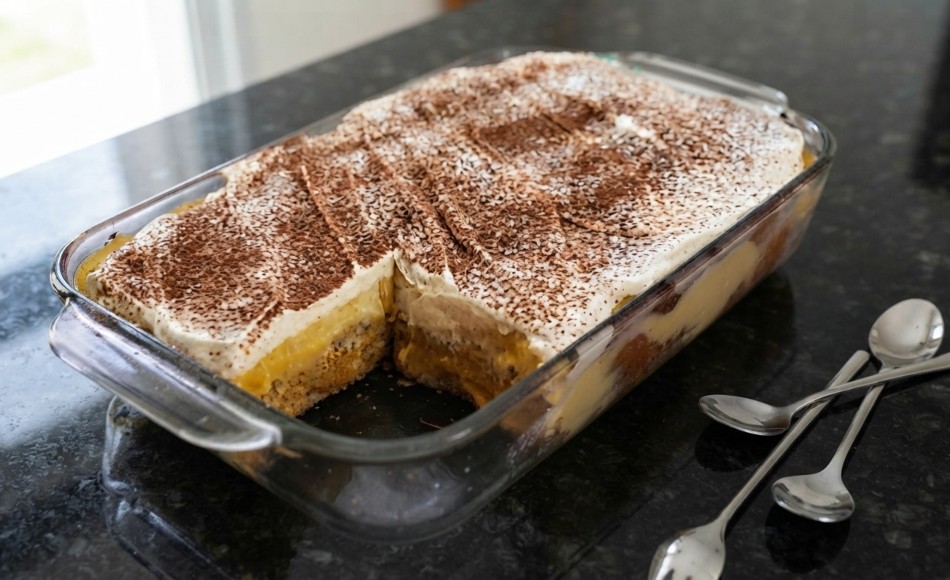
Postre borracho is one of the best-loved classics of Argentine home baking: a fluffy sponge cake sliced into layers, soaked in a liquor-spiked syrup, filled with pastry cream and dulce de leche, and finished with a golden Italian meringue. Its name — literally “drunken dessert” — comes straight from the alcohol-laced syrup that soaks every layer, giving the cake its intense flavor and signature moist texture.
It’s a regular at Argentine family tables, especially for birthdays, New Year’s celebrations, and gatherings where a simple flan or piece of fruit just won’t do as a closer. Many families have their own version passed down through generations, with small variations in the type of liquor used or the final topping.
Print
Argentine Drunken Cake
- Prep Time: 45 minutes
- Cook Time: 55 minutes
- Total Time: 4 hours 10 minutes
- Yield: 10 servings
- Category: Dessert
- Cuisine: Argentine
Ingredients
- 6 large eggs (for the sponge cake)
- 200 g of sugar (for the sponge cake) (1 cup)
- 200 g of all-purpose flour (1 1/2 cups)
- 1 teaspoon of vanilla extract (for the sponge cake)
- 1 pinch of salt
- 200 ml of water (for the syrup) (3/4 cup)
- 150 g of sugar (for the syrup) (3/4 cup)
- 100 ml of dark rum or caña quemada (Argentine burnt-cane liquor) (scant 1/2 cup)
- 500 ml of whole milk (for the pastry cream) (2 cups)
- 4 egg yolks
- 100 g of sugar (for the pastry cream) (1/2 cup)
- 40 g of cornstarch (4 tablespoons)
- 1 teaspoon of vanilla extract (for the pastry cream)
- 300 g of dulce de leche (1 cup)
- 4 pasteurized egg whites
- 200 g of sugar (for the meringue) (1 cup)
- 60 ml of water (for the meringue syrup) (1/4 cup)
Preparation
- Make the sponge cake: beat the eggs with the sugar for several minutes until the mixture triples in volume and turns pale and foamy. Stir in the vanilla extract, sift the flour with the salt, and fold it in gently so the batter doesn’t lose its air. Pour the batter into a buttered and floured pan and bake in a moderate oven (350°F/180°C) for 25 to 30 minutes, until a toothpick inserted in the center comes out clean. Let it cool completely before unmolding.
- Make the syrup: combine the water and sugar in a small saucepan and cook over medium heat until it boils and the sugar dissolves completely. Remove from the heat, let it cool slightly, then stir in the rum or caña quemada.
- Make the pastry cream: in a bowl, whisk the egg yolks with the sugar and cornstarch until smooth. Warm the milk with the vanilla extract and slowly pour it over the yolk mixture, whisking constantly. Return everything to the saucepan and cook over low heat, stirring nonstop, until it thickens into a creamy custard. Remove from the heat and cover with plastic wrap pressed directly onto the surface to prevent a skin from forming; let it cool.
- Slice the sponge cake into two or three even layers using a serrated knife. Place the first layer on the serving platter and soak it generously with the prepared syrup.
- Assemble the cake: spread a layer of pastry cream over the soaked disc, followed by an even layer of dulce de leche. Add the next sponge layer, soak it with syrup as well, and repeat the filling until you finish with a well-soaked top layer.
- Make the Italian meringue: cook the water and sugar together until the syrup reaches the soft-ball stage (about 240°F/115–118°C). Meanwhile, beat the pasteurized egg whites to stiff peaks and, without stopping, drizzle in the hot syrup in a thin stream until you get a firm, glossy, warm meringue.
- Cover the entire cake with the meringue, shaping peaks with a spatula. Brown the surface with a kitchen torch or a few seconds under the broiler, watching closely so it doesn’t burn. Refrigerate the cake for at least two hours before serving so it firms up and the flavors settle.
Kitchen Tricks
- If you don’t have a kitchen torch, brown the meringue for a few seconds under a very hot broiler, staying close by so it doesn’t scorch.
- Bake the sponge cake a day ahead; once firm, it’s much easier to slice into even layers.
- Adjust how much syrup you use depending on how dry the cake is: it should end up moist but never soggy or falling apart.
- For a milder kick, briefly flambé the rum or caña quemada before adding it to the syrup to soften its intensity.
Traditional variations
- Some households replace the caña quemada with sweet wine or moscato in the syrup.
- Some families top the cake with whipped cream instead of Italian meringue.
Serving Suggestions
Serve postre borracho well chilled, cut into generous slices that show off the layers of sponge cake, pastry cream, and dulce de leche. It’s traditionally enjoyed with a cortado (espresso with a splash of milk) or a cup of tea after a Sunday asado or a family gathering.
Recommended sides
- Cortado (Argentine espresso with milk)
- Black tea
- A small glass of sweet liqueur (optional)
A Bit of History
Postre borracho belongs to the classic repertoire of Argentine home baking, rooted in the European tradition of syrup- and liquor-soaked cakes, much like Spain’s bizcocho borracho or Italy’s tiramisù. It’s a fixture at birthdays, family celebrations, and end-of-year gatherings, whenever a more elaborate finish to a meal is called for. Its name comes directly from the alcohol-spiked syrup that soaks the sponge cake, and even though most of the alcohol cooks off during preparation, it leaves behind a distinctive flavor that sets this cake apart from other dulce de leche desserts.
Frequently Asked Questions
Postre Borracho (Argentine Drunken Cake) is a traditional recipe made with simple ingredients and a homemade cooking method that preserves its authentic flavor.
The total time may vary depending on the recipe and number of servings, but it can usually be prepared by following the steps shown in the recipe.
It can be served with traditional side dishes, typical drinks, or simple accompaniments according to local customs.
Yes, in many cases it can be stored in the refrigerator in a sealed container and enjoyed the next day, as long as it is still fresh before serving.
Yes, you can make small adjustments based on your taste, but it is best to keep the main ingredients to preserve the traditional flavor.