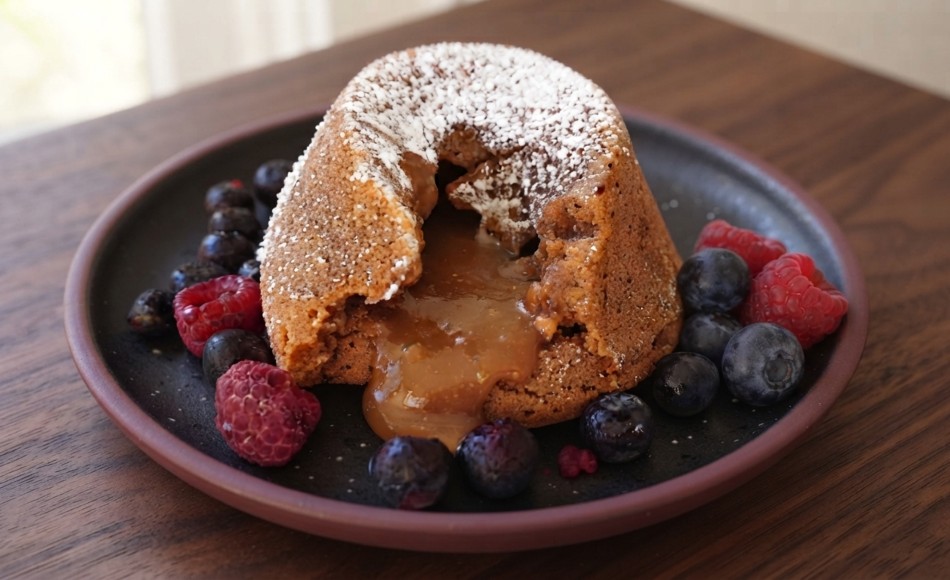
The dulce de leche volcano is one of the most popular desserts on Argentine steakhouse menus, arriving at the table as a tall stack of thin crepes filled with dulce de leche and finished with a warm pour of the caramel-like sauce that spills down the sides like lava. It’s typically the grand finale after a big asado (barbecue) or family meal, cut and served right at the table so everyone can see the dulce de leche stream down the tower.
While it doesn’t come from a centuries-old tradition, this dessert became a modern Argentine classic over the past few decades as a festive way to showcase the country’s most beloved ingredient: dulce de leche. Today it’s a staple on dessert menus across Argentina, especially at steakhouses and family restaurants, where it’s built to be shared among several diners.
Print
Dulce de Leche Volcano Cake
- Prep Time: 25 minutes
- Cook Time: 20 minutes
- Total Time: 1 hour
- Yield: 4 servings
- Category: Dessert
- Cuisine: Argentine
Ingredients
- 500 ml of whole milk (2 cups)
- 250 g of all-purpose flour (2 cups)
- 3 eggs
- 50 g of melted butter (3 1/2 tablespoons)
- 1 pinch of salt
- 25 g of sugar (2 tablespoons)
- 500 g of thick spreadable dulce de leche (1 1/2 cups)
- 100 g of chopped roasted peanuts (3/4 cup) (optional)
- 200 ml of whipped cream or vanilla ice cream (1 cup) (optional)
- Oil or butter for the skillet
Preparation
- Make the crepe batter, whisk together the milk, eggs, melted butter, salt, and sugar in a bowl until combined, then gradually add the flour and mix until you have a smooth, lump-free, pourable batter.
- Let the batter rest, cover the bowl and refrigerate it for 15 minutes so the flour fully hydrates, which makes the crepes thinner and more pliable once cooked.
- Cook the crepes, heat a lightly oiled nonstick skillet over medium heat, pour in a ladleful of batter, swirl the pan to coat the bottom in a thin layer, and cook each crepe about a minute per side until golden; repeat with the remaining batter.
- Fill and stack the crepes, spread a thin layer of dulce de leche over each crepe and stack them one on top of another in the center of a deep plate, building a tall tower and pressing down gently so it holds together.
- Warm the remaining dulce de leche, heat the rest of the dulce de leche over low heat or in the microwave until pourable, then drizzle it generously over the crepe tower, letting it run down the sides like lava.
- Garnish and serve, sprinkle the volcano with chopped peanuts, add a dollop of whipped cream or a scoop of vanilla ice cream if you like, and serve right away, slicing it into portions at the table.
Practical Tips
- Cook the crepes in a hot but not smoking pan so they brown evenly without scorching.
- If the batter thickens too much after resting, whisk in a splash of milk to bring it back to a pourable consistency.
- Cook the crepes ahead of time and assemble the volcano right before serving so it stays warm and gooey.
- Use a thicker, spreadable dulce de leche if you want the tower to hold its shape better before topping it with the warm sauce.
Traditional variations
- Some versions swap the crepes for sponge cake rounds, keeping the same volcano-shaped assembly.
- Many steakhouses flambé the dulce de leche with a splash of liqueur before serving for a more dramatic tableside presentation.
How to Serve
The dulce de leche volcano is served right after assembly, while the dulce de leche is still warm and streaming down the sides of the tower.
It’s common to pair it with a cortado or a hot coffee at the end of the meal, since this dessert is quite rich and sweet.
Recommended sides
- Vanilla ice cream
- Whipped cream
- Cortado coffee
A Bit of History
Dulce de leche is one of the most iconic ingredients in Argentine cooking and stars in many of the country’s desserts, from alfajores to filled crepes. The volcano cake builds on that tradition in a format made for sharing at the table, reflecting the Argentine custom of lingering over dessert and coffee after a big asado.
Frequently Asked Questions
Dulce de Leche Volcano Cake is a traditional recipe made with simple ingredients and a homemade cooking method that preserves its authentic flavor.
Following the recipe step by step, the total time will depend on how many servings you make and the cooking times listed.
It goes well with classic accompaniments and typical beverages, depending on the occasion and family tradition.
In most cases yes: stored in a sealed container in the refrigerator, it stays good for the next day, as long as its freshness is checked before serving.
Yes, small variations are fine based on personal preference, as long as the key ingredients that define its traditional flavor are kept.