
Peruvian stuffed tacacho is an Amazonian variation of traditional tacacho, made with cooked green plantains mashed with pork lard and shaped into balls filled with cecina, crispy pork, or another pork preparation typical of the region. It is hearty, flavorful, and closely tied to the culinary identity of Peru’s rainforest.
In regions such as San Martín, Loreto, Ucayali, and Madre de Dios, tacacho is part of hearty breakfasts, family lunches, food fairs, and regional celebrations. The stuffed version keeps the traditional green plantain base but concentrates the flavor of cecina or chicharrón inside, creating a more generous and festive presentation.
Unlike tacacho served alongside cecina, stuffed tacacho places the meat inside the plantain dough. It is served hot with cocona chili sauce, chonta salad, or boiled cassava, preserving the rustic and authentic character of Peruvian Amazonian cooking.
Print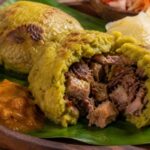
Peruvian Stuffed Tacacho
- Prep Time: 25 minutes
- Cook Time: 30 minutes
- Total Time: 55 minutes
- Yield: 4
- Category: Main Course
- Cuisine: Peruvian
Ingredients
- 1.2 kg green plantains (4 large plantains)
- 120 g pork lard (½ cup)
- 250 g finely chopped or shredded Amazonian cecina (1½ cups)
- 120 g chopped crispy pork or chicharrón (¾ cup)
- 45 ml vegetable oil or pork lard (3 tablespoons, for frying the cecina if needed)
- 8 g salt (1½ teaspoons)
- 100 g cocona chili sauce for serving (½ cup)
- 4 clean bijao leaves for serving, optional
Preparation
- Prepare the cecina, if the cecina is very dry or salty, soak it in hot water for 10 minutes, drain it, and dry it well. Then fry it in a skillet with the oil or pork lard for 3 to 5 minutes, until hot, golden, and slightly crisp around the edges. Chop it finely or shred it.
- Cook the plantains, peel the green plantains and cut them into large pieces. Roast them over embers or on a grill until soft and lightly browned, or fry them in hot pork lard over medium heat until cooked through without burning on the outside.
- Mash the dough, place the hot plantains in a large mortar, batán, or sturdy bowl. Mash them while still soft, gradually add the pork lard and salt, and keep mashing until you get a rustic, compact, slightly moist dough.
- Prepare the filling, mix the chopped cecina with the chicharrón in a bowl. The filling should be savory, juicy, and cut into small pieces so you can seal it easily inside the tacacho.
- Shape the stuffed tacachos, take a portion of warm plantain dough, flatten it in your palm, place a generous spoonful of filling in the center, and close it into a firm ball. Press gently to seal it well without compacting the dough too much.
- Brown and serve, if you want a firmer surface, place the stuffed tacachos in a hot skillet with a little pork lard and turn them carefully until lightly browned. Serve them hot with cocona chili sauce, chonta salad, or boiled cassava.
Practical Tips
Use firm green plantains, not ripe or semi-ripe ones, because you need a compact dough that can hold the filling.
Mash the plantain while it is hot; once it cools, it becomes harder to work with and may crack when filled.
Chop the cecina and chicharrón finely so the filling spreads well and does not tear the dough.
Do not add too much salt to the dough if the cecina is well cured, because the filling already adds saltiness.
For a more traditional smoky flavor, roast the plantains instead of frying them.
Traditional Variations
In some areas of the Peruvian Amazon, stuffed tacacho is filled with chopped cecina, especially when a stronger smoky flavor is desired.
There are also versions with chicharrón as the main filling, common in heartier home-style preparations.
In certain homes, cecina and chicharrón are mixed inside the tacacho, creating a more flavorful and festive version.
Some preparations are served wrapped in or placed on bijao leaves to reinforce the Amazonian character of the dish.
Traditional Serving Style
Serve stuffed tacacho hot, freshly shaped or lightly browned in a skillet. The most traditional presentation is rustic and generous: one or two large balls per serving, with the filling visible when opened.
Serve it with cocona chili sauce, chonta salad, boiled cassava, or roasted plantain. In the Peruvian Amazon, it also pairs well with regional drinks such as aguajina, camu camu juice, cocona juice, or masato.
Recommended Pairings
- Cocona chili sauce
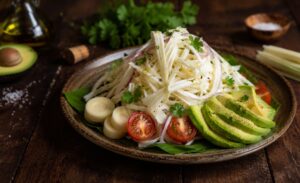
- Chonta salad
- Boiled cassava
- Roasted plantain
- Extra fried cecina
- White rice
- Aguajina
- Camu camu juice
- Masato
Culinary Curiosity
Stuffed tacacho preserves the essential technique of Amazonian tacacho: cooking green plantain and mashing it while hot until it becomes a firm dough. The difference is that the flavor of the meat is hidden inside, like a smoky, salty surprise.
This preparation shows the versatility of green plantain in Peruvian rainforest cooking. With few ingredients and a simple technique, it can become a side dish, a main dish, or a hearty food to share at markets, family gatherings, and regional celebrations.
Frequently Asked Questions
Peruvian stuffed tacacho is an Amazonian variation of traditional tacacho. It is made with cooked green plantain mashed with pork lard, then shaped into a ball and filled with cecina, chicharrón, or both. It is a hearty dish typical of Peru’s rainforest cuisine.
The most representative filling includes chopped Amazonian cecina, chicharrón, or a mix of both. Cecina adds smoky, salty flavor, while chicharrón brings fat, texture, and richness. The filling should be finely chopped so it fits well inside the plantain dough.
Not always. You can serve it freshly shaped if the plantain and filling are hot. However, many home-style versions lightly brown it in a skillet with pork lard to give it a firmer surface and toasted flavor, without turning it into a deep-fried preparation.
Green plantain is used, firm and unripe. Ripe plantain is not suitable because it is sweeter and softer, which makes it harder to hold the filling. Green plantain creates a rustic, compact, sturdy dough that is ideal for stuffed balls.
The most traditional accompaniment is cocona chili sauce, valued for its fresh, tangy, spicy flavor. It is also served with chonta salad, boiled cassava, roasted plantain, or extra cecina. Common drinks include aguajina, camu camu juice, cocona juice, and masato.