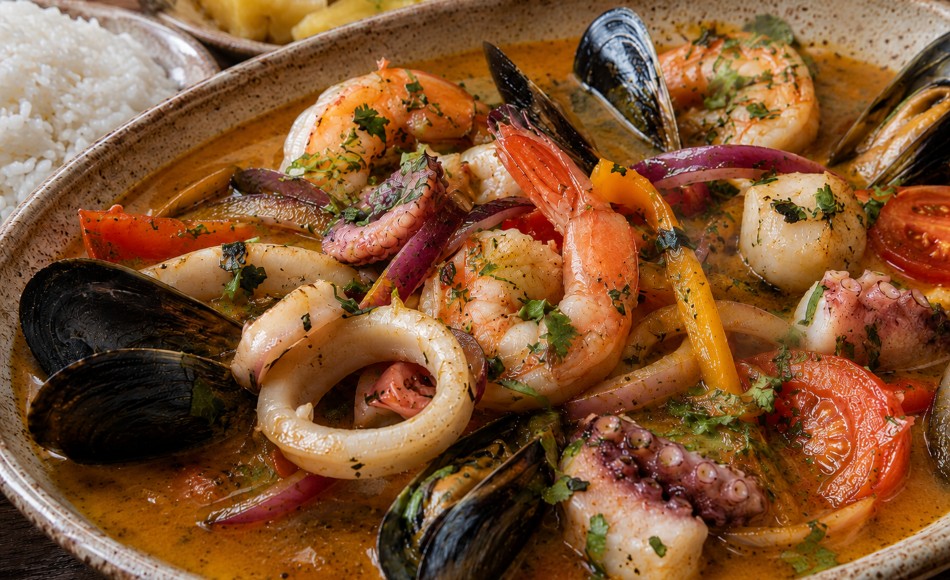
Peruvian seafood sudado is a traditional coastal dish made with fresh seafood gently cooked in a flavorful, concentrated broth of red onion, tomato, ají amarillo, cilantro, and chicha de jora. The method preserves the natural flavor of the seafood while creating a short, aromatic broth.
It is common in seafood restaurants, fishing towns, and coastal homes throughout Peru. It is served piping hot, usually with boiled cassava, white rice, or bread to soak up the deeply flavored juices from the seafood and criollo-style seasoning base.
Print
Peruvian Seafood Sudado
- Prep Time: 25 minutes
- Cook Time: 25 minutes
- Total Time: 50 minutes
- Yield: 6
- Category: Main Course
- Cuisine: Peruvian
Ingredients
- 500 g cleaned squid, cut into rings (about 1.1 lb)
- 400 g cleaned shrimp, tails on (about 14 oz)
- 400 g cleaned mussels (about 14 oz)
- 300 g cooked octopus, sliced (about 10.5 oz)
- 200 g cleaned scallops (about 7 oz)
- 250 g red onion, cut into thick slices (2 medium onions)
- 250 g tomatoes, cut into wedges (3 medium tomatoes)
- 30 g fresh ají amarillo, seeded and cut into strips (1 large pepper)
- 20 g garlic paste (4 garlic cloves)
- 45 g ají amarillo paste (3 tablespoons)
- 250 ml chicha de jora (1 cup)
- 250 ml hot fish stock (1 cup)
- 30 ml vegetable oil (2 tablespoons)
- 20 g chopped fresh cilantro (½ cup)
- 10 g chopped fresh parsley (¼ cup)
- 10 g salt (2 teaspoons)
- 3 g ground black pepper (½ teaspoon)
- 5 g ground cumin (1 teaspoon)
- 30 ml lime juice (2 tablespoons)
- 500 g boiled cassava, cut into large pieces (1 medium cassava root)
- 400 g cooked white rice (4 cups)
Preparation
- Clean and season the seafood, rinse the squid, shrimp, mussels, octopus, and scallops well. Discard any mussels that are open before cooking. Mix the seafood with the lime juice, half of the salt, black pepper, and cumin, then set it aside while you prepare the base.
- Make the criollo seasoning base, heat the oil in a wide pot and cook the onion for 4 minutes, until it begins to soften. Add the garlic, ají amarillo paste, fresh ají amarillo, and tomatoes. Cook for 5 minutes, stirring gently, until the tomatoes release some of their juices.
- Build the sudado broth, pour the chicha de jora and fish stock into the pot. Add half of the cilantro and let the mixture simmer gently for 5 minutes, until fragrant and slightly reduced.
- Cook the seafood in stages, add the squid and cooked octopus first, cover the pot, and cook for 3 minutes. Add the mussels, cover again, and cook for 3 more minutes, until they open. Add the shrimp and scallops last, cook for only 2 to 3 minutes, and remove the pot from the heat when the shrimp are pink and the scallops are opaque.
- Finish the sudado, add the remaining cilantro and parsley, then taste for seasoning. Gently shake the pot by its handles to combine the flavors without breaking the seafood. Let it rest, covered, for 2 minutes so the broth settles.
- Serve piping hot, divide the seafood and short broth among deep bowls. Serve each portion with boiled cassava and fluffy white rice to soak up the flavorful sudado juices.
Chef’s tips
- Use very fresh seafood and cook it only as long as needed so it remains tender.
- Discard mussels that do not open after cooking.
- Add shrimp and scallops at the end because they cook in only a few minutes.
- Keep the pot covered while cooking to concentrate steam, seafood juices, and cilantro aroma.
- Do not stir with a spoon after adding the seafood; shake the pot gently instead.
Traditional variations
Along Peru’s coast, sudado may be made with firm fish such as corvina, cachema, rockfish, or bonito. Mixed versions also combine fish with mussels, shrimp, squid, and octopus.
Some families use dark beer instead of part of the chicha de jora, while others add rocoto for more heat. The onion, tomato, ají amarillo, cilantro, and covered cooking method remain the central features of the dish.
How to serve
Serve seafood sudado in deep bowls with plenty of broth, vegetables, and visible seafood. Bring it to the table as soon as cooking is finished, when the seafood is still tender and the broth is at its most fragrant.
Serve it with boiled cassava, fluffy white rice, or crusty bread. Peruvian tables may also offer ground chili sauce, salsa criolla, and lime wedges to adjust the flavor.
Recommended accompaniments
- Boiled cassava
- Fluffy white rice
- Crusty bread
- Salsa criolla
- Ground ají amarillo
- Chicha morada
- Peruvian-style lemonade
Food tradition
The word “sudado” describes a covered cooking technique in which ingredients cook with little liquid and their own steam. Instead of boiling in a large amount of broth, the seafood releases its juices into the pot, where they blend with tomatoes, onions, chili peppers, and herbs.
This technique is highly valued in Peruvian coastal cooking because it creates deeply flavored, juicy dishes without covering the natural taste of the fish or seafood.
Frequently Asked Questions
You can use a mix of squid, shrimp, mussels, octopus, and scallops. The key is using very fresh seafood and adding each ingredient according to its cooking time. Firmer seafood such as squid and cooked octopus goes in first, while shrimp and scallops should be added at the end.
Yes. Use frozen seafood when fresh seafood is unavailable. Thaw it slowly in the refrigerator, drain it very well, and pat it dry before cooking. Since it can release extra water, reduce the seasoning base for a few minutes before adding the seafood so the finished sudado remains concentrated.
Seafood becomes tough when it is cooked too long. Squid should be cooked very briefly or for a long braise, but this recipe uses a short cooking method. Shrimp, mussels, and scallops need only a few minutes. Remove the pot from the heat as soon as they are cooked to keep them tender.
It is not ideal to make the complete dish far ahead because seafood can lose its texture when reheated. You can prepare the seasoning base and broth a few hours earlier. When you are ready to serve, warm them and add the fresh seafood for a quick final cook.