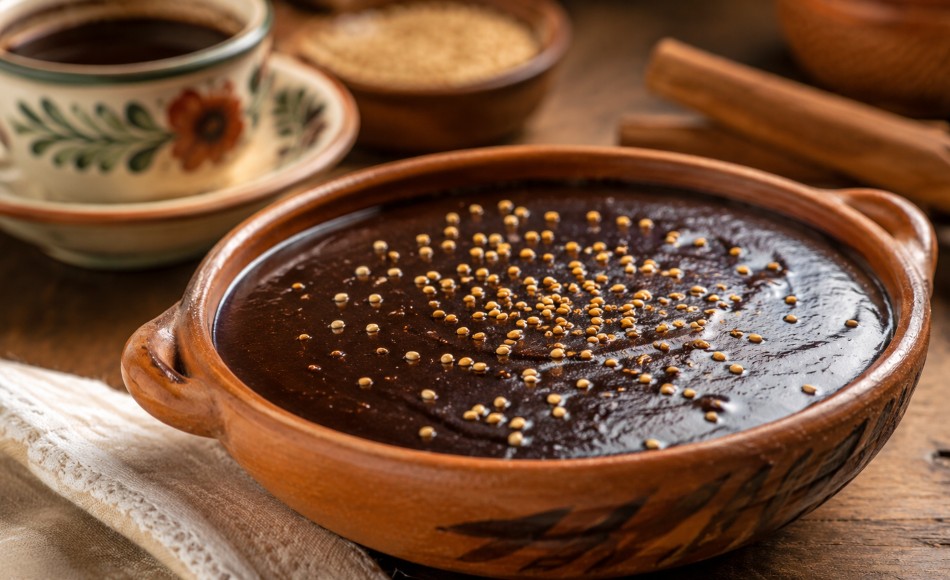
Peruvian Frejol colado is one of the most traditional desserts from Peru’s southern coast, especially linked to the provinces of Chincha and Cañete. It is made with cooked black beans that are strained until smooth, then slowly cooked with sugar, milk, cinnamon, cloves, and toasted sesame seeds until thick, glossy, and aromatic.
In Chincha, this dessert is part of home-style and festive cooking. It is often prepared for family gatherings, local food fairs, and religious seasons such as Holy Week. Its deep flavor and silky texture reflect the criollo and Afro-Peruvian heritage of Peru’s coastal cuisine, where simple ingredients are transformed into sweets with strong cultural identity.
Print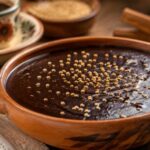
Peruvian Frejol Colado
- Prep Time: 12 hours
- Cook Time: 2 hours
- Total Time: 14 hours
- Yield: 8
- Category: Dessert
- Cuisine: Peruvian
Ingredients
- 500 g dried black beans
- 1.5 liters water (6 cups)
- 400 g brown or white sugar (2 cups)
- 400 ml evaporated milk (1 large can)
- 250 ml whole milk (1 cup)
- 2 cinnamon sticks
- 4 whole cloves
- 30 g toasted sesame seeds (3 tablespoons)
- 15 ml vanilla extract (1 tablespoon)
- 1 pinch of salt
Preparation
- Soak and cook the beans, rinse the black beans and soak them overnight. The next day, drain them, place them in a pot with the water, cinnamon sticks, and cloves, and cook over medium heat until the beans are completely tender and break apart easily.
- Strain the mixture, remove the cinnamon sticks and cloves, then blend the cooked beans with some of their cooking liquid until thick and creamy. Pass the mixture through a fine-mesh strainer, pressing well to remove the skins and create the smooth texture that defines traditional frejol colado.
- Cook the pudding slowly, place the strained bean cream in a heavy-bottomed pot, add the sugar, evaporated milk, whole milk, and salt. Cook over low heat, stirring constantly with a wooden spoon so the mixture does not stick or scorch.
- Reach the right consistency, keep cooking until the mixture thickens, turns dark and glossy, and begins to pull slightly away from the bottom of the pot as you stir. This step takes patience, because the traditional flavor develops through slow cooking.
- Add the final aroma, stir in the vanilla and half of the toasted sesame seeds. Cook for a few more minutes until the pudding is smooth, creamy, and as thick as a rich custard.
- Serve the frejol colado, spoon the pudding into small dessert bowls or plates and sprinkle the remaining toasted sesame seeds on top. Serve it warm or chilled, depending on preference.
Practical Cooking Tips
Use very tender black beans so the final pudding turns out smooth and free of lumps.
Stir constantly during the final cooking stage, since the sugar and milk can easily stick to the bottom of the pot.
A fine-mesh strainer is important for achieving the traditional silky texture.
For a deeper flavor, let the cinnamon and cloves fully perfume the cooking water, but remove them before blending.
Traditional Variations
In some homes, frejol colado is prepared with only sugar and spices, without milk, resulting in a darker and more concentrated dessert.
Some families add a light touch of anise or increase the amount of toasted sesame seeds at the end.
In certain households, it is served very thick, almost like a sweet paste, while others prefer a creamier pudding-like texture.
Traditional Serving Style
Chincha-style frejol colado is usually served in small portions, often in dessert bowls, shallow dishes, or simple cups. The traditional topping is toasted sesame seeds, which add aroma and a delicate contrast to the creamy pudding.
It is commonly enjoyed as a dessert after lunch, at family gatherings, or during traditional celebrations. It pairs well with Peruvian brewed coffee, lemongrass tea, or chilled chicha morada.
Recommended Pairings
- Peruvian brewed coffee
- Lemongrass tea
- Chicha morada
- Soda crackers or sweet bread
- Other Peruvian criollo sweets on festive dessert tables
Culinary Curiosity
Even though its main ingredient is black beans, frejol colado does not taste like a savory bean dish. The long cooking process with sugar, spices, and milk completely transforms the beans into a smooth, fragrant dessert loved along Peru’s southern coast.
Its name comes from the straining process used to remove the bean skins and create a silky cream. That technique is what sets frejol colado apart from other legume-based sweets.
Frequently Asked Questions
Traditional frejol colado is made with dried black beans. They provide the dessert’s characteristic dark color and creamy texture once fully cooked. Soaking them for several hours beforehand helps them soften properly and makes the straining process much easier.
You can serve it either warm or chilled. Many families enjoy it warm right after cooking because the cinnamon, clove, and vanilla aromas are more noticeable. It can also be refrigerated and served cold, when it becomes firmer and creamier.
The beans are strained to remove the skins and create a smooth, delicate cream. This step is essential in the traditional recipe because the finished dessert should be silky, without lumps or pieces of bean skin.
Frejol colado keeps for 3 to 4 days in the refrigerator when stored in a tightly sealed container. Since it contains milk, it should stay chilled and should not sit at room temperature for many hours. Before serving, stir it gently to restore its creamy texture.