Escalivada is one of the most iconic dishes in Catalan cooking: a mix of whole-roasted eggplant, red bell pepper, and onion, cooked until the skins char and the flesh turns sweet and tender. Its name comes from the Catalan verb "escalivar," meaning to roast directly over embers, a technique that goes back generations in Catalonia.
It's especially popular during the warmer months, when the vegetables are at their peak, and it shows up on Catalan tables as a starter or a side for grilled meats and fish. You'll find it in country homes, traditional masies, and classic restaurants alike, usually served cold or lukewarm and dressed simply with olive oil and a touch of garlic.
Print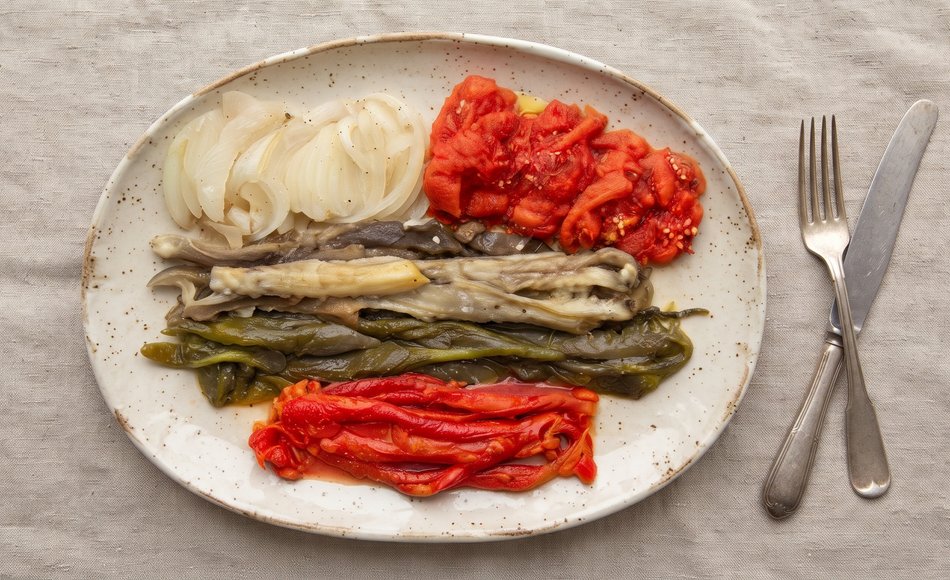
Catalan Escalivada
- Prep Time: 20 minutes
- Cook Time: 50 minutes
- Total Time: 1 hour 25 minutes
- Yield: 4 servings
- Category: Side Dish
- Cuisine: Catalan
Ingredients
- 800 g of large eggplants (2 large (about 1.75 lbs))
- 750 g of large red bell peppers (3 large (about 1.65 lbs))
- 400 g of large onions (2 large (about 14 oz))
- 300 g of ripe tomatoes (2 medium (about 10.5 oz)) (optional)
- 4 cloves of garlic
- 80 ml of extra virgin olive oil (about 1/3 cup)
- Salt, to taste
Preparation
- Preheat the oven, set it to 400°F (200°C) and line a baking sheet with parchment paper, since escalivada is traditionally roasted over embers or an open flame, but the oven reproduces that result very well at home.
- Prep the vegetables, wash the eggplants and peppers, pat them dry, and peel the onions while leaving them whole so they keep their juices during roasting.
- Roast the vegetables whole, place the eggplants, peppers, onions, and tomatoes if using on the baking sheet, drizzle with a little olive oil, and roast for 45 to 60 minutes, turning halfway through, until the skins are dark and blistered and the flesh is very tender.
- Let the vegetables sweat, remove them from the oven and place them in a large bowl covered with a clean towel or plastic wrap for 15 to 20 minutes; this resting step makes them much easier to peel afterward.
- Peel and slice into strips, remove the charred skin, the pepper seeds, and the onion core, then cut the flesh of each vegetable into long, thin strips, saving any juices they release.
- Dress and serve, arrange the vegetable strips on a serving platter, add the chopped or sliced garlic, drizzle with extra virgin olive oil and salt, and serve at room temperature or slightly warm.
Kitchen Tips
- Roast the vegetables directly over a gas flame or on the grill if you can, since direct contact with fire gives escalivada its signature smoky flavor.
- Don't cut the vegetables before roasting: they need to cook whole so they keep their juices and don't dry out.
- Make a generous batch, since escalivada keeps well in the fridge for 3-4 days and actually tastes better the next day.
- Save the oil and juices the vegetables release while peeling them, since they're perfect for dressing the finished dish.
Traditional variations
- Some households add roasted tomato along with the other vegetables for extra juiciness.
- It's common to serve escalivada topped with anchovy fillets or flaked salt cod, known then as "escalivada amb anxoves" or "amb bacallà."
- In inland Catalonia, some families replace part of the olive oil with the vegetables' own roasting juices for a lighter dressing.
Serving Suggestions
Escalivada is traditionally served at room temperature or lukewarm, never hot, arranged on a wide platter and dressed just before it reaches the table.
It's usually served with country bread or Catalan tomato bread (pa amb tomàquet), which can also be topped directly with the vegetables.
Recommended sides
- Country bread or Catalan tomato bread (pa amb tomàquet)
- Anchovies in oil or flaked salt cod
- Grilled meats or fish
Origin and Tradition
The name "escalivada" comes from the Catalan verb "escalivar," meaning to roast directly over embers or hot ashes, an ancient technique used throughout the Mediterranean basin.
This dish is deeply tied to the tradition of the hearth: in the past it was prepared using the low embers left after roasting meat, placing the whole vegetables directly on the hot ashes.
Frequently Asked Questions
Because that 15 to 20 minute rest in a bowl covered with a towel or plastic wrap makes them much easier to peel afterward.
No, they need to roast whole so they keep their juices and don't dry out during cooking.
It keeps well in the fridge for 3-4 days, and it actually tastes better the next day.
It's served at room temperature or lukewarm, never hot, arranged on a wide platter and dressed just before it reaches the table.
You can add roasted tomato along with the other vegetables, or serve it topped with anchovy fillets or flaked salt cod.