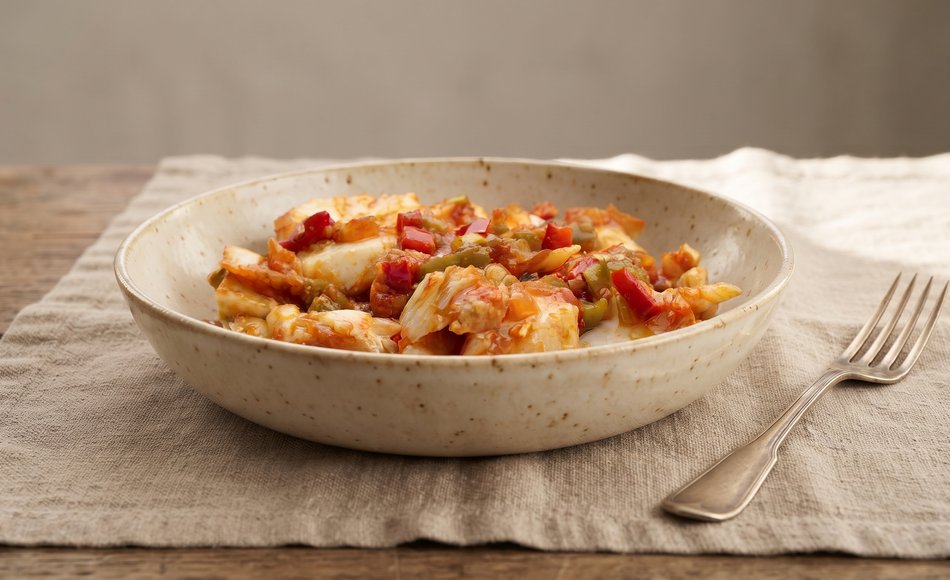
Marmitako is one of the most iconic stews of Basque cuisine, a hearty dish that combines bonito del norte (white albacore tuna), potatoes, and a sofrito of peppers and onion into a rich, comforting one-pot meal. Its name comes from "marmita," the iron cooking pot that fishermen carried aboard bonito boats, combined with the Basque suffix "-ako," meaning "made in" or "belonging to" that pot.
It was traditionally cooked by fishermen themselves during the long bonito fishing trips between July and October, using the freshly caught fish along with potatoes, onion, and peppers, ingredients sturdy enough to keep for weeks at sea. Over time, the recipe moved from the boats into homes and cider houses across the Basque Country and Cantabria, where it's now a much-anticipated seasonal dish.
Beyond its flavor, marmitako carries the memory of traditional Basque fishing and is still celebrated today: several coastal towns hold cook-offs and summer festivals dedicated to the stew, reinforcing its place as a symbol of the region's culinary identity.
Print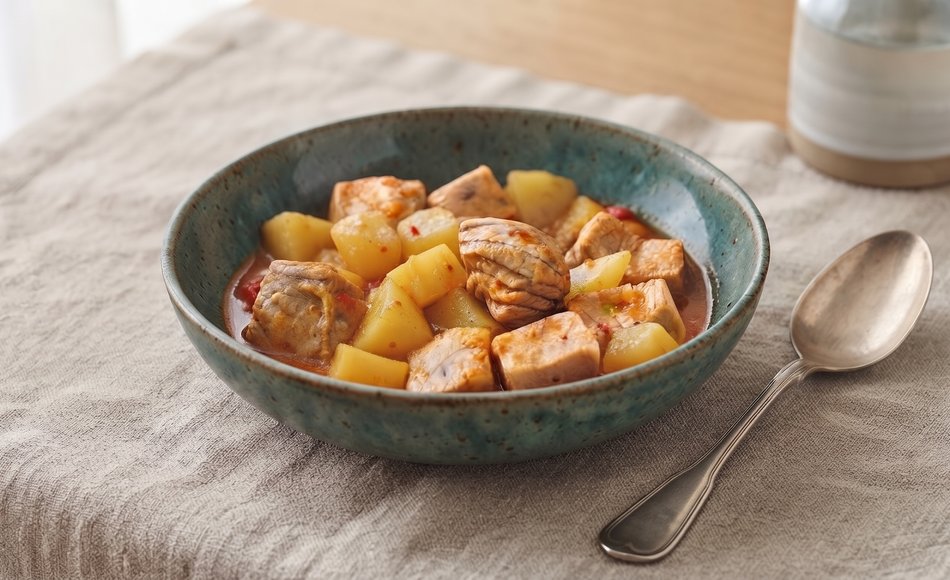
Marmitako (Tuna and Potato Stew)
- Prep Time: 20 minutes
- Cook Time: 35 minutes
- Total Time: 55 minutes
- Yield: 4 servings
- Category: Main Course
- Cuisine: Basque
Ingredients
- 800 g of fresh bonito del norte (white albacore tuna), cut into large chunks (about 4 thick fillets; ask your fishmonger to cut it for you)
- 1 kg of potatoes (5-6 medium potatoes (about 2.2 lb))
- 300 g of chopped green Italian frying peppers (2 large green peppers)
- 200 g of chopped onion (1 large onion)
- 15 g of chopped garlic (3 garlic cloves)
- 200 g of grated ripe tomato (2 medium tomatoes)
- 2 choricero (or ñora) peppers, rehydrated in hot water for 20 minutes
- 5 g of sweet Spanish paprika (pimentón de la Vera) (1 teaspoon)
- 100 ml of white wine (ideally txakoli) (about 1/2 cup)
- 1 liter of fish stock or fumet (4 cups)
- 80 ml of extra virgin olive oil (6 tablespoons)
- Salt, to taste
- Water to keep the potatoes covered
Preparation
- Prep the potatoes, peel them and break them into irregular chunks using the traditional "cachelada" technique: insert the tip of a knife and twist to snap off pieces instead of slicing them cleanly, which releases starch that will naturally thicken the broth. Keep them submerged in water so they don't oxidize.
- Build the sofrito, heat the olive oil in a wide pot and sauté the chopped onion, green peppers, and garlic over medium-low heat for about 10 minutes, until soft and translucent.
- Stir in the tomato and choricero pepper, add the grated tomato and the scraped pulp of the rehydrated choricero peppers along with the sweet paprika. Cook, stirring, for 2-3 minutes so the flavors meld without letting the paprika scorch.
- Add the wine and potatoes, pour in the white wine and let it reduce for a couple of minutes to cook off the alcohol. Add the broken potatoes and cover them with hot fish stock until just submerged.
- Simmer gently, cook uncovered for 20-25 minutes, shaking the pot occasionally instead of stirring with a spoon, so the potatoes release their starch and the broth thickens into a hearty, clinging texture, neither soupy nor dry.
- Finish with the tuna, once the potatoes are tender, remove the pot from the heat, add the tuna chunks and salt, cover, and let it rest for 3-4 minutes: the residual heat will gently cook the fish without toughening it; check that the tuna is opaque inside and, if not, return the pot to low heat for 1-2 minutes. Serve the marmitako piping hot.
Practical Tips
- Don't cook the tuna over high heat or for too long, it dries out and loses its juiciness.
- Breaking the potatoes instead of cutting them is the key to thickening the broth naturally.
- If you can't find choricero peppers, substitute an extra teaspoon of sweet paprika dissolved in a bit of stock.
- Marmitako tastes even better the next day, once the flavors have had time to settle.
Traditional variations
- In some Basque coastal towns, regular tuna is used instead of bonito del norte when it's out of season (outside July through October).
- Some families add a small hot chili pepper for a spicier finish.
Traditional Way to Serve
Marmitako is traditionally served piping hot straight from the clay or cast-iron pot it was cooked in, the same way fishermen ate it aboard their boats with just a spoon. It's enjoyed as a standalone main course, with no side dishes needed.
Recommended sides
- Crusty bread for soaking up the broth
- Txakoli or another Basque white wine
- A simple green salad (optional)
History and Tradition
Marmitako began as a survival meal aboard Basque bonito fishing boats, which could spend weeks at sea. Fishermen cooked in a shared marmita pot with whatever they had on hand: freshly caught tuna, potatoes, and vegetables that kept well without refrigeration, giving rise to a frugal stew that eventually became an emblem of Basque cuisine.
Frequently Asked Questions
Breaking them into irregular pieces releases more starch, which helps naturally thicken the broth.
They need to rehydrate in hot water for 20 minutes before scraping their pulp for the sofrito.
You can substitute them with an extra teaspoon of sweet paprika dissolved in a bit of stock.
Because the residual heat gently cooks the fish during the 3-4 minute rest without toughening it.
It should be hearty and clinging, neither soupy nor dry, thanks to the starch released by the potatoes as they cook.