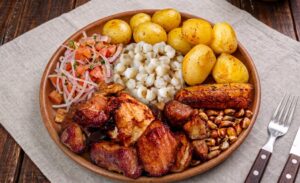
Carne punzada is a traditional dish from Manabí, on Ecuador’s coast: beef or pork leg seasoned and slow-cooked with spices, beer, orange juice, and cherry wine while it’s pierced with a fork until it falls into strands.
It’s served with corn rice or green rice and ensaladilla; at Manabí birthday parties it also fills the carne punzada sandwich.
Print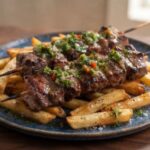
Ecuadorian Carne Punzada
- Prep Time: 20 minutes
- Cook Time: 3 hours
- Total Time: 3 hours 20 minutes
- Yield: 10 servings
- Category: Main Course
- Cuisine: Nicaraguan
Ingredients
- 5 lb beef or pork leg
- 80 g Manabí adobo (aliño de la abuela)
- 100 g sofrito
- 4 small cinnamon sticks
- 3 whole cloves
- 3 allspice berries
- 30 g cilantro
- 10 g ground black pepper
- 10 g salt
- 100 g garlic
- 5 g cumin
- 2 cups orange juice
- 2 cups cherry wine
- 4 cups beer
- Peel of 1 pineapple (optional)
- 8 oregano leaves
- 4 g fresh oregano
Preparation
- Season the meat, rub the leg with the Manabí adobo.
- Prepare the pot, put the sofrito in the pot with the cinnamon, cloves, allspice, cilantro, black pepper, salt, garlic, cumin, oregano leaves, and fresh oregano; add the orange juice, cherry wine, beer, and, if you like, the pineapple peel, and add the meat.
- Cook and pierce, cook for about 3 hours in a pressure cooker over low heat. During cooking, pierce the meat repeatedly with a fork until it shreds into strands.
Tips
- Pierce the meat with the fork several times during cooking: that’s how it shreds and soaks up the sauce.
- Cook over low heat so the meat stays tender.
- The pineapple peel is optional and adds a touch of sweetness.
Traditional variations
- Traditional method: in a Manabí oven it cooks for about 2 days; over slow embers it can take 2 to 3 days.
- It’s made with beef or pork leg.
How to serve
Serve the carne punzada with corn rice or green rice and ensaladilla.
Recommended pairings
- Corn rice or green rice
- Ensaladilla
Did you know?
In Manabí, carne punzada was traditionally cooked in a clay pot for hours until it fell into soft strands.
Frequently Asked Questions
Because during cooking it's pierced repeatedly with a fork to shred it.
Beef or pork leg.
From Manabí, on Ecuador's coast.