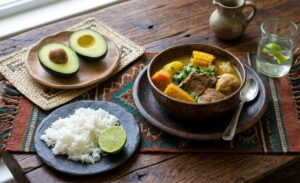

Rabbit stewed in coconut milk is a traditional dish from Colombia’s Caribbean coast, where rabbit is slow-cooked in a fresh coconut milk sauce reduced until thick. It is a signature dish of communities in La Guajira and Urabá, where coconut is a staple of everyday cooking.
This dish is typically prepared for family lunches and special occasions. Its slow cooking produces tender, juicy meat that falls easily off the bone, coated in a thick, fragrant coconut sauce.
Print
Colombian Rabbit Stew
- Prep Time: 20 minutes
- Cook Time: 1 hour
- Total Time: 1 hour 20 minutes
- Yield: 4
- Category: Main Course
- Cuisine: Colombian
Ingredients
- 1.5 kg rabbit, cut into pieces
- 150 g chopped scallions (3 stalks)
- 20 g crushed garlic (4 cloves)
- 1 hot or sweet chili pepper, finely chopped
- 300 g chopped ripe tomatoes (3 medium tomatoes)
- 30 ml vegetable oil (2 tablespoons)
- 500 ml fresh coconut milk (extracted from 1 large grated coconut)
- 15 g salt (1 tablespoon)
- 3 g ground black pepper (1/2 teaspoon)
Preparation
- Season the rabbit, combine the rabbit pieces with the garlic, salt, pepper, scallions, and chopped chili pepper. Let rest for 20 minutes to absorb the seasonings.
- Sear the meat, heat the oil in a large pot and brown the seasoned rabbit pieces on all sides for 10 minutes.
- Add the tomato, stir in the chopped tomato and cook for 5 minutes, stirring occasionally.
- Add the coconut milk, stir in the fresh coconut milk, cover, and cook over medium heat for 40 to 45 minutes, until the rabbit is tender and the sauce has reduced to a thick consistency.
- Serve hot, plate the rabbit with the thick coconut sauce and serve immediately.
Chef’s Tips
Use young rabbit for a more tender texture and even cooking.
Avoid cooking over high heat for long periods, as it can dry out the meat.
To extract fresh coconut milk, grate the coconut flesh and squeeze it with hot water through a cloth or fine strainer.
Traditional Variations
In the Urabá region, coconut rabbit is commonly served with boiled cassava or boronía (a mashed plantain and eggplant dish) instead of rice alone.
Some versions add annatto-infused oil for a more vibrant color in the sauce.
How to Serve
Serve coconut rabbit stew with white rice. In Urabá it is traditionally paired with boiled cassava or boronía (mashed plantain and eggplant).
Recommended Side Dishes
- White rice
- Boiled cassava
- Boronía (mashed plantain and eggplant)
Fun Fact
Rabbit farming has been present in various rural regions of Colombia for decades. On the Caribbean coast, coconut is a staple of everyday cooking, found in fish, seafood, and meat dishes alike, including rabbit.
In many families from La Guajira and Urabá, coconut rabbit stew was reserved for special gatherings and family celebrations.
Frequently Asked Questions
Rabbit has a mild, delicate flavor often compared to chicken, though it has a slightly firmer texture and richer taste.
The meat should pull easily away from the bone while remaining moist and tender.
The traditional recipe uses coconut milk freshly extracted from grated coconut, which gives a more authentic flavor. Canned coconut milk works as a substitute, though the result will be less fresh-tasting.
Yes. Once cooled, coconut rabbit stew can be stored in airtight containers and frozen for several months.