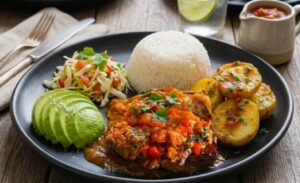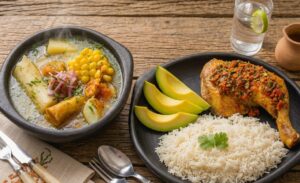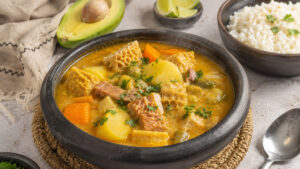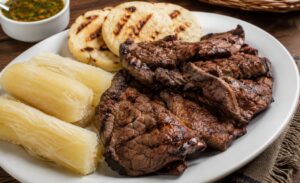
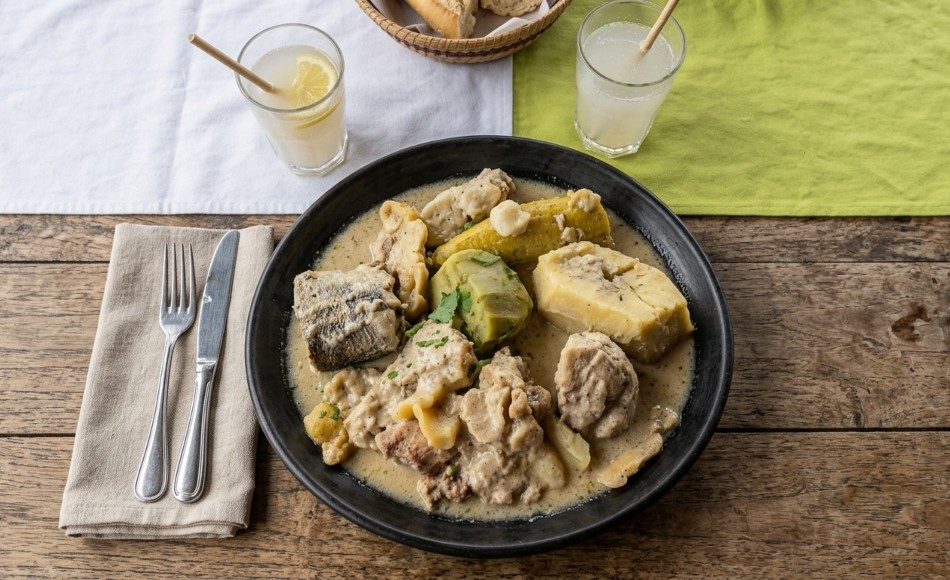
Rondón is a traditional stew from San Andrés, Providencia, and Santa Catalina that comes from meals held outdoors, around the trees. It brings together ingredients from the sea and the land —fish, conch, salt-cured pork tail, cassava, yam, pumpkin, and green plantain— cooked in coconut milk over a fire that stays constant.
Its name comes from the English expression run down, meaning “come down quickly”: it is how women called the men to let them know the food was ready. It is traditionally made with corned fish or preserved salted fish; this version uses fresh sea fish, and rondón is eaten slightly dry.
Print
Rondón from San Andrés and Providencia
- Prep Time: 20 minutes
- Cook Time: 50 minutes
- Total Time: 1 hour 10 minutes
- Yield: 10 servings
- Category: Main Course
- Cuisine: Colombian
Ingredients
- 6 large coconuts, or more
- About 8 cups water (to extract the coconut milk)
- 10 small sea fish (parguitos, margaritas), or 5-6 pounds fish fillet
- 3 pounds pig tail (salt-cured pork tail)
- 3 pounds queen conch fillet (optional; the source says it is not essential)
- 3 pounds cassava, peeled and cut into chunks
- 2 pounds yam, peeled and cut into chunks
- 3 pounds pumpkin (ahuyama), peeled and cut into chunks
- 6 green plantains, peeled and cut into chunks
- 3 white onions, sliced
- 2 heads of garlic, crushed
- ½ cup oregano
- 1 cup basil, preferably the kind called wild basil
- 2 medium ginger roots, grated
- 1 chili pepper, finely chopped (optional)
- Whole black peppercorns
- Lemons and vinegar (for seasoning the fish and cooking the conch)
- Salt and pepper to taste
For the dumplings
- 1 pound all-purpose flour
- 1 tablespoon baking powder
- Salt
- 1 cup coconut milk
Preparation
- Extract the coconut milk. Split the coconuts and grate or blend the pulp. Mix it with about 8 cups of water to squeeze it more easily, strain the coconut milk, and set it aside.
- Desalt the pig tail. Cut it into small pieces and cook it for 15 minutes in a pressure cooker to remove the salt. Without a pressure cooker, cook it for 25 minutes from the boil.
- Prepare the fish and the conch. Clean the fish and season it with salt, pepper, and lemon juice or vinegar. Clean the conch fillets and pound them on both sides; cut into medium pieces and cook in water with a splash of vinegar until tender (this can be done in a pressure cooker).
- Prepare the dumplings. Mix the flour, baking powder, and salt, and gradually add the cup of coconut milk until you have a firm but not sticky dough. Knead well and shape small torticas or arepitas (small flattened balls); makes approximately 30–40 dumplings. Set them aside until the end.
- Cook the base and the root vegetables. In a large pot over high heat, add in this order the coconut milk, then the onion and garlic, and cook for 3 minutes. Add the cassava, yam, pumpkin, and plantains, and boil everything for 15 minutes.
- Add the fish, conch, pig tail, and herbs. Add the fish, conch, and pig tail, then the basil, oregano, ginger, chili, and black pepper. Cook everything for 10 minutes.
- Add the dumplings. Add the dumplings to taste and boil for 5 more minutes.
- Serve by component. Take out the ingredients and arrange them separately on trays or plantain leaves: the fish, the root vegetables, the pig tail, and the conch. Serve each person a portion of each, drizzled with a little of the cooking broth.
Note: rondón is eaten slightly dry; if preferred, it can be prepared with a more liquid consistency. The source does not specify the cooking time for the conch.
Chef’s Tips
- Mix the coconut pulp with about 8 cups of water to squeeze out the milk more easily.
- Cook the salt-cured pig tail first to remove its salt.
Traditional Variations
- Breadfruit can be added together with the fish, along with a tablespoon of achiote or color.
- The pumpkin can be replaced with 2 pounds of plantain bosco.
- To make it the traditional way, with corned fish, use dried sea fish soaked in fresh water all the day before, changing the water several times to remove the excess salt.
- Conch is not essential.
Traditional Serving Method
Rondón is served by component: the fish, the root vegetables, the pig tail, and the conch are arranged separately on trays or plantain leaves, and each person receives a portion of each, drizzled with a little of the cooking broth.
Did You Know?
At the outdoor meals where rondón was born, the fire stayed constant thanks to the wind, which also carried the aroma to the diners as a sign that the dish was ready.
Frequently Asked Questions
It comes from the English expression run down, "come down quickly": the way women called the men to tell them the food was ready.
No. The source states that conch is not essential.
They are small doughs of wheat flour, baking powder, coconut milk, and salt, kneaded and shaped into small torticas or arepitas, added to the pot for the last 5 minutes.
It is extracted from 6 large coconuts: the pulp is grated or blended, mixed with about 8 cups of water, and strained.
It is a stew that is eaten slightly dry; if preferred, it can be prepared with a more liquid consistency.