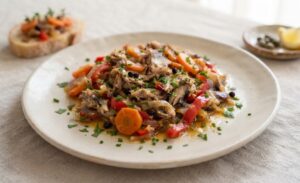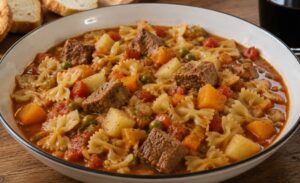
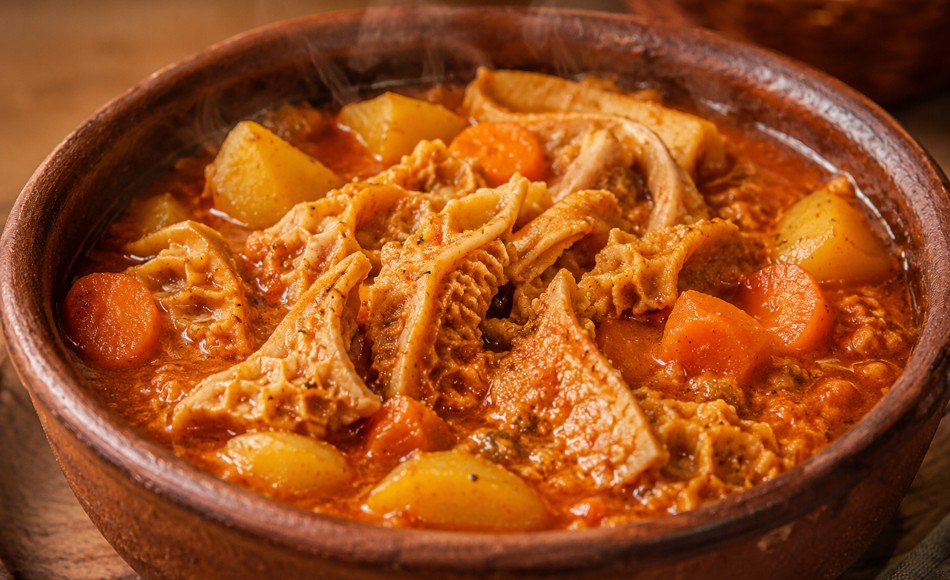
Picante de panza, also known as picante de mondongo, is an iconic dish of northern Argentina, particularly from Salta, said to have been enjoyed by General Manuel Belgrano before the Battle of Salta.
Unlike mondongo a la criolla, this Salta version skips pasta and stands out for its spicy touch, thanks to chili peppers and dissolved paprika that give it color and intense flavor.
Print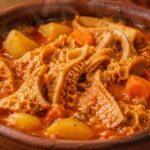
Argentine Spicy Tripe Stew
- Prep Time: 30 minutes
- Cook Time: 2 hours
- Total Time: 2 hours 30 minutes
- Yield: 6 servings
- Category: Main Course
- Cuisine: Argentine
Ingredients
- 1 kg of tripe, cleaned (about 2.2 lb)
- 2 bay leaves
- Thyme and rosemary, to taste
- Salt (for boiling), to taste
- 3 tablespoons of beef fat or oil
- 1 onion, finely chopped
- 2 hot chili peppers, seeded and deveined, chopped
- 4 potatoes, cut lengthwise into quarters
- 1 teaspoon of cumin
- 2 teaspoons of paprika, dissolved in hot water
- Salt, to taste
Preparation
- Boil the tripe, rinse it in a bowl of clean water, without strong running water to avoid splashing, clean it well, and then wash the utensils that touched the raw tripe. Boil it in plenty of salted water with bay leaf, thyme, and rosemary over low heat for 1.5 hours, until very tender.
- Cut the tripe, let it cool and cut it into strips.
- Melt the fat, in a clay pot (or a regular pot), melt the beef fat or heat the oil.
- Brown the onion, add the chopped onion and cook until golden.
- Add chili and tripe, stir in the chopped chili peppers, the tripe strips, the quartered potatoes, cumin, and salt, and cook for a few minutes.
- Dissolve the paprika, in a separate container, dissolve the paprika in a bit of hot water.
- Add the paprika, stir it into the pot and cover with a bit more hot water.
- Cook, let it cook until the potatoes are done, and serve piping hot.
Tips for getting it right
- Removing the veins and seeds from the chili peppers well helps control the spice level to your preference.
- Dissolving the paprika in hot water before adding it keeps lumps from forming in the stew.
- Cooking the tripe the day before and letting it cool makes cutting it into even strips much easier.
- A clay pot helps hold heat and cook more evenly, though a regular pot works fine too.
Traditional variations
- There’s also a chicken version of picante, following the same preparation technique with chili and paprika.
- Some families adjust the amount of chili according to each guest’s taste, since it allows for different spice levels.
How to serve
Picante de panza is served piping hot as a main dish, perfect for cold days.
It’s a typical dish of northern Argentina, especially enjoyed in Salta during winter and Carnival.
Recommended sides
- Crusty bread
- Red wine
- Simple salad
Did you know?
It’s said that General Manuel Belgrano enjoyed a similar dish before the crucial Battle of Salta, giving this recipe a special place in the region’s culinary history.
Unlike mondongo a la criolla, which usually includes pasta, picante de panza stands out for the absence of noodles and for its use of chili and paprika, which give it its characteristic spiciness.
Frequently Asked Questions
Picante de panza skips pasta and stands out for its spicy kick from chili peppers and dissolved paprika, while mondongo a la criolla usually includes pasta and is milder.
Dissolving it beforehand keeps lumps from forming in the stew and helps it distribute evenly, giving consistent color and flavor.
Yes, removing the veins and seeds from the chili peppers well controls the heat, and the amount of chili can also be adjusted to each guest's taste.
It's said that General Manuel Belgrano enjoyed a similar dish before the Battle of Salta, which turned this recipe into an emblem of the region's cuisine.