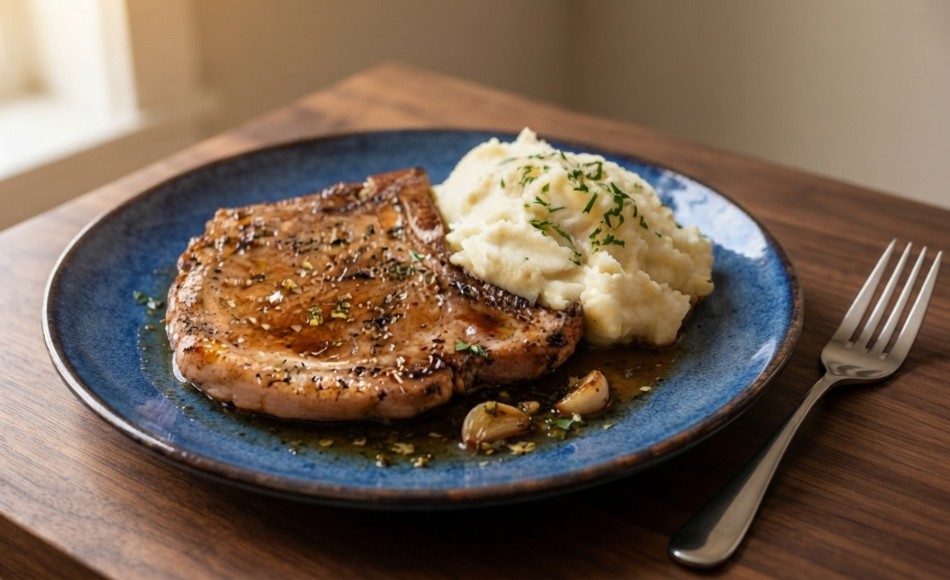
Pork chop with mashed potatoes, known in Argentina as costeleta con puré, is one of the most common home-cooked meals in the country: a golden, juicy pork chop served alongside a smooth, creamy mashed potato. It’s everyday Argentine comfort food, showing up on family tables during the week and on the menu at neighborhood rotiserías and casual eateries known as bodegones.
Its popularity comes down to how simple it is to make and how comforting the result feels: well-seared meat paired with a buttery, milky mash that balances every bite. It’s a dish most Argentines learn at home, almost without a written recipe, passed down and repeated in kitchens across generations.
Print
Argentine Pork Chop with Mashed Potatoes
- Prep Time: 15
- Cook Time: 25
- Total Time: 40
- Yield: 4 servings
- Category: Main Course
- Cuisine: Argentine
Ingredients
- 4 (about 800 g total) of bone-in pork chops (4 bone-in pork chops (about 1.75 lb total))
- 1 kg of potatoes (2.2 lb, about 5 to 6 medium potatoes)
- 200 ml of whole milk (¾ cup)
- 80 g of butter (6 tablespoons)
- 2 cloves of garlic, minced
- 30 ml of oil (2 tablespoons)
- to taste of salt
- to taste of black pepper
- 1 pinch of nutmeg (optional)
- juice of ½ lemon of lemon juice (optional)
Instructions
- Season the pork chops, rub both sides of the pork chops with the minced garlic, salt, pepper, and a splash of lemon juice, then let them rest at room temperature for about 15 minutes so they soak up the flavor.
- Cook the potatoes, peel the potatoes, cut them into even chunks, and boil them in salted water for 20 to 25 minutes, until they’re fork-tender all the way through.
- Sear the pork chops, heat the oil in a skillet over medium-high heat and cook the chops for 4 to 5 minutes per side, until golden on the outside and juicy inside; remove them and let them rest for a few minutes.
- Make the mash, drain the potatoes, mash them with a potato masher or ricer, then stir in the butter and warm milk a little at a time until the mixture is smooth and creamy; adjust the salt and add the nutmeg if using.
- Serve, plate a generous scoop of mashed potatoes alongside the golden pork chop and spoon the pan juices over the meat before bringing it to the table.
Kitchen Tricks
- Lightly pound the pork chops before cooking so they cook evenly and stay tender.
- Warm the milk before adding it to the mash so it doesn’t cool down the potatoes or break the texture.
- Don’t overcook the pork chops — pull them off the heat as soon as they’re golden and firm to the touch so they stay juicy.
- Pass the potatoes through a ricer instead of a blender to keep the mash from turning gluey.
Traditional variations
- Made with beef chops (costeleta de novillo) instead of pork, using the same method.
- “A caballo” style, topped with a fried egg.
- Topped with sautéed onions, known as costeleta “a la criolla.”
Serving Suggestions
Serve the pork chop resting on or next to the mashed potatoes, spooned over with the pan juices.
It’s best enjoyed freshly made and piping hot, the kind of dish that shows up for a family lunch or dinner.
Recommended sides
- Mixed salad with lettuce, tomato, and onion
- Fried egg
- Homemade bread
Fun Fact
Pairing meat with mashed potatoes is one of the pillars of Argentine home cooking, a legacy of the strong Italian and Spanish immigrant influence that shaped the country’s cuisine. At neighborhood rotiserías and bodegones, pork chop with mashed potatoes is often listed as the “dish of the day” — an affordable, hearty, and comforting option that perfectly captures everyday Argentine cooking.
Frequently Asked Questions
Argentine Pork Chop with Mashed Potatoes is a traditional recipe made with simple ingredients and a homemade cooking method that preserves its authentic flavor.
Preparation time is usually short if you follow the steps in order; the exact duration depends on the quantities and serving size.
It pairs well with traditional side dishes and typical drinks, depending on personal taste and local custom.
Yes, it generally keeps well in the fridge in a covered container and can be enjoyed the next day, as long as you check it is still fresh.
Yes, some ingredients can be adjusted to taste, though it is best to keep the main ones to preserve the dish's characteristic flavor.