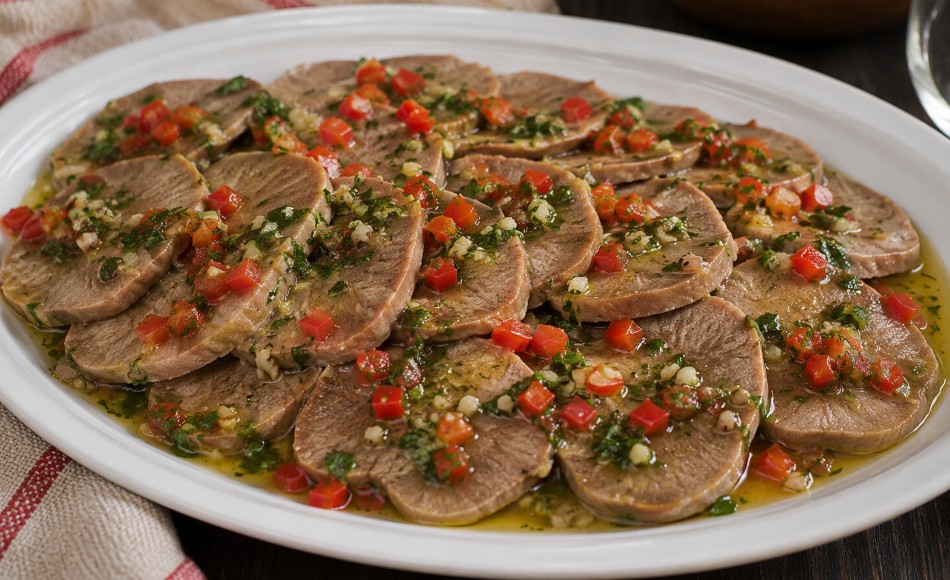
Lengua a la vinagreta is a classic cold dish of Argentine cuisine, popularized during the 20th century by Spanish and Italian immigration, combining tender boiled beef tongue with a garlic, parsley, and bell pepper vinaigrette.
It’s a traditional dish for Christmas tables and family appetizer spreads, prized for the balance between the meat’s mild flavor and the vinaigrette’s tangy touch.
Print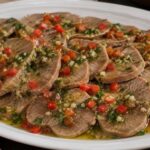
Argentine Beef Tongue in Vinaigrette
- Prep Time: 12 hours
- Cook Time: 2 hours
- Total Time: 14 hours
- Yield: 8 servings
- Category: Appetizer
- Cuisine: Argentine
Ingredients
- 1 beef tongue
- 2 bay leaves
- 1 teaspoon of peppercorns
- 2 cloves of garlic, for cooking
- 1 teaspoon of salt (for the cooking water)
- 2 cloves of garlic, chopped (for the vinaigrette)
- 1 bell pepper, finely diced
- a few sprigs of fresh parsley, chopped
- 1/2 cup of vinegar
- 1/2 cup of oil
- Salt and pepper (for the vinaigrette), to taste
Preparation
- Cook the tongue, place the beef tongue in a large pot, cover with water, and add the bay leaves, peppercorns, garlic, and salt.
- Boil, cook over medium-high heat for 2 hours, or until the tongue is tender when pierced with a fork.
- Peel the tongue, remove it from the water while still hot and carefully peel off the outer skin, using a knife if needed.
- Slice, let it cool slightly and cut the tongue into even slices.
- Make the vinaigrette, in a bowl, mix the chopped garlic, parsley, diced bell pepper, vinegar, oil, salt, and pepper.
- Assemble, in a glass dish, arrange a layer of tongue slices and cover with vinaigrette. Repeat until all the ingredients are used.
- Marinate, let it rest in the fridge overnight so the tongue absorbs the flavors well.
- Serve, serve cold, as an appetizer or part of a spread.
Tips for getting it right
- The secret to this recipe is letting the tongue marinate in the vinaigrette overnight in the fridge, so it absorbs the flavors well.
- Peel the tongue while it’s still hot, since the skin comes off much more easily at that point.
- Cut even slices so the marinating is uniform across all portions.
- For a milder flavor, you can reduce the vinegar and add a bit more oil to balance it.
Traditional variations
- Some families add chopped hard-boiled egg to the vinaigrette for extra texture.
- It’s also made with onion instead of (or along with) bell pepper, depending on each household’s taste.
How to serve
Lengua a la vinagreta is served well chilled, as an appetizer or as part of a spread.
It’s a traditional dish on Argentine Christmas tables and at family gatherings.
Recommended sides
- Crusty bread
- Olives
- White wine
Did you know?
Lengua a la vinagreta was popularized in Argentina during the 20th century thanks to Spanish and Italian immigration, which introduced this style of cold dishes with vinegar, garlic, and herbs.
It’s a classic dish of Argentina’s end-of-year celebrations, present on many Christmas tables alongside other cold appetizers.
Frequently Asked Questions
The marinating time allows each slice to absorb the flavors of the vegetables, vinegar, and oil, resulting in a much more intense texture and taste.
It's easier to remove the outer skin while the tongue is still hot, fresh out of the cooking water.
Generally about 2 hours over medium-high heat, until it's tender when pierced with a fork.
It's a classic on Argentine Christmas tables and at family appetizer spreads, always served well chilled as a starter.