Escudella i carn d'olla is the most iconic stew in Catalan cuisine and the centerpiece of Christmas meals across Catalonia. It's really two dishes cooked in the same pot: first a comforting broth with snail-shaped galets pasta, and then carn d'olla, the slow-cooked meats and vegetables served as a hearty second course.
Its roots go back to medieval Catalan cooking, when families relied on one long, slow simmer to get both broth and meat that would last several days. Over time it became the required dish for Christmas Day, Sant Esteve (the day after Christmas), and other major dates on the Catalan calendar.
What sets this escudella apart from an ordinary stew is the pilota, a large seasoned meatball that simmers right alongside everything else and that many families consider the most anticipated part of the meal. Making it at home is still, for much of Catalonia, a way of keeping a family tradition alive at the Christmas table.
Print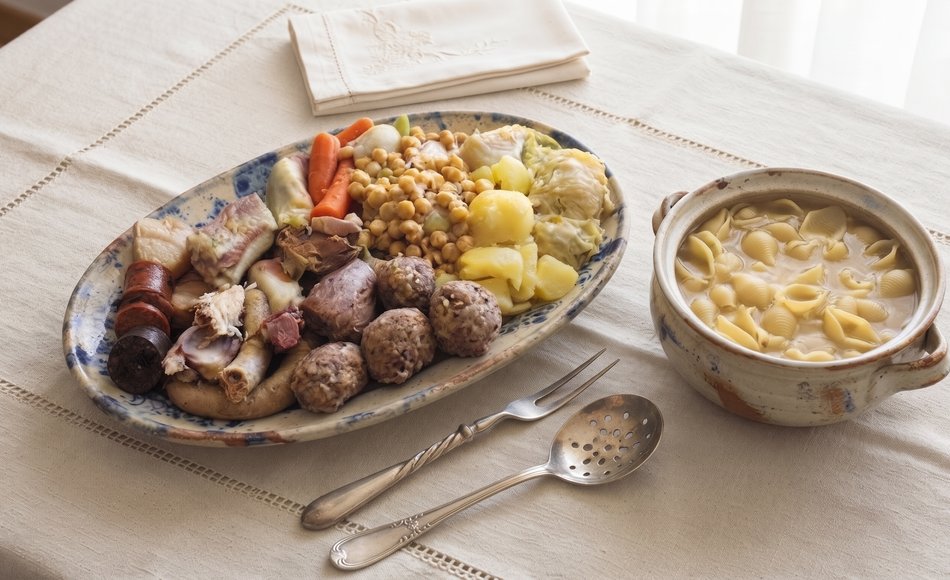
Escudella i Carn d’Olla (Catalan Christmas Stew)
- Prep Time: 45 minutes
- Cook Time: 2 hours 45 minutes
- Total Time: 3 hours 30 minutes
- Yield: 6 servings
- Category: Main Course
- Cuisine: Catalan
Ingredients
- 300 g of dried chickpeas (1 ½ cups)
- 1 ham bone (about 300 g)
- 400 g of beef shank (2 medium pieces (about 14 oz))
- 500 g of chicken or hen thighs (4 pieces (about 1 lb))
- 400 g of pork ribs, cut into pieces (1 small rack (about 14 oz))
- 1 pig’s trotter, split in half (about 300 g) (optional)
- 150 g of fresh pork belly (unsmoked) (1 piece (about 5 oz))
- 2 botifarra negra links (Catalan blood sausage, about 300 g)
- 500 g of potatoes, peeled and chopped (4 medium potatoes)
- 300 g of carrots (3 medium carrots)
- 200 g of turnip (1 medium turnip)
- 150 g of leek (1 large leek)
- 100 g of celery (2 stalks)
- 300 g of cabbage (1/4 small head)
- 200 g of galets (Catalan snail-shaped pasta) (2 cups)
- 300 g of ground pork and beef mix (for the pilota) (2 cups)
- 1 egg (for the pilota)
- 50 g of bread soaked in milk (for the pilota) (1 slice)
- 2 garlic cloves, minced (for the pilota)
- 1 tablespoon of chopped parsley (for the pilota)
- 20 g of pine nuts (for the pilota) (2 tablespoons) (optional)
- Salt and pepper, to taste
- Cold water for soaking and cooking
- Flour for dusting the pilota
Preparation
- Soak the chickpeas, the night before, cover them with plenty of cold water so they hydrate fully and cook evenly the next day.
- Start the broth, place the ham bone, beef shank, chicken, pork ribs, trotter, and pork belly in a large pot, cover with plenty of cold water, and bring to a boil, skimming off any foam that rises to the top.
- Add the chickpeas and long-cooking vegetables, stir in the drained chickpeas, carrots, turnip, leek, and celery, lower the heat to a bare simmer, cover, and cook for about 2 hours, until the meats are tender.
- Shape the pilota, mix the ground meat with the egg, soaked bread, garlic, parsley, and pine nuts, season with salt and pepper, knead until well combined, and form one large oblong meatball; dust it lightly with flour.
- Add the pilota and cabbage, lower the pilota and cabbage into the pot, making sure the meatball stays submerged in the broth, and keep simmering for 45 more minutes.
- Stir in the potatoes and sausage, add the chopped potatoes and botifarra negra, cook for 20 more minutes until the potatoes are tender, and adjust the broth's seasoning.
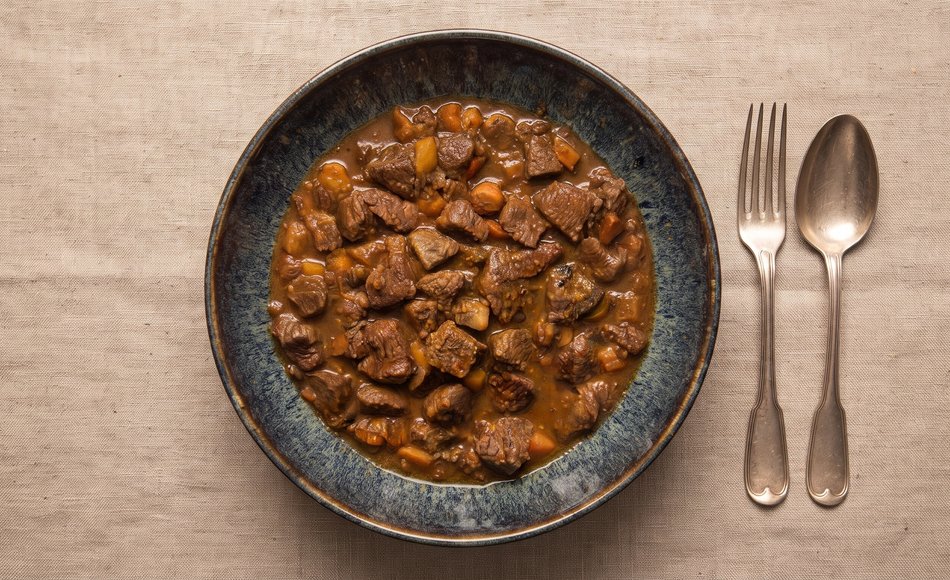
- Serve in two courses, strain off some of the broth, cook the galets in it until al dente, and serve that as the first course; then arrange the meats, pilota, and vegetables on a platter as the second course, the traditional carn d'olla.
Kitchen Tips
- Add a pinch of baking soda to the chickpeas' soaking water to help them soften faster and cook more evenly.
- Skim the broth during the first few minutes of cooking to keep it clear and clean-tasting.
- Cook the galets right before serving, in strained broth, so they don't overcook or cloud the soup.
- Freeze any leftover broth in portions — it makes a great base for other soups or rice dishes.
- Let the carn d'olla rest for a few minutes before carving so it slices more easily.
Traditional variations
- Some areas add farcellets de col, cabbage leaves stuffed with ground meat, alongside the pilota.
- In the Empordà region, cooks often add a second, smaller pilota so every diner gets their own.
- Some families replace part of the galets with thick fideos noodles, or use a mix of both.
Traditional Serving
Escudella i carn d'olla is always served in two courses within the same meal: first the steaming hot broth with galets, and then the carn d'olla, with the meats sliced and the vegetables arranged on a central platter so everyone can serve themselves.
Recommended sides
- Catalan rustic bread (pa de pagès)
- A young red wine from the region
- Alioli to accompany the meats
Origin and Tradition
Escudella has roots in medieval Catalan cooking, when the word referred to both the bowl and the slow-cooked stew served in it, a dish designed to stretch whatever meat and vegetables a family had on hand.
Over the centuries it became the anchor of Catalan Christmas, so deeply rooted that several towns hold escudella de galets cook-offs on Christmas Day, where home cooks compete to make the tastiest version following their grandmothers' recipes.
Frequently Asked Questions
The pilota is a large seasoned meatball made with a mix of ground pork and beef, egg, bread soaked in milk, garlic, parsley, and pine nuts, which simmers in the pot along with everything else.
A pinch of baking soda helps the chickpeas soften faster and cook more evenly.
The galets are cooked right before serving, in strained broth, so they don't overcook or cloud the soup.
It's served in two courses within the same meal: first the hot broth with galets as the soup course, and then the carn d'olla, with the sliced meats and vegetables arranged on a platter.
Any leftover broth can be frozen in portions, since it makes a great base for other soups or rice dishes.