Goxua is a Basque dessert that, despite its relatively recent origin, has become one of the most beloved sweets in Spain's Basque Country and, over time, across the entire country. Its name comes from Euskera, the Basque language, and simply means "the sweet one," a fitting description for a dessert built from layers of rum-soaked sponge cake, silky pastry cream, whipped cream, and a thin, crackling layer of caramelized sugar on top.
It's said to have been created in the mid-1970s in Getaria, a coastal town in Gipuzkoa, as a modern alternative to the more traditional spoon desserts of the region. Ever since, it has been served in a clear glass or cup so the layers show through, and it remains a fixture on dessert menus at Basque cider houses (sidrerías) and restaurants, as well as a favorite at family celebrations, always finished with a torched sugar crust right before it reaches the table.
Print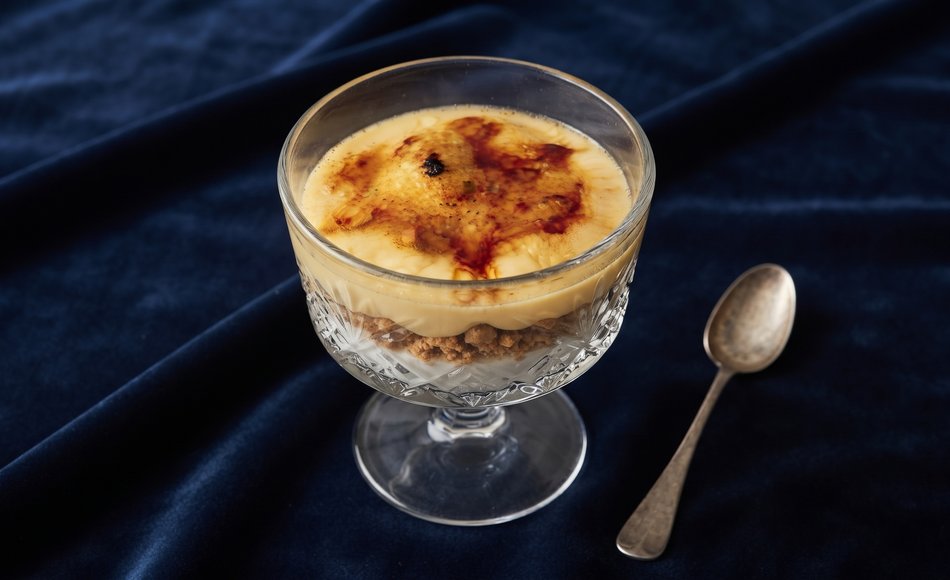
Goxua (Basque Layered Cream Dessert)
- Prep Time: 25 minutes
- Cook Time: 20 minutes
- Total Time: 2 hours 45 minutes
- Yield: 6 servings
- Category: Dessert
- Cuisine: Basque
Ingredients
- 200 g of ladyfinger cookies (savoiardi) (about 12 cookies)
- 100 ml of aged dark rum (1/2 cup)
- 80 g of sugar (for the syrup) (6 tablespoons)
- 100 ml of water (for the syrup) (1/2 cup)
- 500 ml of whole milk (2 cups)
- 4 large egg yolks
- 100 g of sugar (for the pastry cream) (1/2 cup)
- 40 g of cornstarch (4 tablespoons)
- 1 vanilla bean (or 1 teaspoon vanilla extract)
- Peel of ½ lemon (optional)
- 300 ml of heavy whipping cream (35% fat or higher) (1 1/4 cups)
- 30 g of sugar (for the whipped cream) (2 tablespoons)
- 100 g of sugar (for caramelizing the top) (1/2 cup)
Preparation
- Make the rum syrup, heat the water and sugar in a small saucepan until it comes to a boil and the sugar fully dissolves, remove from the heat, let it cool slightly, then stir in the rum.
- Soak the ladyfingers, cut the ladyfingers into pieces sized to fit your serving glasses and dip them briefly in the rum syrup, just long enough to soften without letting them fall apart.
- Cook the pastry cream, warm the milk with the lemon zest and vanilla; in a separate bowl, whisk the egg yolks with the sugar and cornstarch until smooth, temper the mixture with a little of the hot milk, then pour everything back into the saucepan and cook over medium-low heat, stirring constantly, until it thickens into a smooth custard; discard the lemon zest and let it cool.
- Whip the cream, beat the cold heavy cream with the sugar until it forms firm peaks, being careful not to overwhip it so it doesn't turn grainy.
- Layer the glasses, place a layer of soaked cake at the bottom of each glass, add a layer of pastry cream, and finish with a layer of whipped cream; repeat the layers depending on the size of your glasses, then refrigerate for at least 2 hours so the flavors settle.
- Caramelize and serve, right before serving, sprinkle a thin, even layer of sugar over each glass and torch it with a kitchen blowtorch or run it under the broiler until it forms a golden, crackling crust; serve immediately so the caramel stays crisp.
Tips for Best Results
- Use heavy cream with at least 35% fat so it whips up firm enough to hold the layers.
- No kitchen torch? Melt sugar in a separate saucepan into a liquid caramel and carefully pour it over each glass instead.
- Make the pastry cream and soak the cake ahead of time; assemble the glasses completely and caramelize the sugar only right before serving so it stays crisp.
- Don't soak the cake too long in the syrup — a few seconds is enough to soften it without letting it fall apart.
Traditional variations
- Some versions swap the rum for whisky, or use a plain sugar syrup for an alcohol-free take suitable for the whole family.
- Some kitchens use a genoise sponge cake instead of ladyfingers as the base layer.
Recommended Presentation
Goxua is traditionally served in clear glasses or cups that show off its layers of soaked cake, pastry cream, and whipped cream, topped with a freshly torched caramel crust. It's a staple dessert at Basque cider houses and restaurants, served well chilled with a long spoon to reach all the way to the bottom of the glass.
Recommended sides
- It's traditionally enjoyed on its own, with no additional accompaniments, since the cake, cream, and whipped topping already come together in a single dessert.
A Bit of History
Goxua was created in 1975 at the Casino Getariano restaurant in Getaria, a fishing town on the coast of Gipuzkoa, by chef Iñaki Gaztañaga, who wanted a modern, eye-catching dessert to offer his guests. Its name, goxua, means "sweet" or "tasty" in Euskera, a direct nod to the burst of flavor in its three layers.
Although it's a fairly recent addition compared to other traditional Basque desserts, goxua spread quickly across Spain during the 1980s and 1990s, and today it's a common sight on dessert menus at cider houses, restaurants, and bars nationwide, always served in its signature glass cup.
Frequently Asked Questions
Yes, you can use a plain sugar syrup instead of the rum syrup, as noted in the traditional variations.
Melt sugar in a separate saucepan into a liquid caramel and carefully pour it over each glass instead.
Refrigerate the assembled glasses for at least 2 hours so the flavors settle.
Yes, some kitchens use a genoise sponge cake instead of ladyfingers as the base layer.
Because overwhipping makes the cream turn grainy, losing the firm texture needed to hold the layers.