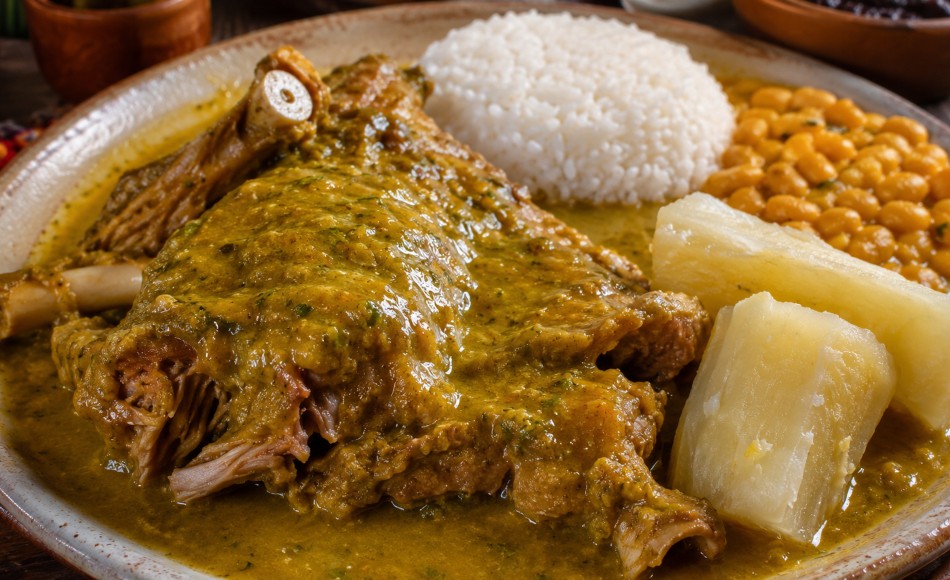
Northern-style goat stew, known in Peru as cabrito a la norteña or seco de cabrito, is one of the most emblematic dishes from the country’s northern coast, especially Lambayeque and Piura. It is made with tender goat slowly braised in a bold sauce of cilantro, chicha de jora, ají amarillo, ají panca, and loche squash.
It is a dish for celebrations, family gatherings, and traditional northern eateries. The meat should become tender enough to pull easily from the bone, while the deeply flavored green sauce carries the distinctive character of Lambayeque cooking. It is traditionally served with rice, beans, and boiled cassava.
Print
Peruvian Northern Goat Stew
- Prep Time: 35 minutes
- Cook Time: 2 hours 25 minutes
- Total Time: 3 hours
- Yield: 6
- Category: Main Course
- Cuisine: Peruvian
Ingredients
- 1.5 kg bone-in goat pieces (about 3.3 lb)
- 120 g fresh cilantro, leaves and tender stems (3 cups)
- 200 g chopped red onion (2 medium onions)
- 25 g garlic paste (5 garlic cloves)
- 60 g ají amarillo paste (4 tablespoons)
- 30 g ají panca paste (2 tablespoons)
- 250 ml chicha de jora (1 cup)
- 750 ml hot goat stock or beef stock (3 cups)
- 250 g grated loche squash (2 cups)
- 30 ml vegetable oil (2 tablespoons)
- 5 g ground cumin (1 teaspoon)
- 5 g dried oregano (1 teaspoon)
- 3 g ground black pepper (½ teaspoon)
- 10 g salt (2 teaspoons)
For the beans and rice
- 300 g dried canary beans (1½ cups)
- 1.5 liters water (6 cups)
- 100 g chopped red onion (1 medium onion)
- 15 g garlic paste (3 garlic cloves)
- 30 ml vegetable oil (2 tablespoons)
- 3 g ground cumin (½ teaspoon)
- 6 g salt (1 teaspoon)
- 1 bay leaf
- 400 g cooked white rice (4 cups)
- 500 g boiled cassava, cut into large pieces (1 medium cassava root)
Preparation
- Soak the beans, rinse the canary beans and soak them for 8 hours. Drain them, place them in a pot with the water and bay leaf, and cook over medium heat for 1 hour and 15 minutes, until tender.
- Blend the cilantro, place the cilantro with 120 ml of hot stock (½ cup) in a blender and process until you have a smooth green sauce. Set it aside for the stew.
- Brown the goat, season the goat pieces with salt, cumin, oregano, and black pepper. Heat the oil in a wide pot and brown the goat in batches for 8 to 10 minutes, until well colored on all sides. Remove and set aside.
- Make the northern-style base, cook the onion in the same pot for 5 minutes, until softened. Add the garlic, ají amarillo paste, ají panca paste, and grated loche squash. Cook for 5 more minutes, stirring until fragrant and thick.
- Braise the goat slowly, return the goat to the pot and add the cilantro sauce, chicha de jora, and remaining stock. Stir gently, cover partly, and cook over low heat for 1 hour and 30 minutes, until the meat is very tender and the sauce has reduced.
- Finish the beans, heat the oil in a skillet and cook the onion, garlic, and cumin for 5 minutes. Add this mixture to the cooked beans, season with salt, and cook for 15 more minutes, until creamy.
- Serve traditionally, let the goat stew rest for 5 minutes before serving. Add white rice, canary beans, and boiled cassava to each plate, then serve one goat portion with plenty of green sauce over the top.
Chef’s tips
- Use young, bone-in goat for juicier meat and a more flavorful sauce.
- Cook the stew over low heat; goat needs time to become truly tender.
- Fresh, finely grated loche squash gives the dish its distinctive aroma and texture.
- Do not add all the salt at the beginning, since the chicha de jora and stock will concentrate during cooking.
- Let the stew rest for a few minutes before serving so the sauce settles and coats the meat better.
Traditional variations
In Lambayeque, some families use extra loche squash for a thicker, more fragrant sauce. In Piura, goat stew may contain more chicha de jora or be served with looser, brothier beans and rice.
Some versions use blended loche squash or a small amount of dark beer, but goat, cilantro, chicha de jora, and Peruvian chili peppers remain the best-known traditional foundation.
How to serve
Serve northern-style goat stew piping hot, with a generous goat portion and plenty of green sauce. Arrange it with fluffy white rice, creamy canary beans, and boiled cassava.
Northern Peruvian tables may also include salsa criolla, ground chili sauce, or onion salad for freshness. Chicha de jora, chicha morada, or passion fruit drink pair well with the stew’s deep flavor.
Recommended accompaniments
- Fluffy white rice
- Creamy canary beans
- Boiled cassava
- Salsa criolla
- Ground ají amarillo
- Chicha de jora
- Chicha morada
Food tradition
Cabrito a la norteña is one of the most important expressions of Lambayeque and Piura cooking. Its preparation brings together ingredients strongly associated with northern Peru, including cilantro, chicha de jora, local chili peppers, and loche squash.
Chicha de jora gives the stew a gently fermented depth, while loche squash provides its velvety texture. Together, these ingredients explain why the dish is considered a defining reference of Peru’s northern regional cuisine.
Frequently Asked Questions
Use young goat cut into bone-in portions. Bone-in meat gives more flavor to the broth and holds up well during long cooking. Choose cuts such as leg, shoulder, ribs, and neck because they have a good balance of meat and connective tissue, allowing the finished stew to become tender and juicy.
You can, but the sauce will have less aroma and a less creamy texture. Loche squash is especially important in northern Peruvian cooking because it gives the dish a distinctive flavor and velvety consistency. When unavailable, use macre squash or kabocha squash, though the final flavor will be different.
You can replace it with dark beer or additional stock, but chicha de jora gives the dish the lightly fermented, traditional flavor closely associated with northern goat stew. For the most authentic result, use chicha de jora and simmer the stew slowly so its flavor blends with the cilantro and chili peppers.
Yes. Northern-style goat stew often tastes even better the next day because the meat absorbs more sauce. Store it in an airtight container in the refrigerator for up to 3 days, then reheat gently over low heat with a little stock if the sauce has thickened too much.