
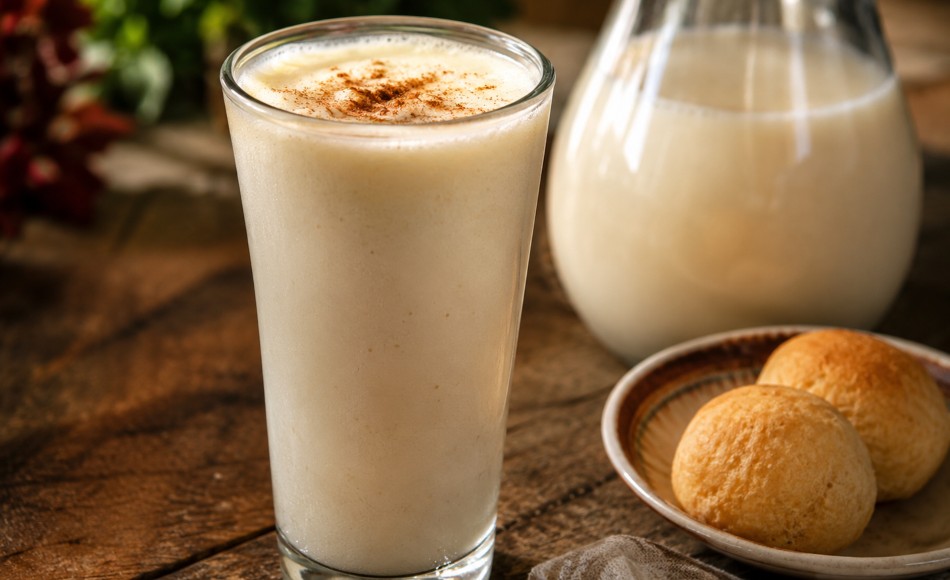
Rice masato is a traditional Colombian drink with a creamy texture, sweet flavor and a mildly tangy finish when fermented. It is especially popular in Cundinamarca, Boyacá, Santander and Tolima, where it is commonly enjoyed with baked snacks, empanadas and traditional pastries.
Made with rice, panela, cinnamon and cloves, masato is one of the most beloved artisanal drinks from Colombia’s Andean region. Families often serve it cold during holiday gatherings, afternoon snacks or celebrations, alongside almojábanas, mantecadas and other Colombian baked treats.
Print
Colombian Rice Masato
- Prep Time: 15 minutes
- Cook Time: 45 minutes
- Total Time: 1 hour
- Yield: 8
- Category: Beverage
- Cuisine: Colombian
Ingredients
- 250 g white rice (about 1 ¼ cups)
- 2.5 liters water (10 cups)
- 300 g grated panela (about 1 ½ cups)
- 1 cinnamon stick, about 3 inches long
- 4 whole cloves
- 5 g ground cinnamon (1 teaspoon)
Preparation
- Rinse and cook the rice, rinse the rice several times until the water runs mostly clear. Place it in a pot with 2 liters of water, the cinnamon stick and cloves. Cook over medium heat for 35 to 40 minutes, until the rice is very soft and nearly falling apart.
- Make the sweetener, while the rice cooks, place the panela and remaining 500 ml of water in a small saucepan. Cook over low heat for about 8 minutes, until the panela dissolves completely and forms a light syrup. Let it cool.
- Blend the mixture, remove the cinnamon stick and cloves from the cooked rice. Blend the rice with its cooking liquid in batches until you have a smooth, creamy drink. Transfer it to a large pitcher or container.
- Add the panela, stir in the cooled panela syrup and ground cinnamon until fully combined. Let the drink reach room temperature before fermenting.
- Ferment the masato, cover the container with a clean cloth and leave it at room temperature for 24 to 48 hours. Taste it after 24 hours for a sweeter, milder result. Let it rest longer for a tangier and more noticeably fermented flavor.
- Chill and serve, refrigerate the masato for at least 2 hours before serving. Stir it gently if it separates slightly, then serve it cold with an extra pinch of ground cinnamon on top.
Chef’s Tips
- Cook the rice until extremely tender for the creamiest traditional texture.
- Do not tightly seal the container while the drink ferments, since natural gases develop.
- Refrigerate the masato once it reaches your preferred level of tanginess to slow fermentation.
- Discard the drink if you notice mold, an unpleasant smell or a slimy texture.
- For a thinner drink, blend in 250 ml of cold water before chilling.
Traditional Variations
In Colombia, masato is also made with corn, wheat flour, cassava or pineapple. The rice version with panela, cinnamon and cloves is one of the best-known styles from the Cundiboyacense highlands and the Colombian Andean region.
Traditional Serving Style
Serve rice masato cold in tall glasses or traditional gourds. It is commonly enjoyed as an afternoon drink or at family gatherings, paired with Colombian baked goods and savory snacks. Its gentle sweetness and tangy character pair particularly well with cheese-based breads and corn snacks.
Recommended Pairings
- Almojábanas
- Pandebonos
- Mantecadas
- Colombian empanadas
- Corn arepas
- Fresh curd cheese with panela
A Culinary Tradition
Masato is closely tied to the food traditions of Colombia’s Andean region. Natural fermentation gives the drink its distinctive flavor and can produce a small amount of alcohol, depending on resting time and temperature.
It is often sold and served with traditional snacks such as cookies, almojábanas and mantecadas, particularly during festive seasons.
Frequently Asked Questions
Let it ferment for 24 to 48 hours. After 24 hours, it will taste sweeter, milder and fresher. After 48 hours, it develops a tangier, slightly bubbly and more fermented profile. Room temperature matters greatly, so in warm climates it may reach the desired flavor sooner.
Masato can develop a small amount of alcohol through the natural fermentation of panela sugars. The amount varies according to resting time, temperature and fermentation conditions. For a milder drink, refrigerate it after the first 24 hours rather than letting it continue fermenting at room temperature.
Keep it refrigerated and consume it within 3 days for the best flavor and safety. It will continue fermenting slowly in the refrigerator, becoming tangier over time. Store it in a clean, covered container and check its aroma and appearance before serving leftovers.