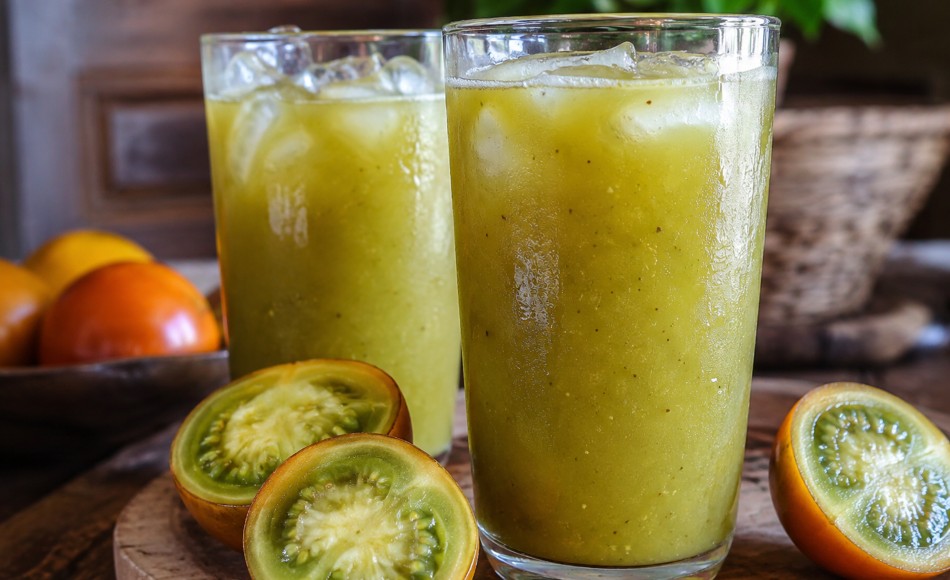
Lulo juice is one of Colombia’s most recognizable fruit drinks. It is made with lulo pulp, water, sugar, and ice, and it stands out for its refreshing, tropical, gently tart flavor.
It is commonly served in homes, restaurants, and juice shops across the country, especially with lunch. Lulo has a distinctive aroma that sets it apart from other tropical fruit juices.
Print
Colombian Lulo Juice
- Prep Time: 10 minutes
- Total Time: 10 minutes
- Yield: 4
- Category: Beverage
- Cuisine: Colombian
Ingredients
- 300 g fresh lulo pulp (about 6 medium lulos)
- 750 ml cold water (3 cups)
- 60 g sugar (5 tablespoons)
- 160 g ice (1 ½ cups)
Preparation
- Scoop out the pulp, wash the lulos, cut them in half, and scoop out the pulp with a spoon. Place it in a blender, including its natural juice.
- Blend gently, add the cold water and sugar. Blend for 20 to 30 seconds, only until combined, so the seeds do not break down too much and add bitterness.
- Strain the juice, pour the mixture through a fine strainer and gently press with a spoon to extract the liquid. Discard the seeds and thicker pulp.
- Chill and serve, add the ice, stir, and serve the lulo juice immediately in tall glasses.
Chef’s tips
- Blend lulo briefly so the seeds do not affect the flavor.
- Use very cold water for a refreshing drink without needing too much ice.
- Adjust the sugar based on the natural tartness of the fruit.
- Serve the juice freshly made to enjoy its tropical aroma at its best.
Traditional variations
In some Colombian homes, lulo juice is made with milk instead of water for a creamier, milder drink. It can also be sweetened with dissolved panela, although the sugar-sweetened version is more common with meals.
How to serve
Serve lulo juice very cold in tall glasses, usually with lunch or as a refreshing drink on warm days. It pairs especially well with Colombian rice dishes, meats, chicken, and fried foods.
Recommended pairings
- Bandeja paisa
- Colombian chicken and rice
- Colombian empanadas
- Stuffed arepas
- Roast chicken
A cultural note
Lulo, also known as naranjilla in other Andean countries, has fragrant green pulp. In Colombia, juice is one of the most popular ways to enjoy the fruit, balancing its natural tartness with cold water and sugar.
Frequently Asked Questions
Both versions are traditional in Colombia. Lulo juice made with water is lighter and more refreshing, so it is often served with lunch or on warm days. The milk version is creamier and milder, making it a popular choice for an afternoon snack.
Lulo has small seeds that may create a rough texture and a more bitter taste when blended too much. Straining the juice produces a smoother, cleaner drink while preserving the fruit’s distinctive aroma and natural tartness.
Yes. You can use unsweetened frozen lulo pulp when fresh lulos are unavailable. Let it thaw slightly before blending and adjust the sugar based on its tartness. The drink will still be refreshing, although fresh fruit usually gives a stronger aroma.