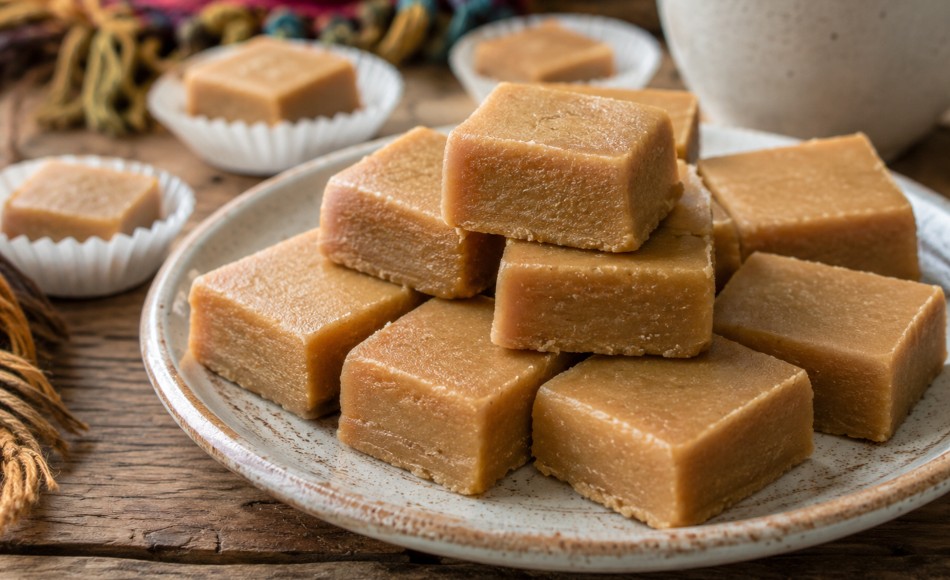
Panelitas de leche are one of Colombia’s most beloved traditional sweets. They are made by slowly cooking milk and sugar until the mixture becomes thick, soft, and caramel-flavored, then shaping it into small individual candies.
They are popular in candy shops, markets, fairs, and family celebrations. Their texture can be firm and slightly grainy, yet they should melt gently in your mouth. In many parts of Colombia, they are also known as milk candies or cut milk fudge.
Print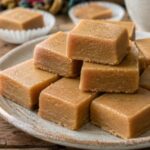
Colombian Milk Candies
- Prep Time: 15 minutes
- Cook Time: 1 hour 30 minutes
- Total Time: 1 hour 45 minutes
- Yield: 20
- Category: Dessert
- Cuisine: Colombian
Ingredients
- 1 liter whole milk (4 cups)
- 500 g granulated sugar (2½ cups)
- 2 g baking soda (½ teaspoon)
- 5 ml vanilla extract (1 teaspoon)
Preparation
- Combine the ingredients, place the milk, sugar, and baking soda in a wide heavy-bottomed pot. Stir until the sugar dissolves, then cook over medium heat until the mixture begins to simmer gently.
- Cook the milk slowly, reduce the heat and cook for 1 hour and 15 minutes to 1 hour and 30 minutes. Stir often, especially near the end, so the mixture does not stick or scorch on the bottom of the pot.
- Reach the proper consistency, when the mixture is thick, light caramel-colored, and begins to pull away from the bottom of the pot, add the vanilla. Keep stirring until you can see the bottom of the pot for a few seconds when you drag the spoon across it.
- Beat the mixture, remove the pot from the heat and beat vigorously with a wooden spoon for 3 to 5 minutes. The mixture will begin to lose its shine, thicken further, and develop a lightly grainy texture.
- Shape the candies, scoop portions of about 25 g with a spoon and place them on a parchment-lined tray. Let them cool completely at room temperature until firm.
Chef’s tips
- Use a wide pot so the milk reduces evenly.
- Stir more often during the last 20 minutes, when the mixture becomes very thick.
- Do not cook over high heat, or the candy may burn before it reaches the proper consistency.
- Beat it off the heat only until it begins to lose its shine; overbeating can make the candies too dry.
Traditional variations
In some Colombian regions, panelitas are made with panela instead of white sugar, giving them a darker color and a deeper cane flavor. Coconut versions also exist, although plain milk panelitas remain the most traditional style.
How to serve
Serve panelitas de leche at room temperature as an after-meal sweet, afternoon snack, or small gift to share. You can place them in small paper candy cups or wrap them individually in wax paper.
Recommended pairings
- Black Colombian coffee
- Hot chocolate
- Aguapanela
- Almojábanas
- Cheese bread
A little history
Baking soda has an important role in this recipe: it helps stabilize the milk during its long cooking time and contributes to the caramel color that defines traditional panelitas.
The finished point depends more on texture than exact timing. The mixture should be thick enough to hold its shape when scooped, but not so dry that it becomes hard once cooled.
Frequently Asked Questions
The mixture probably did not cook long enough. It needs to thicken until a spoon leaves a visible trail across the bottom of the pot. Keep in mind that panelitas firm up as they cool, so let them rest completely before judging their final texture.
This can happen when the mixture cooks for too long or is beaten excessively after removing it from the heat. For a softer texture, take the candy off the heat when it is thick but still pliable, then beat only until it begins to lose its glossy appearance.
It is not recommended. Whole milk provides the fat and creaminess needed for soft, flavorful panelitas. Skim milk can produce a drier, less creamy candy with a less pleasant texture.