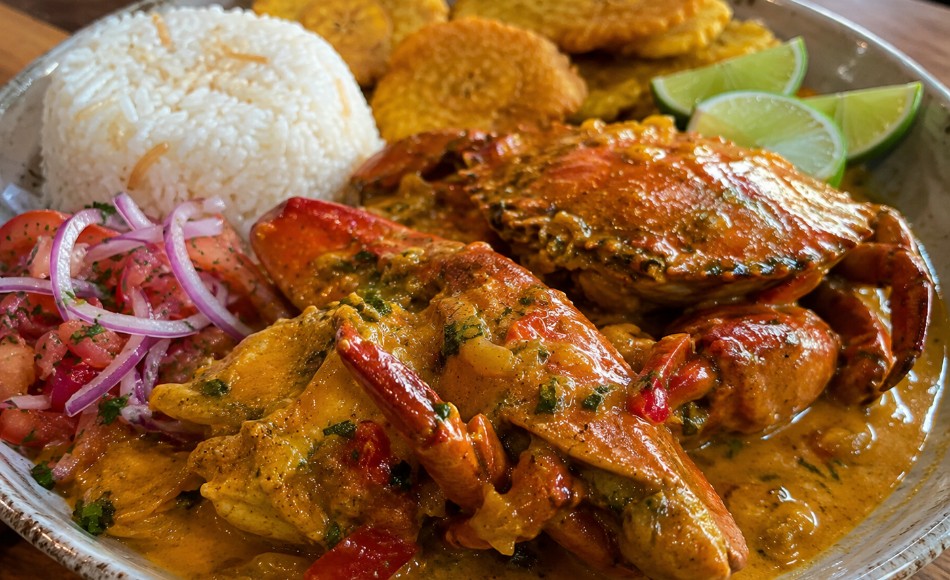
Colombian stewed crab is a traditional dish from the country’s coastal kitchens, especially in Caribbean and Pacific regions where fresh crab is cooked with homemade seasoning, coconut milk, and aromatic herbs. It is a deeply flavorful dish connected to seafood family meals, generous lunches, and recipes that make the most of fresh ingredients from mangroves, rivers, and coastal areas.
In many Colombian homes, crab is slowly stewed so the meat absorbs the flavor of the seasoning base and the sauce becomes creamy, fragrant, and rich. It is usually served with coconut rice, white rice, fried green plantains, or boiled cassava, all perfect for enjoying every bit of the sauce.
Print
Colombian Stewed Crab
- Prep Time: 25 minutes
- Cook Time: 40 minutes
- Total Time: 1 hour 5 minutes
- Yield: 4
- Category: Main Course
- Cuisine: Colombian
Ingredients
- 1.2 kg cleaned crab, cut into pieces
- 400 ml thick coconut milk (1⅔ cups)
- 200 ml water or fish stock (¾ cup)
- 180 g chopped ripe tomato (2 large tomatoes)
- 120 g chopped yellow onion (1 medium onion)
- 100 g chopped scallions (2 medium stalks)
- 100 g chopped red bell pepper (½ large bell pepper)
- 30 g chopped sweet peppers (2 small peppers)
- 20 g crushed garlic (4 cloves)
- 30 ml vegetable oil (2 tablespoons)
- 10 g chopped fresh cilantro (¼ cup)
- 5 g ground cumin (1 teaspoon)
- 5 g ground annatto or achiote (1 teaspoon)
- 8 g salt (1½ teaspoons)
- 2 g ground black pepper (½ teaspoon)
- 30 ml lime juice (2 tablespoons)
Preparation
- Season the crab, rub the crab pieces with the lime juice, half of the salt, the black pepper, and half of the garlic, then let them rest for 15 minutes while you prepare the seasoning base.
- Make the seasoning base, heat the oil in a large pot and sauté the yellow onion, scallions, red bell pepper, sweet peppers, and remaining garlic for 5 minutes. Add the tomato, cumin, and annatto, then cook for another 8 minutes, until the tomato breaks down and the mixture becomes juicy and aromatic.
- Add the crab, place the seasoned crab pieces in the pot and mix carefully so they are coated with the seasoning base. Cook for 5 minutes, stirring occasionally, until the shells begin to take on a deeper color and the seafood aroma blends with the vegetables.
- Simmer with coconut milk, pour in the coconut milk and the water or fish stock. Stir gently, cover the pot, and cook over medium-low heat for 25 to 30 minutes, until the sauce thickens slightly and the crab is fully cooked. Avoid boiling too hard so the coconut milk keeps its creamy texture.
- Finish the stew, taste and adjust the salt, add the chopped cilantro, and cook uncovered for 3 to 5 more minutes if you want a more concentrated sauce. The stew should be creamy, with enough sauce to coat the crab pieces well.
- Serve hot, let the crab rest for 5 minutes before bringing it to the table. Serve each portion with several pieces of crab and plenty of sauce for the rice, fried green plantains, or cassava.
Cooking Recommendations
Use fresh crab whenever possible, because the flavor of the stew depends heavily on the quality of the seafood.
Do not cook coconut milk over very high heat; a gentle simmer helps preserve its creamy texture.
Crack the crab pieces slightly before stewing so they absorb more flavor from the seasoning base.
Serve the dish with proper utensils or plenty of napkins, because traditionally it is enjoyed by pulling the meat directly from the shells.
Traditional Variations
In some areas of Colombia’s Caribbean coast, this dish is made with extra coconut milk, creating a creamier and more generous sauce.
In Colombian Pacific kitchens, similar seasonings are used, often with a stronger presence of coconut milk, fresh herbs, and sweet peppers depending on each family’s tradition.
Some families add potatoes, cassava, or green plantain to make the stew more filling, although the most direct version focuses on the crab and its sauce.
Traditional Serving Style
Serve the stewed crab in a deep plate or wide serving dish, hot and covered with sauce. The most traditional sides are coconut rice or white rice, crispy fried green plantains, and lime wedges.
For drinks, it pairs well with fresh lemonade, corozo juice, lulo juice, passion fruit juice, or cold panela water with lime.
Recommended Side Dishes
- Coconut rice
- White rice
- Fried green plantains
- Boiled cassava
- Fresh tomato and onion salad
- Avocado
- Lime wedges
Fun Fact
Stewed crab reflects an important part of Colombian coastal cooking: the use of fresh seafood with simple seasonings, coconut, and slow simmering. It is a dish meant to be eaten without rushing, because part of the experience is cracking the shells, removing the meat, and mixing it with the sauce and rice.
In many families, this kind of stew is valued not only for its flavor but also for the shared way it is eaten around the table.
Frequently Asked Questions
Fresh sea, river, or mangrove crab is used, depending on the region and local availability. The most important thing is that the crab is very clean and smells fresh. In coastal areas, seasonal fresh crab is preferred because it gives the sauce a deeper flavor.
Many Colombian coastal versions do include coconut milk, especially in Caribbean and Pacific preparations. Coconut milk adds creaminess and pairs very well with the flavor of crab, tomato, onion, garlic, and traditional seasonings.
The crab is ready when the shell changes color, the meat looks firm, and the sauce has taken on a rich seafood flavor. Cooking time may vary depending on the size of the pieces, but a gentle simmer of 25 to 30 minutes is usually enough.
It is served with coconut rice, white rice, fried green plantains, boiled cassava, or a fresh salad. These sides balance the richness of the seafood and help you enjoy the creamy coconut and seasoning sauce.
Yes, you can use crab meat, although the traditional version with whole crab pieces has more flavor because the shells enrich the stew. If you use crab meat, cook it for less time and add it once the sauce is ready so it does not dry out.