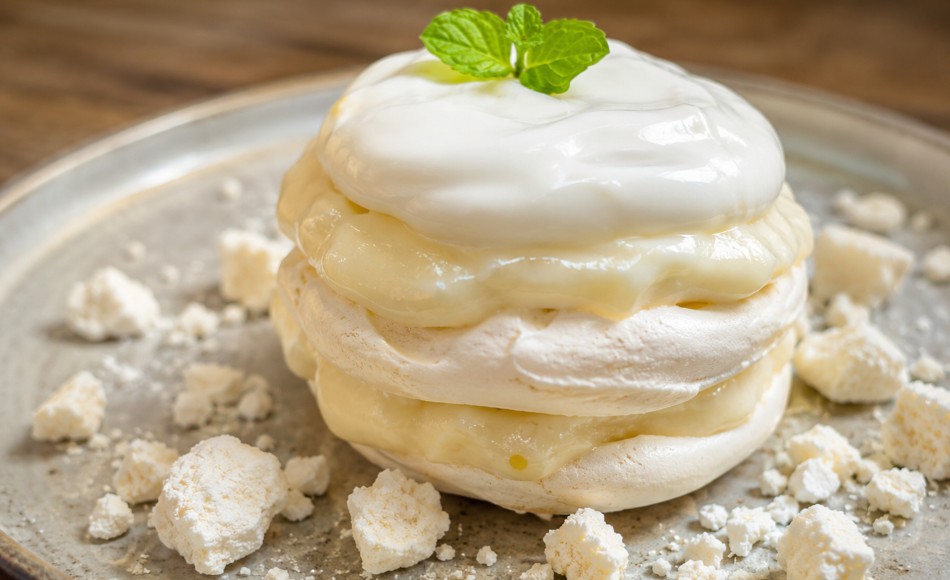
Merengón is one of Colombia’s most beloved desserts. It combines crisp meringue layers with soft cream and fresh fruit; among its most traditional versions, guanábana merengón stands out for its creamy tropical flavor.
It is enjoyed in pastry shops, at family celebrations, and from dessert vendors in many Colombian cities. The combination of meringue, cream, and guanábana creates its signature contrast: crisp at first bite, creamy in the center, and refreshing from the fruit.
Print
Colombian Guanábana Merengón
- Prep Time: 30 minutes
- Cook Time: 1 hour 30 minutes
- Total Time: 2 hours
- Yield: 6
- Category: Dessert
- Cuisine: Colombian
Ingredients
- 120 g egg whites (4 large egg whites)
- 240 g granulated sugar (1¼ cups)
- 2 ml lemon juice (½ teaspoon)
For the filling
- 350 g seedless guanábana pulp (1½ cups)
- 300 ml cold heavy whipping cream (1¼ cups)
- 100 g sweetened condensed milk (⅓ cup)
- 30 g powdered sugar (¼ cup)
Preparation
- Preheat the oven, set it to 100 °C (210 °F) and line a large baking sheet with parchment paper. Draw two 20 cm circles on the paper, then turn it over so the ink does not touch the meringue.
- Whip the egg whites, place the egg whites in a completely clean, dry bowl, add the lemon juice, and beat until foamy. Gradually add the sugar while beating until you have a white, glossy, firm meringue that holds defined peaks.
- Shape and bake the layers, divide the meringue between the two marked circles and spread it with a spatula, leaving the surface slightly rustic. Bake for 1 hour and 30 minutes, turn off the oven, and leave the layers inside for another 30 minutes so they dry without cracking.
- Make the guanábana cream, whip the cold cream with the powdered sugar until it thickens and forms soft peaks. Fold in the sweetened condensed milk and guanábana pulp without overmixing, so the filling stays light and airy.
- Assemble the merengón, place one meringue layer on a serving platter and cover it with half of the guanábana cream. Add the second layer, then spread the remaining cream on top, leaving some meringue visible for the traditional look.
- Serve promptly, refrigerate the merengón for 15 minutes so the cream sets slightly, then serve soon afterward. Do not leave it assembled for many hours, because the filling’s moisture will soften the meringue.
Chef’s tips
- Use room-temperature egg whites for better meringue volume.
- Keep yolk, water, and grease out of the egg whites, or they may not whip properly.
- Use seedless, well-drained guanábana pulp so the filling does not become too loose.
- Assemble the dessert close to serving time to preserve the contrast between crisp meringue and chilled cream.
Traditional variations
Along with guanábana, Colombian merengón is commonly made with strawberries, blackberries, peaches, or mixed fruits. The traditional structure remains the same: meringue, cream, and fresh fruit or fruit pulp.
How to serve
Serve the merengón chilled, cutting generous portions with an offset spatula or serrated knife. It works beautifully for birthdays, family lunches, weekend gatherings, and celebrations. Pair it with Colombian coffee or a cold fruit drink.
Recommended pairings
- Black Colombian coffee
- Hot chocolate
- Fresh lemonade
- Blackberry juice
- Fresh sliced strawberries
A little history
While it shares elements with other international desserts made with meringue and cream, Colombian merengón is known for its generous layers and its use of tropical fruit. Guanábana is widely regarded as one of its classic and most representative flavors.
Frequently Asked Questions
Meringue can crack because of sudden temperature changes or excessive oven heat. To reduce this, bake it at a low temperature and let the layers cool inside the switched-off oven. Small cracks will not ruin the dessert because they will be covered by the guanábana cream.
Yes. You can bake the meringue layers one day ahead and store them in a dry airtight container at room temperature. Do not refrigerate them, because humidity will soften them. Make the cream and assemble the merengón shortly before serving for the best texture.
You can make a Colombian-style variation with strawberries, blackberries, peaches, or mango. Use the same amount of fruit or pulp and make sure it is not excessively watery. Guanábana, however, gives the dessert one of its most traditional Colombian flavors.
Freezing an assembled merengón is not recommended. Once thawed, the cream can release liquid and the meringue will lose its crisp texture. Keep the meringue layers and prepared cream separate, then assemble the dessert when you are ready to serve it.