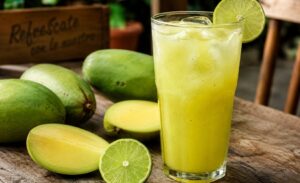
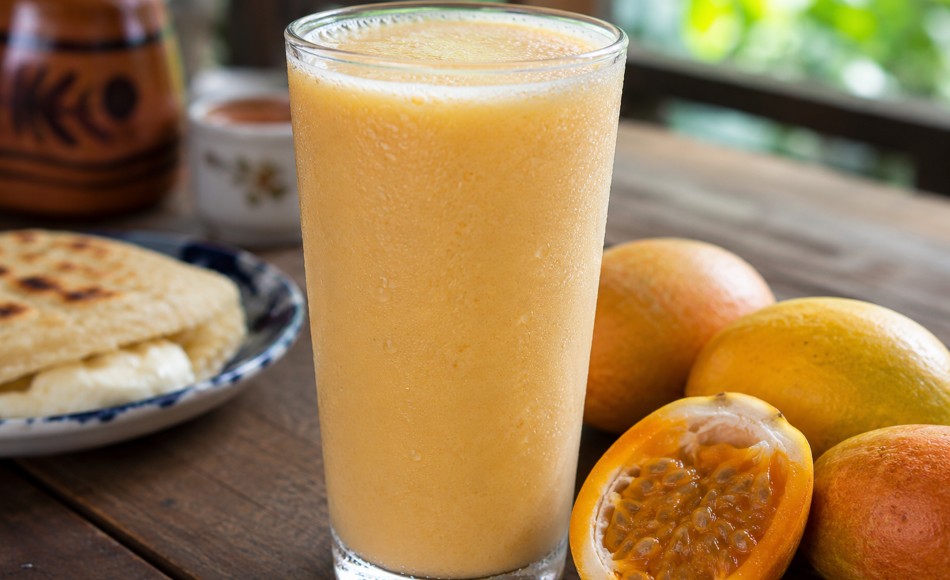
Curuba juice is a traditional drink from Colombia’s Andean regions. Curuba, often called banana passion fruit in English, belongs to the passionfruit family and is known for its fragrant, mildly tart pulp filled with small seeds. In Colombian homes, cafés, and juice shops, it is commonly blended with milk for a smooth, creamy, refreshing drink.
This version uses ripe curuba, cold whole milk, sugar, and ice. Straining the drink after blending removes the seeds and creates the silky texture typically associated with Colombian curuba juice.
Print
Colombian Curuba Juice
- Prep Time: 10 minutes
- Total Time: 10 minutes
- Yield: 4
- Category: Beverage
- Cuisine: Colombian
Ingredients
- 400 g ripe curuba pulp (about 6 medium curuba fruits)
- 720 ml cold whole milk (3 cups)
- 50 g granulated sugar (4 tablespoons)
- 150 g ice cubes (1 cup)
Preparation
- Scoop out the pulp, wash the curuba fruits, cut them lengthwise, and scoop out all the pulp with a spoon. Add it directly to a blender, including the seeds.
- Blend briefly, add the cold milk and sugar. Blend for 20 to 30 seconds, just until combined, without overblending the seeds because they can make the drink feel gritty.
- Strain the juice, pour the mixture through a fine-mesh strainer and press gently with a spoon to extract as much liquid as possible. Discard the seeds and fibers left behind.
- Chill and serve, return the strained juice to the blender, add the ice, and blend for a few seconds. Serve immediately in tall glasses.
Chef’s Tips
- Choose ripe curuba with yellow skin that gives slightly when pressed.
- Blend only briefly before straining to keep the seeds from breaking down too much.
- Taste before adding extra sugar because tartness depends on the ripeness of the fruit.
- Use thoroughly chilled milk so the drink stays creamy without needing excessive ice.
Traditional Variations
In some Colombian households, curuba juice is made with cold water instead of milk for a lighter drink. Another common approach combines water and milk, which keeps some creaminess while allowing the fruit’s tart flavor to stand out more clearly.
How to Serve
Serve curuba juice cold and immediately after blending. It is commonly enjoyed for breakfast, as a midmorning drink, or as an afternoon snack with Colombian baked goods.
Recommended Pairings
- Colombian cheese arepas.
- Almojábana.
- Pandebono.
- Pan de yuca.
- You can also enjoy it on its own as a refreshing drink.
A Culinary Fact
Curuba grows in high-altitude Andean areas and has an important market in Colombia. Its fragrant orange pulp is used in juices, ice creams, desserts, and homemade sweets. It belongs to the same broad fruit family as maracuyá and granadilla, two other popular Colombian passionfruits.
Frequently Asked Questions
Yes. A water-based version is lighter and highlights the fruit’s tart, fragrant flavor. The milk version is creamier and closer to a smoothie, which is why it is especially popular for homemade curuba juice in Colombia. Both preparations are traditional and can be adjusted according to your preferred texture.
Curuba pulp contains many small seeds. They are edible, but they can create an unpleasant texture when blended too long. Straining the juice after a brief blend gives you a smoother, creamier drink while preserving the fresh flavor and aroma that make curuba so distinctive.
Look for curuba fruits with yellow skin, no hard green areas, and a slight give when pressed. A ripe fruit should have juicy, fragrant pulp. Avoid very firm or green fruit because it is usually more acidic and yields less pulp for making juice.